Klondike Legacy Sourdough Bread
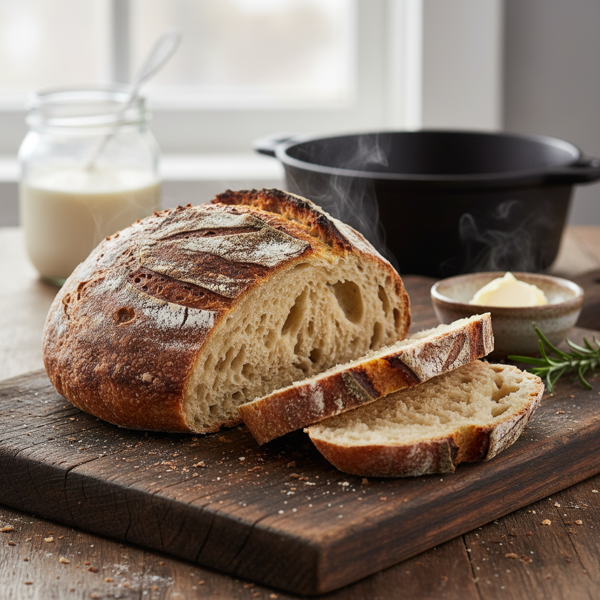
Transport yourself to the Yukon Gold Rush with this authentic Klondike Legacy Sourdough Bread recipe. Rooted in the history of Dawson City, this sourdough starter recipe and bread-making process epitomizes the hearty resilience and camaraderie of miners who thrived on this natural leavening. While the starter takes a few days to develop, the time spent creating this soulful bread is well worth it. Picture your home filled with the warm, delightful aroma of fresh-baked sourdough as it rises and bakes—a comfort that evokes pioneer life. This simple yet rewarding bread pairs beautifully with butter for a true taste of tradition. Share a loaf or a bit of your starter with friends, carrying on a cherished practice of the Klondike community.
N/A
Servings
N/A
Calories
7
Ingredients
Ingredients
Flour
8 cups (1800 g) (Divided into 4 cups for the starter and 4 cups for the dough.)
Warm water
2-2.5 cups (500-625 ml) (Water should be body temperature.)
Sugar
1/4 cup (100 g) (Granulated.)
Salt
1 teaspoon (5 g) (Fine sea salt or table salt.)
Dawson City sourdough starter
2 cups (500 ml) (Freshly prepared and bubbly.)
Egg
1 (optional) (Beaten.)
Melted lard or oil
3-4 teaspoons (15-20 ml) (For moisture and flavor.)
Instructions
1
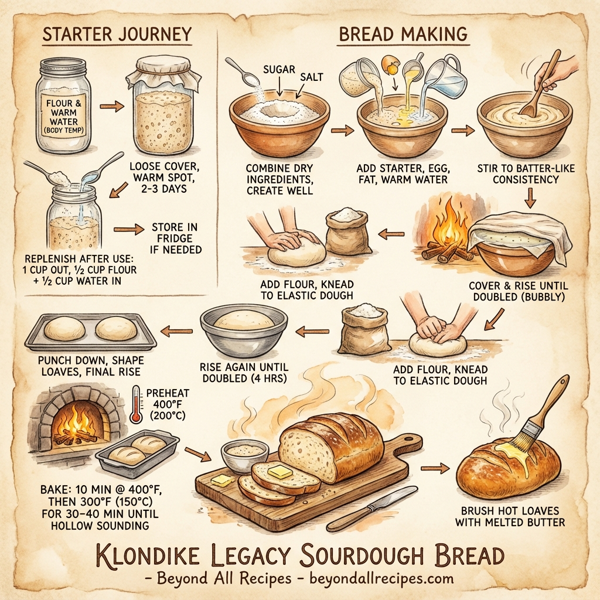
STARTER:
2
1. In a glass or ceramic container, mix equal parts flour and warm water (body temperature) until well combined. Use a container that can accommodate double the volume, as the mixture will rise and bubble.
3
2. Loosely cover the container without sealing it, allowing gases to escape while protecting it from contaminants.
4
3. Place the mixture in a warm spot for 2 to 3 days until it begins to bubble and develop a smooth texture. You might notice a layer of alcohol forming on top—this is normal.
5
4. If your starter develops green mold, you can scoop it out or stir it in; it won't harm your starter. However, if it turns orange, discard it and start fresh.
6
5. After each use, always replenish your starter by removing 1 cup and adding back ½ cup flour and ½ cup warm water. This keeps it vibrant and healthy.
7
6. If you won’t be using your starter regularly, store it in the fridge. Bring it back to room temperature a day before use to reactivate.
8
BREAD:
9
1. In a large mixing bowl, combine 4 cups of flour, sugar, and salt. Create a well in the center for the wet ingredients.
10
2. Pour in the sourdough starter, egg (if using), melted lard or oil, and warm water into the well. Gently stir the mixture until combined, creating a batter-like consistency. Adjust with more water or flour as needed.
11
3. Cover the bowl with greased waxed paper and a kitchen towel, then place it in a warm area to rise until doubled in size and bubbly.
12
4. Once risen, add enough flour (approximately 4 cups) to allow for kneading, forming a smooth, elastic dough ball.
13
5. Allow the dough to rise again in a greased bowl, covered, until doubled in size (about 4 hours).
14
6. Once ready, punch down the dough, shape it into desired loaves or biscuits, and let it rise again until doubled.
15
7. Preheat the oven to 400°F (200°C). Bake the bread for 10 minutes, then lower the temperature to 300°F (150°C) and continue baking for an additional 30 to 40 minutes, or until the loaves sound hollow when tapped.
16
8. For a finishing touch, brush the hot loaves with melted butter.
Nutrition Information
Frequently Asked Questions
Frequently Asked Questions
What is the historical significance of Klondike Legacy Sourdough Bread?
This bread is rooted in the history of the Yukon Gold Rush in Dawson City, representing the resilience and community of miners who relied on natural leavening.
What type of container should be used for the sourdough starter?
A glass or ceramic container should be used to mix the sourdough starter.
How large should the starter container be?
The container should be large enough to accommodate double the volume of the mixture, as it will rise and bubble.
How do I make the sourdough starter?
Mix equal parts flour and warm water at body temperature until well combined.
Should the starter container be sealed?
No, the container should be loosely covered to allow gases to escape while protecting the mixture from contaminants.
How long does the starter take to develop?
It typically takes 2 to 3 days in a warm spot until it begins to bubble and develops a smooth texture.
What does an alcohol layer on the starter mean?
A layer of alcohol forming on top of the starter is normal and part of the fermentation process.
Is green mold on the starter dangerous?
Green mold can be scooped out or stirred in; it will not harm the starter.
When should I throw away my sourdough starter?
If the starter develops orange mold, you must discard it and start fresh.
How do I replenish the starter after using it?
After removing 1 cup for a recipe, add back 1/2 cup flour and 1/2 cup warm water to keep it healthy.
How should the starter be stored for long-term use?
If not using it regularly, store the starter in the refrigerator.
How do I reactivate a refrigerated starter?
Bring the starter back to room temperature a full day before you plan to use it.
What are the dry ingredients for the bread dough?
The dough begins with 4 cups of flour, sugar, and salt combined in a large bowl.
How are the wet ingredients added to the dough?
Create a well in the center of the dry ingredients and pour in the starter, egg, melted fat, and warm water.
Is an egg required for this recipe?
No, the egg is listed as an optional ingredient.
What kind of fat can be used in this sourdough bread?
You can use either melted lard or oil for moisture and flavor.
What is the initial consistency of the dough mixture?
The initial mixture should have a batter-like consistency before the first rise.
How should the bowl be covered during the first rise?
Cover the bowl with greased waxed paper and a kitchen towel.
How much flour is added for the kneading process?
Approximately 4 additional cups of flour are added after the first rise to allow for kneading.
What is the goal of kneading the sourdough?
Kneading should continue until you have formed a smooth, elastic dough ball.
How long is the second rise?
The second rise should last about 4 hours or until the dough has doubled in size.
What is the next step after the second rise is complete?
You should punch down the dough and shape it into your desired loaves or biscuits.
At what temperature should the oven be preheated?
The oven should be preheated to 400 degrees Fahrenheit (200 degrees Celsius).
How long does the bread bake at the initial high temperature?
The bread bakes at 400 degrees Fahrenheit for the first 10 minutes.
What is the secondary baking temperature?
After the initial 10 minutes, lower the temperature to 300 degrees Fahrenheit (150 degrees Celsius).
How long is the total baking time?
The total baking time is approximately 40 to 50 minutes.
How can you tell if the bread is done?
The loaves are done when they sound hollow when tapped on the bottom.
What is the final finishing touch for the hot loaves?
Brush the hot loaves with melted butter immediately after taking them out of the oven.
What total amount of flour is used in this recipe?
A total of 8 cups of flour is used, divided between the starter and the dough phases.
What is the recommended temperature for the water?
The water should be warm, specifically around body temperature.