Kerala-Style Ginger Coconut Chutney
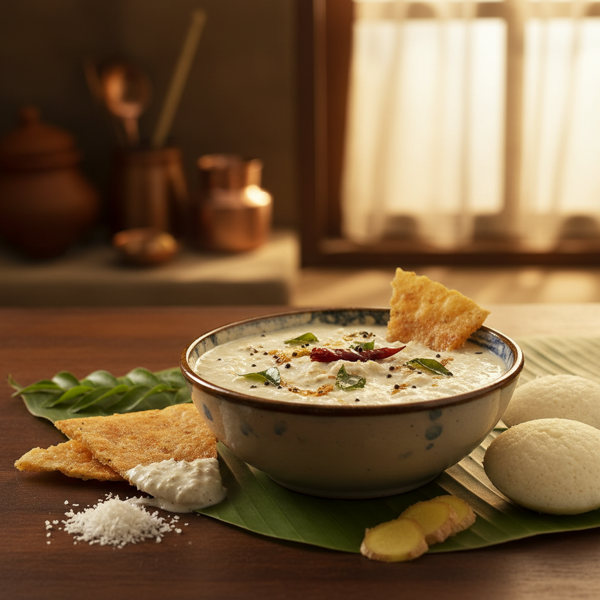
This Kerala-style Ginger Coconut Chutney is a robust and spicy accompaniment that deeply celebrates the flavors of South Indian cuisine. Known for its piquant blend of fiery chilies, tangy tamarind, and aromatic spices, this chutney is traditionally served during festive occasions and pairs seamlessly with a variety of curry dishes. The addition of coconut offers a creamy texture, perfectly balancing the chutney’s spiciness. Even if fresh coconut is unavailable, this recipe allows for easy substitution with desiccated coconut, soaking it in warm water to bring out its natural creaminess.
N/A
Servings
150
Calories
16
Ingredients
Ingredients
Coriander Seeds
1 teaspoon
Cumin Seeds
1/4 teaspoon
Ground Turmeric
1/4 teaspoon
Coconut Oil
3 teaspoons (or other vegetable oil)
Fresh Coconut
1 tablespoon (grated)
Brown Mustard Seeds
1/4 teaspoon
Fenugreek Seeds
1/4 teaspoon
Dried Hot Red Chilies
4
Curry Leaves
10-15 (Fresh, if available)
Red Onion
1 small (finely chopped)
Hot Green Chili Pepper
1-2 (finely chopped)
Fresh Ginger
2 inches (julienned)
Tamarind Paste
1/2 cup (tamarind concentrate)
Water
1/2 cup
Salt
1 teaspoon
Brown Sugar
2 teaspoons (or jaggery)
Instructions
1
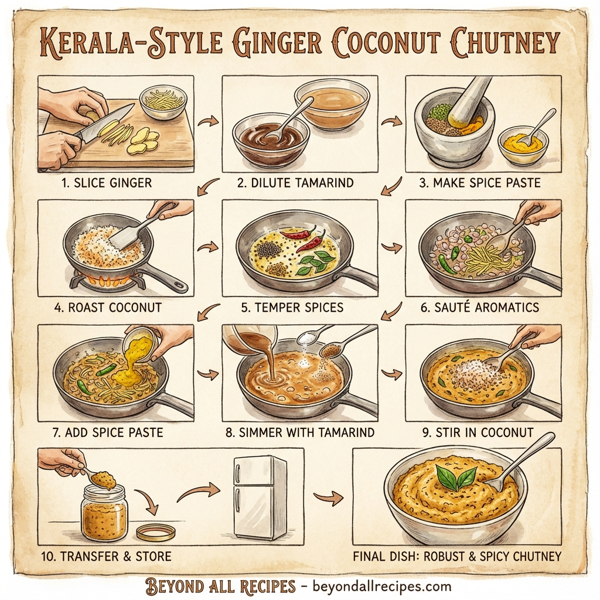
Start by slicing the peeled ginger into very fine julienne strips and set aside.
2
Prepare the tamarind base by diluting the tamarind paste/concentrate in 1/2 cup of water and set aside.
3
Grind the coriander seeds, cumin seeds, and ground turmeric to a fine powder using a coffee grinder or a mortar and pestle. Combine this spice blend with 1 tablespoon of water to form a paste and set aside.
4
Heat 1 teaspoon of coconut oil over medium-high heat in a small pan. Add the grated fresh coconut, reduce heat to low, and stir-fry for 3-4 minutes until golden brown. Be vigilant to prevent burning, then set aside.
5
In a separate heavy-bottomed, medium-sized pan, heat over medium-high heat. Add mustard seeds and wait a few seconds for them to pop and splutter. Introduce fenugreek seeds, dried red chilies, and curry leaves, stirring and frying for 1-2 minutes until the spices are fragrant.
6
Add the finely chopped red onion, chopped green chilies, and julienned ginger. Stir and cook for about 4-5 minutes until the onion turns golden brown and begins to soften.
7
Mix in the spice paste you prepared earlier, continuing to stir and fry until the mixture begins to dry.
8
Pour in the diluted tamarind mixture, adding salt and brown sugar or jaggery. Stir well and cook for 10-12 minutes until the chutney thickens. If the mixture begins to stick, you can add additional water in small increments.
9
Stir in the roasted grated coconut to integrate the flavors thoroughly.
10
Transfer the chutney into a clean, airtight container or jar. Refrigerate to allow flavors to meld; it can be stored for months.
Nutrition Information
9g
Fat
17.5g
Carbs
2.5g
Protein
4g
Fiber
Frequently Asked Questions
Frequently Asked Questions
What is Kerala-Style Ginger Coconut Chutney?
It is a robust and spicy South Indian accompaniment known for its blend of fiery chilies, tangy tamarind, and aromatic spices, traditionally served during festive occasions.
What are the primary flavors of this chutney?
The chutney features a piquant flavor profile combining the heat of ginger and chilies with the tanginess of tamarind and the creaminess of coconut.
What dishes pair well with this chutney?
It pairs seamlessly with a variety of curry dishes and other traditional South Indian meals.
What texture does coconut add to the recipe?
The coconut offers a creamy texture that helps balance the chutney's inherent spiciness.
What can I use if fresh coconut is unavailable?
You can use desiccated coconut as a substitute by soaking it in warm water to bring out its natural creaminess.
How do I prepare the ginger for this recipe?
The peeled ginger should be sliced into very fine julienne strips before being cooked with the onions and chilies.
How is the tamarind base prepared?
Dilute the tamarind paste or concentrate in 1/2 cup of water and set it aside for later use.
Which spices should be ground together?
Grind the coriander seeds, cumin seeds, and ground turmeric into a fine powder.
How is the spice paste created?
Combine the ground spice blend of coriander, cumin, and turmeric with 1 tablespoon of water to form a paste.
What type of oil is recommended for frying?
Coconut oil is recommended for its authentic flavor, though other vegetable oils can be used as a substitute.
How long should the fresh coconut be stir-fried?
Stir-fry the grated fresh coconut over low heat for 3-4 minutes until it becomes golden brown.
Why do mustard seeds need to pop in the pan?
Mustard seeds are heated until they pop and splutter to release their essential oils and flavor before other ingredients are added.
What aromatics are added with the mustard seeds?
After the mustard seeds pop, introduce fenugreek seeds, dried red chilies, and curry leaves to the pan.
How long do you cook the onion and ginger mixture?
Cook the red onion, green chilies, and julienned ginger for about 4-5 minutes until the onion softens and turns golden brown.
When do you add the diluted tamarind?
Add the diluted tamarind mixture after the spice paste has been fried and the mixture begins to dry.
How long should the chutney thicken on the stove?
The chutney should be cooked for 10-12 minutes until it reaches a thick consistency.
What should I do if the mixture sticks during cooking?
If the mixture begins to stick while thickening, you can add additional water in small increments.
When is the roasted coconut added back into the mix?
The roasted grated coconut is stirred in at the very end to integrate the flavors thoroughly after the chutney has thickened.
How should the chutney be stored?
Transfer the chutney into a clean, airtight container or jar and keep it in the refrigerator.
How long does the chutney last in the refrigerator?
When stored in an airtight container in the refrigerator, it can be kept for several months.
What is the calorie count for this chutney?
Each serving contains approximately 150 calories.
How much fat is in one serving?
There are 9 grams of fat per serving of this chutney.
What is the carbohydrate content?
One serving contains 17.5 grams of carbohydrates.
How much fiber does this recipe provide?
This chutney provides 4 grams of fiber per serving.
What can be used as a substitute for brown sugar?
Jaggery can be used as a traditional substitute for brown sugar in this recipe.
How many green chili peppers are used?
The recipe calls for 1 to 2 finely chopped hot green chili peppers.
What type of mustard seeds are required?
The recipe specifically uses 1/4 teaspoon of brown mustard seeds.
Is this recipe suitable for a vegan diet?
Yes, all ingredients listed, including coconut oil and tamarind, are plant-based, making it suitable for vegans.
How much protein is in this recipe?
This chutney contains 2.5 grams of protein per serving.
How many curry leaves are needed?
You will need 10 to 15 fresh curry leaves for this recipe.