Kashmiri Chicken Pilaf with Cardamom and Saffron Rice

Indulge in a richly flavored Kashmiri Chicken Pilaf, a beloved dish treasured for its aromatic spices and vibrant colors. The tender pieces of marinated chicken meld beautifully with fragrant basmati rice, infused with the luxurious essence of saffron and the warm notes of cardamom. Poised as a centerpiece for family gatherings or a comforting weeknight meal, this recipe encapsulates a piece of culture, crafted lovingly by an artist friend who shared her heritage with us many years ago. Enjoy it with a cooling cucumber raita, sambals, and warm naan for a complete culinary experience that evokes the essence of Indian feasts.
N/A
Servings
N/A
Calories
18
Ingredients
Ingredients
white basmati rice
1 lb (rinsed in cold water and drained)
oil
2 tablespoons (divided)
onions
2 (peeled and diced)
garlic cloves
4 (peeled and crushed)
fresh gingerroot
1 inch (peeled and finely diced)
cumin seeds
2 teaspoons
boneless chicken
1.5 lbs (cubed)
saffron strands
1 teaspoon
boiling water
1/2 pint
cardamom pods
6 (bruised)
fresh mint
4 tablespoons (chopped)
garam masala
2 teaspoons
cinnamon stick
1
skinned and chopped tomatoes
8 ounces (or tinned chopped tomatoes)
sultanas
2 ounces
salt
(to taste)
pepper
(to taste)
blanched almonds
2 ounces (toasted)
Instructions
1
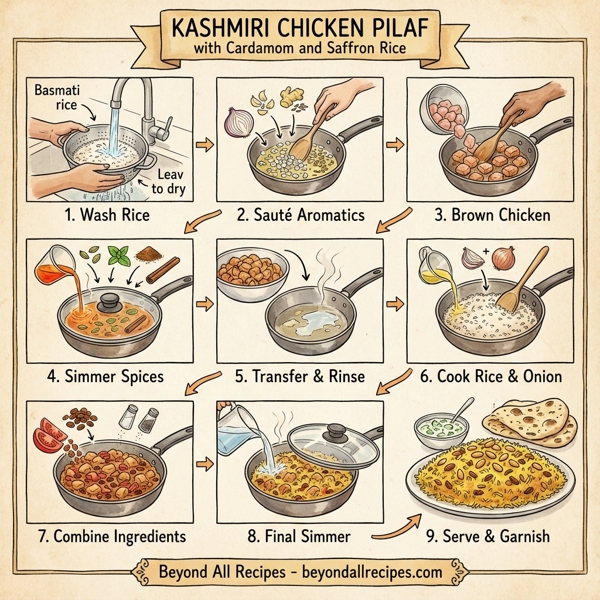
Wash the basmati rice thoroughly in cold water several times until the water runs clear. Drain and allow it to dry in a colander.
2
In a large saucepan, heat 1 tablespoon of oil over medium heat. Add one of the diced onions, crushed garlic, diced ginger, and cumin seeds. Sauté gently for about five minutes until the onions are soft and fragrant.
3
Increase the heat slightly and add the cubed chicken to the pan. Cook until the chicken is well browned on all sides, ensuring even cooking by turning it regularly.
4
Dissolve the saffron in the boiling water and pour it into the pan along with the bruised cardamom pods, chopped mint, garam masala, and cinnamon stick. Stir well to combine, bring the mixture to a boil, then cover and reduce the heat to low. Simmer for 25 to 30 minutes or until the chicken is tender.
5
Once the chicken is cooked, transfer the entire mixture to a bowl and rinse out the pan.
6
In the same pan, heat the remaining oil and add the second diced onion. Cook until the onion becomes lightly golden, then add the rinsed basmati rice. Stir the rice for 2 to 3 minutes until it appears opaque.
7
Return the chicken mixture, chopped tomatoes, and sultanas to the pan. Season generously with salt and pepper, stirring gently. Shake the pan to level the ingredients evenly.
8
Add boiling water to the pan until it rises 3/4 inch above the rice mixture. Cover with a tight lid and reduce heat to the lowest setting. Cook gently for 20 to 25 minutes until the rice is tender and all the liquid has been absorbed.
9
Remove the cinnamon stick before serving. Transfer the pilaf to a warm serving dish, sprinkle with the toasted almonds, and serve immediately with raita and naan.
Nutrition Information
Frequently Asked Questions
Frequently Asked Questions
What is Kashmiri Chicken Pilaf?
A richly flavored Indian dish featuring marinated chicken and fragrant basmati rice infused with saffron and cardamom.
What kind of rice is best for this recipe?
White basmati rice is recommended for its long grains and aromatic quality.
How do I prepare the basmati rice?
Wash the rice thoroughly in cold water several times until the water runs clear, then drain and allow it to dry in a colander.
What spices are used in this pilaf?
The recipe uses cumin seeds, saffron strands, cardamom pods, garam masala, and a cinnamon stick.
How do I prepare the chicken for the pilaf?
Use 1.5 lbs of boneless chicken, cut into cubes, and brown it well on all sides in a pan with aromatics.
What is the role of saffron in this dish?
Saffron provides a luxurious essence and a vibrant yellow color to the rice after being dissolved in boiling water.
How many cardamom pods should I use?
The recipe calls for 6 cardamom pods that should be bruised before adding to the pan.
Can I use tinned tomatoes?
Yes, you can use 8 ounces of either fresh skinned and chopped tomatoes or tinned chopped tomatoes.
What are sultanas?
Sultanas are dried white grapes that add a subtle sweetness to the savory chicken and rice.
How do I toast the almonds for the garnish?
Toast 2 ounces of blanched almonds in a dry pan until golden brown to add a crunch to the finished dish.
What should I serve with Kashmiri Chicken Pilaf?
It is traditionally served with a cooling cucumber raita, various sambals, and warm naan bread.
Is this recipe considered a one-pot meal?
Yes, it is a fragrant one-pot style meal, though the chicken mixture is briefly moved to a bowl during the process.
How much chicken is required?
You will need 1.5 lbs of boneless chicken.
Can I use bone-in chicken for this recipe?
The recipe specifies boneless chicken, but you can use bone-in pieces if you adjust the simmering time to ensure they are cooked through.
Why is it important to rinse the rice?
Rinsing removes excess surface starch, which ensures the rice grains remain separate and fluffy rather than sticky.
What is the water-to-rice ratio for the final cook?
Add boiling water until it rises approximately 3/4 inch above the rice and chicken mixture in the pan.
How long should the chicken simmer?
The chicken should be simmered for 25 to 30 minutes or until it becomes tender.
At what point do I add the garam masala?
Add the garam masala along with the saffron water, cardamom, mint, and cinnamon stick before simmering the chicken.
What does it mean to 'bruise' cardamom pods?
Bruising means to lightly crush the pods to crack the shell, allowing the aromatic seeds inside to infuse the dish.
Can I substitute fresh gingerroot?
Fresh gingerroot is preferred for its sharp flavor, but you can use ground ginger if fresh is unavailable.
How many onions are needed for this dish?
The recipe uses two onions, which are peeled, diced, and added at different stages of the cooking process.
What is the final cooking time for the rice?
Once the lid is on, cook the rice on the lowest setting for 20 to 25 minutes until all liquid is absorbed.
Should I remove any whole spices before serving?
Yes, you should remove the cinnamon stick from the pilaf before transferring it to a serving dish.
Can I add other nuts to the garnish?
While toasted almonds are traditional, you can also use cashews or pistachios for additional flavor and texture.
Is Kashmiri Chicken Pilaf a spicy dish?
It is highly aromatic and flavorful due to the cardamom and garam masala, but it is generally considered a mild to medium heat dish.
What can I use as a substitute for saffron?
While there is no perfect flavor substitute, a small pinch of turmeric can provide a similar yellow color to the rice.
How do I ensure the rice doesn't get mushy?
By rinsing the rice, drying it, and then sautéing it in oil until opaque before adding liquid, you help maintain the grain structure.
Can I make a vegetarian version of this pilaf?
Yes, you can substitute the chicken with hearty vegetables like cauliflower, potatoes, or chickpeas, or use paneer cubes.
How much fresh mint is used in the recipe?
The recipe requires 4 tablespoons of chopped fresh mint for a refreshing herbal note.
What is the history behind this specific recipe?
This recipe is a cultural piece shared by an artist friend to showcase her Kashmiri heritage through aromatic spices.