Japanese Tangzhong Fluffy Milk Bread
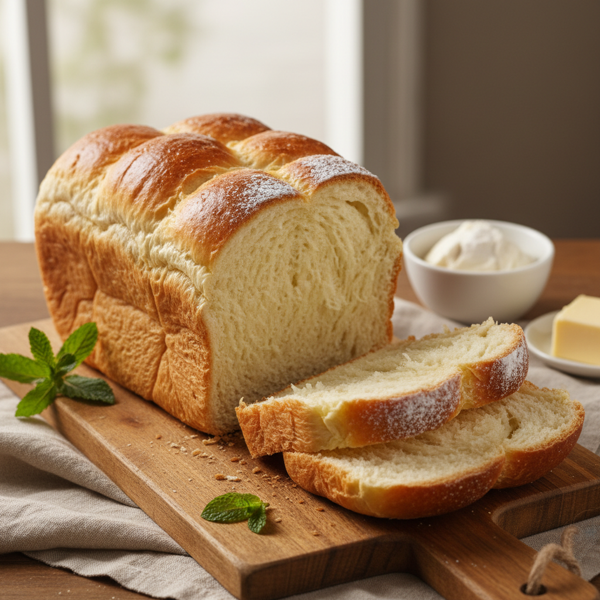
This Japanese Tangzhong Fluffy Milk Bread uses the tangzhong method to create a supremely soft and tender loaf that stays fresh for days. Inspired by Yvonne Chen's 'The 65 Degree Bread Doctor', this recipe guides you through a unique baking technique to achieve a pillow-like texture that's perfect for sandwiches or a comforting snack. Ideal for bread machines or mixers due to its soft and sticky dough.
12
Servings
N/A
Calories
10
Ingredients
Ingredients
bread flour
25g (for tangzhong)
water
125ml (for tangzhong)
bread flour
350g (for dough)
instant yeast
6g
sugar
55g
salt
5g
powdered milk
7g
egg
1 (lightly beaten)
milk
125ml
butter
30g (softened)
Instructions
1
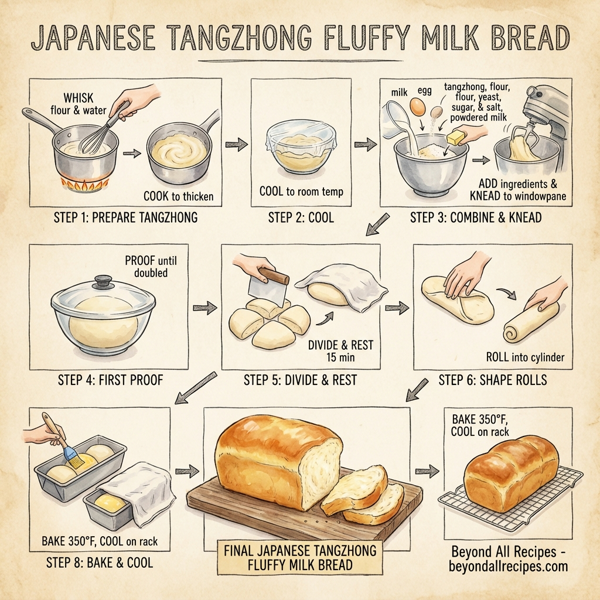
Prepare the tangzhong (water roux): In a small saucepan, whisk 25g of bread flour with 125ml of water until smooth.
2
Cook the mixture over medium-low heat, stirring constantly until it thickens, forming lines on the surface when stirred. Remove from heat promptly.
3
Transfer tangzhong to a small bowl, cover with plastic wrap to prevent drying, and let it cool to room temperature.
4
In a mixer bowl or bread machine pan, combine milk, egg, and the cooled tangzhong.
5
Add 350g of bread flour, 6g of instant yeast, 55g of sugar, 5g of salt, and 7g of powdered milk into the bowl.
6
Start the mixer on low to combine ingredients, then increase speed to knead the dough after adding 30g of softened butter.
7
Continue kneading until the dough is smooth and elastic, achieving the windowpane test.
8
Cover the dough and let it proof until it doubles in size.
9
Gently deflate the dough and divide it into four equal portions, weighing for accuracy if possible.
10
Cover the portions and let them rest for 15 minutes.
11
Roll each portion into an oval shape, fold the sides into the center, and roll again to seal.
12
Roll each oval into a tight cylinder, like a Swiss roll, starting from the short end.
13
Place the rolls seam side down in a greased 9" x 5" bread pan.
14
Cover and allow them to proof until nearly doubled in size.
15
Optionally, brush with a beaten egg for a glossy finish.
16
Preheat the oven to 350°F (175°C) and bake for 30 minutes or until the top is deep golden brown.
17
Remove the bread from the pan and cool it on a wire rack.
18
For an extra touch, brush the top with melted butter while still warm, if no egg wash was applied.
Nutrition Information
Frequently Asked Questions
Frequently Asked Questions
What is Japanese Tangzhong Fluffy Milk Bread?
It is a supremely soft and tender loaf that uses the tangzhong method to stay fresh for days, resulting in a pillow-like texture.
What is the tangzhong method?
Tangzhong is a water roux made by cooking flour and water together into a paste, which helps the bread retain moisture.
Who inspired this specific milk bread recipe?
This recipe is inspired by Yvonne Chen's book, 'The 65 Degree Bread Doctor'.
How many servings does this recipe make?
This recipe makes approximately 12 servings.
What ingredients are needed for the tangzhong?
You will need 25g of bread flour and 125ml of water to prepare the water roux.
How do you cook the tangzhong?
Whisk the flour and water until smooth, then cook over medium-low heat, stirring constantly until it thickens and forms lines.
Should the tangzhong be cooled before use?
Yes, it should be transferred to a bowl, covered with plastic wrap, and cooled to room temperature before being added to the dough.
What wet ingredients are used in the dough?
The dough uses milk, one lightly beaten egg, and the prepared tangzhong.
What dry ingredients are required for the dough?
The dough requires 350g of bread flour, 6g of instant yeast, 55g of sugar, 5g of salt, and 7g of powdered milk.
How much butter is used in this recipe?
The recipe calls for 30g of softened butter, added during the kneading process.
Is this dough suitable for a bread machine?
Yes, the soft and sticky nature of the dough makes it ideal for bread machines or stand mixers.
What is the windowpane test?
The windowpane test is a way to check if the dough is smooth and elastic enough by stretching it thin enough to see light through it without tearing.
How long should the first proofing last?
The dough should be proofed until it has doubled in size.
How should the dough be divided?
The dough should be gently deflated and divided into four equal portions, preferably using a scale for accuracy.
How long do the dough portions need to rest?
The divided portions should rest covered for 15 minutes before final shaping.
How do you shape the milk bread rolls?
Roll each portion into an oval, fold sides to the center, roll again, and then roll into a tight cylinder like a Swiss roll.
What size bread pan is used?
A greased 9 inch by 5 inch bread pan is recommended.
How do you place the rolls in the pan?
Place the rolls seam side down inside the greased pan.
What is the target for the second proof?
The shaped rolls should be covered and proofed until they have nearly doubled in size.
How can I get a glossy finish on the bread?
Brush the top of the dough with a beaten egg before putting it in the oven.
What is the baking temperature?
The oven should be preheated to 350 degrees Fahrenheit (175 degrees Celsius).
How long does the bread bake?
Bake for 30 minutes or until the top is a deep golden brown.
What should I do once the bread is done baking?
Remove the bread from the pan immediately and cool it on a wire rack.
Can I use butter instead of an egg wash?
Yes, if no egg wash was used, you can brush the top with melted butter while the loaf is still warm.
Is the dough sticky?
Yes, this specific recipe produces a soft and sticky dough which helps create the fluffy texture.
What type of yeast does this recipe use?
The recipe specifies 6g of instant yeast.
Why is powdered milk added to the recipe?
Powdered milk enhances the flavor and contributes to the soft, tender crumb characteristic of milk bread.
What is the total amount of bread flour used?
The total is 375g (25g for the tangzhong and 350g for the main dough).
Can I use this bread for sandwiches?
Yes, the pillow-like texture makes it perfect for sandwiches or as a comforting snack.
What are the primary tags for this recipe?
Key tags include Japanese bread, milk bread, tangzhong, fluffy bread, and soft bread.