Japanese Sweet Rolled Omelette
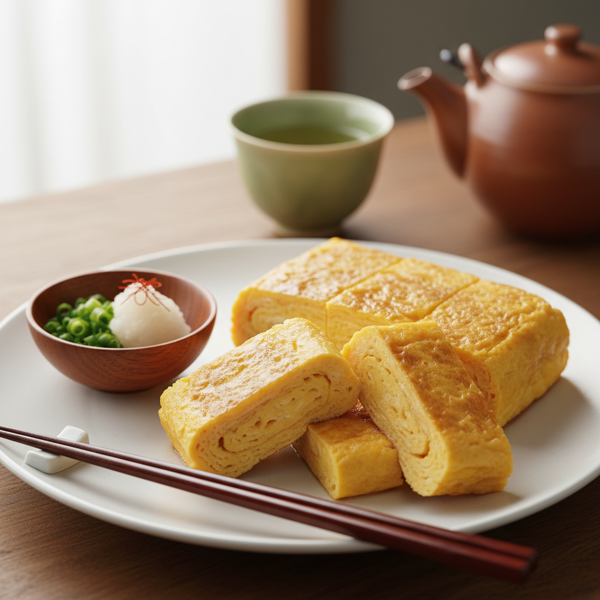
Japanese Sweet Rolled Omelette, or Tamago Yaki, is a delightful and traditional dish that highlights the versatility of eggs in Japanese cuisine. This slightly sweet and fluffy omelette features a delicate balance of flavors, creating a light yet satisfying addition to any meal. Often served as part of sushi, Tamago Yaki can be savored on its own or paired with sushi rice to create a delicious nigiri. While it may appear intricate, with a little practice, you'll find that mastering this technique is both enjoyable and rewarding. A must-try for any sushi lover or breakfast enthusiast!
N/A
Servings
N/A
Calories
6
Ingredients
Ingredients
Large Eggs
4 (Crack and beat well)
Dashi Stock
4 tablespoons (Measure and combine with eggs)
Sugar
1 tablespoon (Measure and combine with eggs)
Mirin
1 teaspoon (Measure and combine with eggs)
Soy Sauce
1/2 teaspoon (Measure and combine with eggs)
Salt
to taste (Add to egg mixture)
Instructions
1
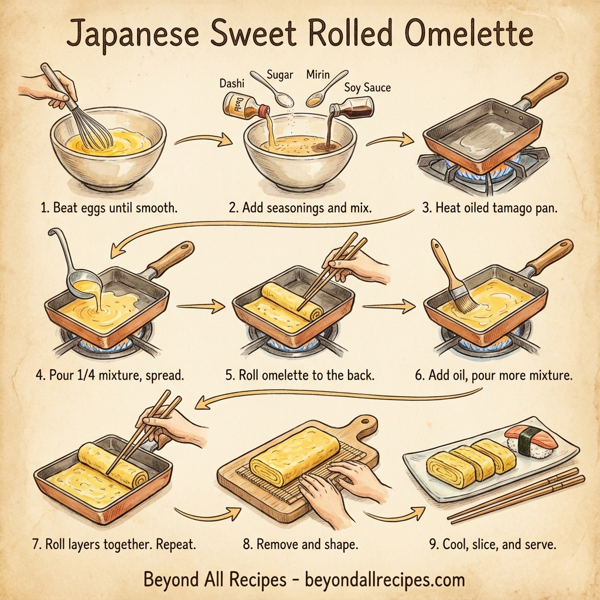
In a large bowl, crack the eggs and beat them vigorously until the mixture is smooth and well-combined, with a light froth.
2
Add the dashi stock, sugar, mirin, soy sauce, and a pinch of salt to the egg mixture. Mix until everything is fully incorporated.
3
Heat your well-oiled tamago pan over low to medium heat until hot.
4
Pour approximately 1/4 of the egg mixture into the pan, tilting it to spread the mixture evenly into a thin layer, resembling a crepe.
5
As the edges begin to set and small bubbles form in the center, gently roll the omelette towards the back of the pan using a spatula or chopsticks.
6
Add a little more oil to the pan, and pour another 1/4 of the egg mixture into the pan. Slide the rolled omelette to the back to allow the new mixture to flow underneath.
7
Once the new layer starts to set, gently roll the existing roll back to the front, combining the layers together. Repeat the process until all the mixture is used up.
8
Carefully remove the rolled omelette from the pan, shaping it gently into either a round or rectangular form.
9
Allow the rolled omelette to cool slightly, then slice into bite-sized pieces. Serve as-is or atop sushi rice wrapped in a thin nori sheet for nigiri.
Nutrition Information
Frequently Asked Questions
Frequently Asked Questions
What is Tamago Yaki?
Tamago Yaki is a traditional Japanese sweet rolled omelette made by layering thin sheets of seasoned egg.
What are the primary ingredients for this omelette?
The primary ingredients include four large eggs, dashi stock, sugar, mirin, soy sauce, and a pinch of salt.
Why is dashi stock used in the recipe?
Dashi stock provides an umami depth and helps the omelette achieve a light, moist, and fluffy texture.
How many eggs are required for this dish?
This specific recipe requires 4 large eggs.
Do I need a special pan to make Tamago Yaki?
While a rectangular tamago pan is traditional for shaping, you can use a well-oiled round frying pan if necessary.
What is the purpose of mirin in the egg mixture?
Mirin adds a subtle sweetness and helps create a glossy finish on the surface of the omelette.
Is Japanese Sweet Rolled Omelette savory or sweet?
It features a delicate balance of both, with sweetness from sugar and mirin paired with savory dashi and soy sauce.
How do I prepare the egg mixture?
Beat the eggs vigorously until smooth and frothy, then mix in the dashi, sugar, mirin, soy sauce, and salt.
What heat setting should I use for cooking?
It is recommended to use low to medium heat to prevent the eggs from browning too quickly or becoming tough.
When should I start rolling the first layer of egg?
Start rolling once the edges of the egg layer begin to set and small bubbles appear in the center.
How many layers should the omelette have?
The mixture is typically poured in four parts, creating four layers that are rolled together.
What if the egg layer tears while I am rolling it?
If a layer tears, simply continue rolling; the subsequent layers will wrap around it and hide any imperfections.
Can I make this recipe without dashi?
You can substitute dashi with a small amount of water or broth, though the flavor will be less traditional.
How is Tamago Yaki typically served with sushi?
It is often sliced and placed on top of sushi rice, sometimes secured with a thin strip of nori seaweed.
Why is soy sauce included in the recipe?
A small amount of soy sauce enhances the savory profile and adds a hint of color to the omelette.
Is this recipe suitable for vegetarians?
It is vegetarian-friendly if you use a vegetarian dashi, such as one made from kombu (kelp).
How do I prevent the egg from sticking to the pan?
Ensure the pan is well-oiled before the first layer and add a little more oil between subsequent layers.
Should the eggs be cold or room temperature?
While not specified, room temperature eggs often incorporate more easily with the other seasonings.
Can children eat this dish?
Yes, its soft texture and slightly sweet flavor make it a favorite among children in Japan.
How do I shape the finished omelette?
After removing it from the pan, you can gently press it into a round or rectangular shape while it is still warm.
How should I slice the finished roll?
Allow it to cool slightly so the layers set, then slice it into bite-sized pieces with a sharp knife.
Can Tamago Yaki be stored for later?
Yes, it can be refrigerated and served cold, which is common in bento boxes.
Is sugar an essential ingredient?
Sugar is key to the traditional sweet-savory profile, but you can adjust the amount to your personal taste.
Can I add other seasonings to the eggs?
Yes, some variations include a pinch of white pepper or a drop of sesame oil for different flavors.
What should the final texture be like?
The final product should be soft, layered, and slightly spongy rather than dry or rubbery.
How do I get rid of bubbles while cooking?
You can pop any large bubbles with a chopstick or spatula to ensure the layers remain flat and even.
Can I add fillings like nori or vegetables?
Yes, you can place a piece of nori or finely chopped herbs on a layer before rolling for extra flavor.
Is the rolling technique hard to master?
It takes some practice to get the timing right, but it becomes much easier after a few attempts.
Is this recipe dairy-free?
Yes, this traditional Japanese recipe does not contain any milk or butter.
What tools are best for rolling the egg?
A wide spatula or a pair of long cooking chopsticks are the most effective tools for rolling the thin egg layers.