Japanese-Style Steamed Snapper with Burdock (Tai Nitsuke)
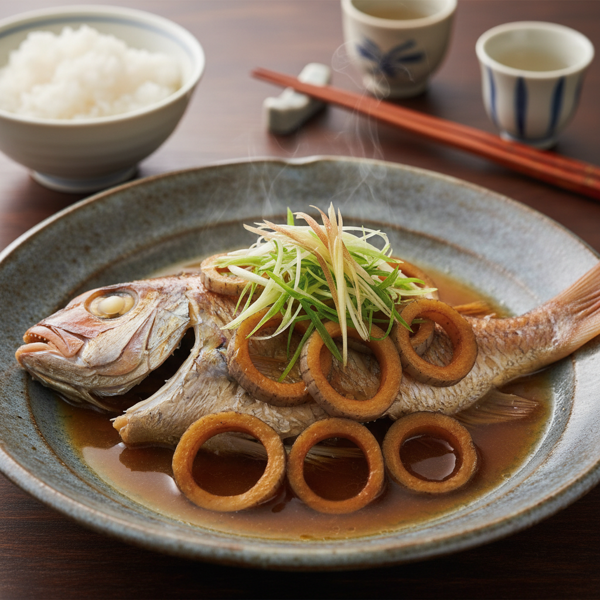
Indulge in this delightfully fragrant and healthy Japanese steamed fish dish. This recipe captures the essence of traditional Japanese cooking with a blend of savory and slightly sweet flavors, enhanced by aromatic ginger and earthy burdock root. With its exquisite taste and presentation, this dish is ideal for a light lunch or a sophisticated snack.
2
Servings
N/A
Calories
7
Ingredients
Ingredients
red snapper
2 (small, cleaned, and dried)
ginger
1 teaspoon (thinly sliced)
burdock root (gobo)
50 grams (shaved into thin slices)
soy sauce
1 tablespoon (none)
sake
1 tablespoon (none)
mirin
1/2 tablespoon (none)
sugar
1 teaspoon (none)
Instructions
1
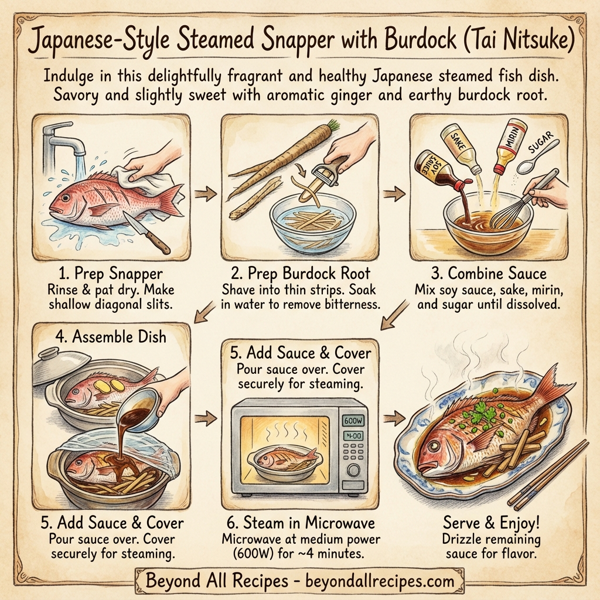
Rinse the red snapper under cold water and pat dry with paper towels. Using a sharp knife, make shallow diagonal slits on each side of the fish to help absorb flavors while cooking.
2
Cut the burdock root vertically into thin strips using a sharp knife, or shave it using a peeler, rotating the root for even slices. Soak the shavings in water to remove excess bitterness, then drain just before using.
3
In a mixing bowl, combine the soy sauce, sake, mirin, and sugar. Stir the mixture until the sugar is fully dissolved and set aside.
4
Arrange the snapper on a microwave-safe dish. Distribute the slices of ginger evenly over the top of each fish. Place the shaved burdock root alongside the fish.
5
Pour the prepared sauce mixture over the fish and burdock root. Cover the dish with a microwave-safe lid or wrap it securely with cling wrap, ensuring there is enough space for steam to circulate.
6
Microwave the dish on medium power (600W) for approximately 4 minutes, or until the fish is cooked through and the burdock is tender.
7
Carefully remove the lid or cling wrap to release the steam. Transfer the fish and burdock to serving plates, drizzling the remaining sauce from the dish over the top for an extra burst of flavor.
Nutrition Information
Frequently Asked Questions
Frequently Asked Questions
What is Japanese-Style Steamed Snapper with Burdock?
It is a fragrant and healthy Japanese seafood dish, known as Tai Nitsuke, featuring red snapper steamed with earthy burdock root and ginger.
What are the primary ingredients for Tai Nitsuke?
The main ingredients include red snapper, ginger, burdock root, soy sauce, sake, mirin, and sugar.
How many servings does this recipe provide?
This recipe is designed to serve 2 people.
How should the red snapper be prepared?
The fish should be cleaned, dried, and have shallow diagonal slits cut into each side to help it absorb flavors.
What is burdock root?
Burdock root, or gobo, is an earthy root vegetable commonly used in Japanese cooking for its unique flavor and texture.
How do I prepare the burdock root for steaming?
Cut it vertically into thin strips or shave it with a peeler, then soak the shavings in water to remove bitterness.
Why do you soak burdock root in water?
Soaking the burdock shavings helps remove excess bitterness before cooking.
What is in the Tai Nitsuke sauce?
The sauce consists of soy sauce, sake, mirin, and sugar stirred together until dissolved.
How is the ginger used in this recipe?
Thinly sliced ginger is distributed evenly over the top of each fish to provide an aromatic flavor.
What is the cooking method for this version of the recipe?
This recipe utilizes microwave steaming for a quick and easy preparation.
What microwave power setting should I use?
The dish should be cooked on medium power, approximately 600W.
How long does the fish need to microwave?
It takes approximately 4 minutes for the fish to cook through and the burdock to become tender.
Do I need to cover the dish while microwaving?
Yes, cover the dish with a microwave-safe lid or cling wrap, leaving space for steam to circulate.
How do I know when the fish is done?
The fish is done when it is cooked through and the burdock root is tender.
Is this recipe considered healthy?
Yes, it is a healthy dish that focuses on steaming rather than frying, using fresh fish and vegetables.
What is the flavor profile of Tai Nitsuke?
It has a savory and slightly sweet flavor profile enhanced by aromatic ginger and earthy burdock.
Can I serve this as a snack?
Yes, its light nature makes it suitable for a sophisticated snack or a light lunch.
What should I do with the remaining sauce in the dish?
The remaining sauce should be drizzled over the fish and burdock before serving for extra flavor.
What are the tags associated with this recipe?
Tags include Japanese cuisine, healthy, steamed fish, Tai Nitsuke, seafood, and microwave cooking.
Is this an easy recipe to follow?
Yes, it is categorized as an easy recipe with only 7 ingredients and straightforward microwave steps.
What size snapper is best for this recipe?
The recipe calls for two small red snappers.
Can I substitute the red snapper?
While snapper is traditional, other firm white fish can be used as a substitute.
What does mirin add to the dish?
Mirin adds a subtle sweetness and a glossy finish to the steamed fish.
Why is sake used in the sauce?
Sake helps tenderize the fish and removes any strong 'fishy' odors while adding depth to the sauce.
Should I peel the ginger?
The recipe specifies thinly slicing the ginger; peeling is generally recommended for the best texture.
Can I add other vegetables?
While not in the original recipe, you could add small amounts of mushrooms or greens if they fit the microwave timing.
How do I prevent the cling wrap from touching the fish?
Ensure the dish is deep enough so that the wrap covers the top without resting directly on the fish.
What is the purpose of the sugar in the recipe?
Sugar balances the saltiness of the soy sauce and enhances the natural sweetness of the snapper.
Is this dish traditionally steamed?
Yes, though 'nitsuke' often refers to simmering, steaming is a popular healthy variation.
What is the texture of the finished burdock?
The finished burdock should be tender with a slight pleasant chewiness.