Japanese-Style Squid and Octopus Salad
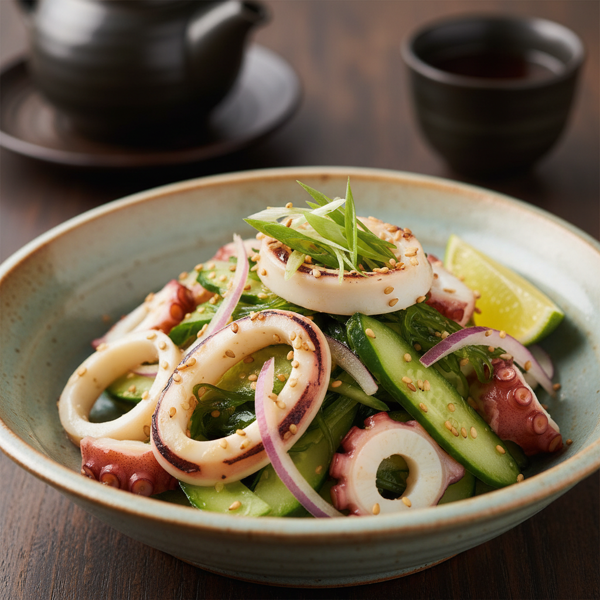
This vibrant Japanese-style salad is a delightful combination of tender squid and baby octopus, served atop a bed of fresh mixed greens. With the savory taste of the ocean, complemented by a zesty garlic-soy dressing, this dish offers a taste of Japan's coastal cuisine in every bite. Perfect for warm weather dining, this salad is as visually appealing as it is delicious. Whether you use squid or baby octopus, this recipe guarantees an impressive and nutritious dish that’s sure to impress your family and guests. A personal touch based on Harumi Kurihara's traditional recipe, this version has been adapted for even greater flavor and ease of preparation.
N/A
Servings
N/A
Calories
10
Ingredients
Ingredients
Mixed salad greens
to taste (washed and cut into bite-size pieces)
Squid or baby octopus
700 g (cleaned and cut into 1.5 cm thick pieces)
Salt
to taste (for seasoning)
Pepper
to taste (for seasoning)
Olive oil
2 tablespoons (for cooking)
Garlic clove
1 (crushed)
Chili powder (shichimi togarashi)
1 pinch (to taste)
Low sodium soy sauce
3 tablespoons (for the dressing)
Freshly grated gingerroot
1 tablespoon (for the dressing)
Caster sugar
1/2 teaspoon (adjust to taste)
Instructions
1
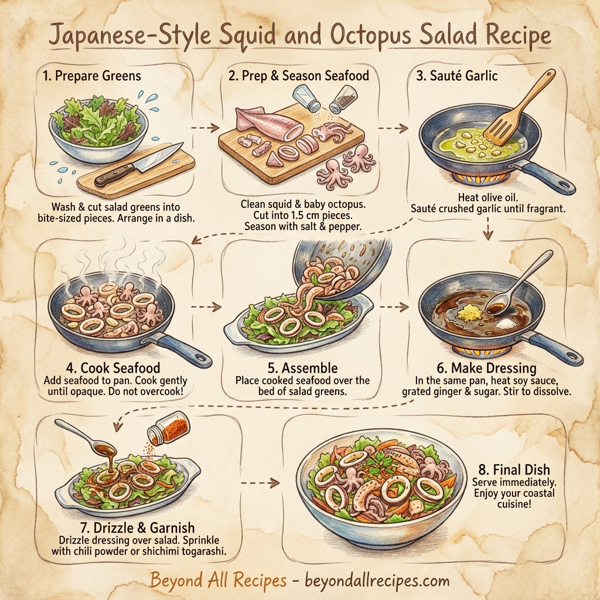
Begin by washing and patting dry the mixed salad greens. Cut the leaves into bite-sized pieces and arrange them attractively in a serving dish. Set aside.
2
If using whole squid or octopus, clean them as appropriate. Cut the squid body and legs into 1.5 cm thick pieces. Season the seafood with salt and pepper to taste.
3
In a frying pan, heat the olive oil over medium heat. Add the crushed garlic and sauté until fragrant, being careful not to burn it.
4
Add the seasoned squid or octopus to the pan with the sautéed garlic. Cook, stirring gently, until the seafood is cooked through and the color changes from transparent to opaque. Be mindful not to overcook, as this will result in a tough texture.
5
Once cooked, remove the seafood from heat and place it on top of the prepared salad greens in the serving dish.
6
Return the frying pan to the heat. Add the low-sodium soy sauce, freshly grated gingerroot, and caster sugar. Stir well, ensuring all the sugar dissolves in the remaining cooking juices from the squid or octopus.
7
Drizzle the soy-ginger dressing over the seafood and salad. Finish with a light sprinkle of chili powder or shichimi togarashi for an extra kick.
8
If there’s a significant amount of dressing, consider serving it on the side for guests to add more as they prefer.
9
Serve immediately and enjoy the delicious flavors of your Japanese-Style Squid and Octopus Salad.
Nutrition Information
Frequently Asked Questions
Frequently Asked Questions
What is Japanese-Style Squid and Octopus Salad?
It is a vibrant salad featuring tender squid and baby octopus served over mixed greens with a zesty garlic-soy and ginger dressing.
What seafood is used in this recipe?
The recipe calls for 700 grams of either squid or baby octopus, or a combination of both.
How should the squid or octopus be prepared?
The seafood should be cleaned and cut into pieces approximately 1.5 cm thick before cooking.
What type of greens are used as a base?
Mixed salad greens, washed and cut into bite-sized pieces, are used as the base for the seafood.
How do I season the seafood?
The squid or octopus should be seasoned with salt and pepper to taste before it is added to the frying pan.
What oil is best for sautéing the seafood?
Two tablespoons of olive oil are recommended for sautéing the garlic and seafood.
How do I prepare the garlic for this dish?
Use one garlic clove that has been crushed and sauté it in olive oil until it becomes fragrant.
How can I tell when the squid or octopus is cooked?
The seafood is done when its color changes from transparent to opaque; avoid overcooking to prevent a tough texture.
What ingredients are in the salad dressing?
The dressing consists of the pan juices, low-sodium soy sauce, freshly grated gingerroot, and caster sugar.
How much soy sauce is required for the dressing?
The recipe requires 3 tablespoons of low-sodium soy sauce.
How much ginger should be added to the dressing?
One tablespoon of freshly grated gingerroot is used to give the dressing its zesty flavor.
Is there sugar in the dressing?
Yes, 1/2 teaspoon of caster sugar is used, which can be adjusted according to your taste preferences.
What is Shichimi Togarashi?
Shichimi Togarashi is a Japanese chili powder blend used as a finishing touch to add an extra kick to the salad.
When should the dressing be added?
Drizzle the soy-ginger dressing over the seafood and greens once the seafood has been cooked and placed on the salad.
Can I serve the dressing on the side?
Yes, if there is a lot of dressing, it is a good idea to serve it on the side so guests can add it as they prefer.
Who is the inspiration behind this recipe?
This version is a personal touch based on a traditional recipe by the famous Japanese cook Harumi Kurihara.
Is this recipe suitable for hot weather?
Yes, it is described as a perfect dish for warm weather dining due to its fresh and vibrant qualities.
What is the first step in making this salad?
The first step is washing and drying the mixed salad greens and arranging them in a serving dish.
What heat should I use for sautéing?
The olive oil and garlic should be heated over medium heat to avoid burning the garlic.
How many ingredients are in the recipe?
There are 10 ingredients in total, including seasonings and the dressing components.
Should the salad be served cold or immediately?
The recipe recommends serving the salad immediately after assembly to enjoy the fresh flavors.
Can I use regular soy sauce instead of low-sodium?
While the recipe specifies low-sodium soy sauce, you can use regular soy sauce but may want to adjust the salt levels.
Is this a healthy recipe choice?
Yes, it is tagged as a healthy recipe as it features fresh greens and lean seafood.
How thick should the seafood slices be?
Both the squid body and legs should be cut into 1.5 cm thick pieces.
Does the garlic need to be chopped?
The recipe suggests using one crushed garlic clove rather than finely chopping it.
What makes the dressing savory?
The combination of the natural juices from the cooked seafood mixed with soy sauce and garlic creates a savory base.
Is this dish easy to prepare?
Yes, the recipe has been adapted for ease of preparation while maintaining impressive flavors.
Can I use only baby octopus?
Yes, the recipe allows for the use of either squid, baby octopus, or a mixture of both.
What adds the 'kick' to the recipe?
A light sprinkle of chili powder or shichimi togarashi provides the spicy kick at the end.
Why is the gingerroot grated?
Grating the gingerroot allows its juices and fine texture to incorporate better into the liquid dressing.