Japanese Style Cucumber & Bean Sprout Salad with Sesame Dressing
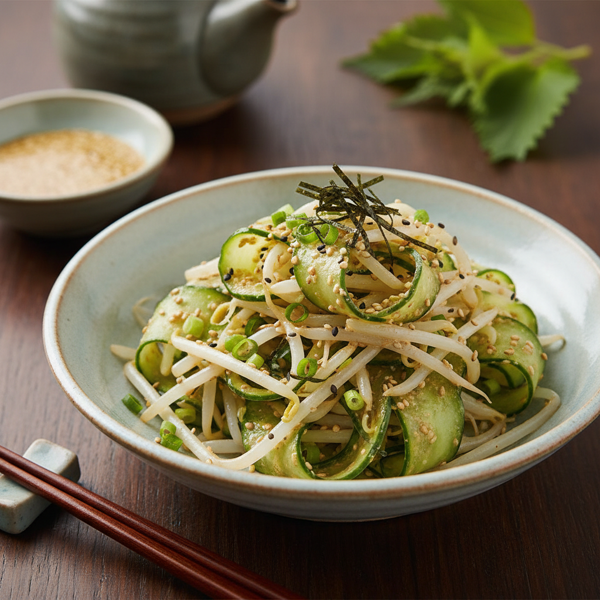
This refreshing Japanese-style salad perfectly blends the crispness of fresh cucumbers with the crunch of bean sprouts, drizzled in a savory sesame dressing. Inspired by the delightful pickled side dishes served in Japanese restaurants, this dish combines the tanginess of rice vinegar with the rich nuttiness of toasted sesame oil. It's not only easy to make but also packed with vibrant flavors that come together beautifully. Perfect as a side dish or a light meal, this salad can be prepared ahead of time, allowing the flavors to mingle and intensify. Enjoy it chilled for a refreshing treat on warm days!
4
Servings
50
Calories
11
Ingredients

Ingredients
Cucumber
1-2 (peeled, thinly sliced)
Bean Sprouts
2 cups (fresh, rinsed)
Salt
1 teaspoon (for seasoning)
Rice Vinegar
2 tablespoons (for dressing)
Toasted Sesame Oil
2 tablespoons (for dressing)
Soy Sauce
1/4 cup (may use lite for less sodium)
Hot Sauce
1/4 teaspoon (adjust to taste (Sriracha recommended))
Dry Mustard
1/8 teaspoon (for dressing)
Fresh Gingerroot
1 teaspoon (grated)
Honey
2 teaspoons (for dressing)
Toasted Sesame Seeds
2 tablespoons (for garnish)
Instructions
1
In a medium glass bowl, combine the sliced cucumber and fresh bean sprouts. Sprinkle with salt and toss gently to coat.
2
Cover and refrigerate for 1 hour to allow the cucumbers to release some moisture.
3
After chilling, rinse the vegetables under cold water and drain thoroughly to remove excess salt.
4
In a separate jar or bowl, whisk together the rice vinegar, toasted sesame oil, soy sauce, hot sauce, dry mustard, grated gingerroot, and honey until well combined.
5
Pour the dressing over the chilled cucumber and bean sprouts, tossing to ensure all the ingredients are well coated.
6
Transfer the salad to a serving bowl and sprinkle with toasted sesame seeds for garnish.
7
For best results, let the salad sit in the refrigerator for a few hours or overnight, allowing the flavors to meld beautifully before serving.
Nutrition Information
3.5g
Fat
4.5g
Carbs
1.5g
Protein
Frequently Asked Questions
Frequently Asked Questions
What is Japanese Style Cucumber & Bean Sprout Salad?
It is a refreshing side dish featuring crisp cucumbers and bean sprouts tossed in a savory sesame and rice vinegar dressing.
What are the main ingredients for this salad?
The primary ingredients are cucumber, bean sprouts, rice vinegar, toasted sesame oil, soy sauce, ginger, and honey.
Can I use English cucumbers for this recipe?
Yes, English cucumbers are a great choice because they have thinner skin and fewer seeds.
Do I need to peel the cucumbers?
The recipe suggests peeling the cucumbers, but you can leave strips of skin for added color and texture.
How many calories are in one serving?
Each serving contains approximately 50 calories.
Why do I need to salt the cucumbers and sprouts?
Salting helps draw out excess moisture, ensuring the salad stays crisp and the dressing doesn't get watered down.
How long should the vegetables sit with salt?
They should be refrigerated for at least one hour to allow the moisture to release.
Is it necessary to rinse the vegetables after salting?
Yes, rinsing under cold water removes the excess salt before you add the dressing.
What can I use instead of rice vinegar?
Apple cider vinegar or white wine vinegar can be used as a substitute, though rice vinegar is most authentic.
Is toasted sesame oil necessary?
Toasted sesame oil is recommended for its deep, nutty flavor which is central to the dressing.
Can I make this salad gluten-free?
Yes, simply substitute the soy sauce with tamari or a gluten-free liquid aminos.
Is this salad vegan?
It is vegetarian as written. To make it vegan, substitute the honey with agave nectar or maple syrup.
What kind of hot sauce works best?
Sriracha is highly recommended for this Japanese-style dressing.
How do I prepare the fresh ginger?
The gingerroot should be peeled and finely grated to blend smoothly into the dressing.
Can I substitute dry mustard?
If you don't have dry mustard, you can use a small amount of prepared Dijon mustard instead.
How should I toast the sesame seeds?
You can toast them in a dry pan over medium heat for 1-2 minutes until they become fragrant and golden.
Can I make this salad in advance?
Yes, letting it sit in the refrigerator for a few hours or overnight allows the flavors to meld beautifully.
How long does this salad keep in the fridge?
It is best enjoyed within 2 to 3 days, as the vegetables will eventually lose their crunch.
Can I freeze Japanese Cucumber Salad?
No, freezing is not recommended as it will ruin the texture of the fresh vegetables.
What dishes pair well with this salad?
It pairs perfectly with grilled fish, teriyaki chicken, sushi, or steamed rice.
Is this salad low in fat?
Yes, it contains only 3.5g of fat per serving, mostly from healthy sesame oil.
Can I add other vegetables to this salad?
Certainly! Shredded carrots, sliced radishes, or bell peppers would make excellent additions.
How many servings does this recipe make?
This recipe is designed to yield 4 servings.
Is this salad spicy?
It has a very mild kick from the hot sauce and ginger, which you can adjust to your preference.
What is the texture of the salad?
The salad is very crisp and crunchy due to the fresh bean sprouts and salted cucumbers.
Can I add protein to make it a full meal?
Yes, adding edamame, tofu, or chilled shredded chicken turns this into a light and healthy meal.
Does this salad contain a lot of sugar?
No, it only uses a small amount of honey (2 teaspoons) to balance the acidity of the vinegar.
Is it better served cold or at room temperature?
It is definitely best served chilled for maximum refreshment.
Can I use canned bean sprouts?
Fresh bean sprouts are strongly recommended for the necessary crunch; canned sprouts are often too soft.
What type of soy sauce should I use?
You can use regular soy sauce or a low-sodium (lite) version to reduce the salt content.