Irresistible No-Knead Refrigerator Rolls
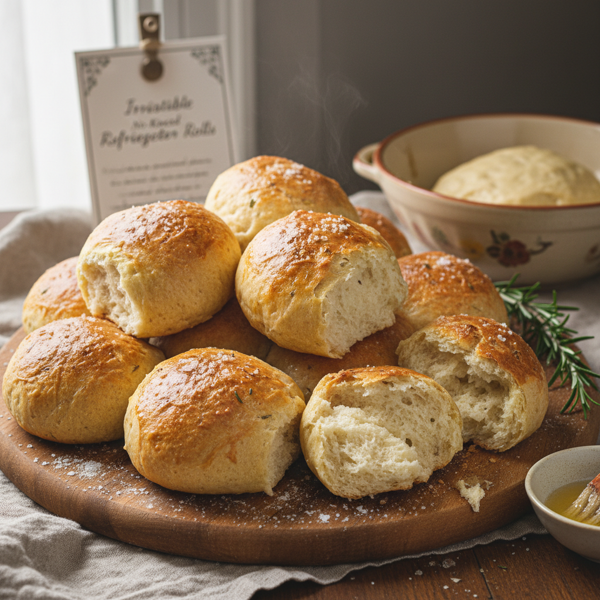
These Irresistible No-Knead Refrigerator Rolls are a true culinary delight that will impress both your family and guests. Originally made by my aunt for a post-New Year's Eve gathering, they were an instant hit and I knew I had to recreate them myself. Not only are they incredibly easy to make, but the flavor and texture are simply out of this world. The dough can be prepared in advance and stored in the refrigerator, making it a perfect choice for busy chefs or first-time bread bakers. Whether served warm with butter or as a side to your favorite dish, you'll find these rolls are light, fluffy, and utterly addictive. Feel free to experiment with different flavors by adding herbs or cheeses to the dough! Enjoy this straightforward recipe that guarantees mouth-watering rolls!
N/A
Servings
N/A
Calories
7
Ingredients
Ingredients
active dry yeast
4 1/2 teaspoons (dissolved in warm water)
warm water
2 cups (used for dissolving yeast)
white sugar
1/2 cup (mixed with other ingredients)
salt
2 teaspoons (mixed with other ingredients)
shortening
1/4 cup (mixed with other ingredients)
all-purpose flour
6 1/2 cups (added gradually to the mix)
egg
1 (mixed with other ingredients)
Instructions
1
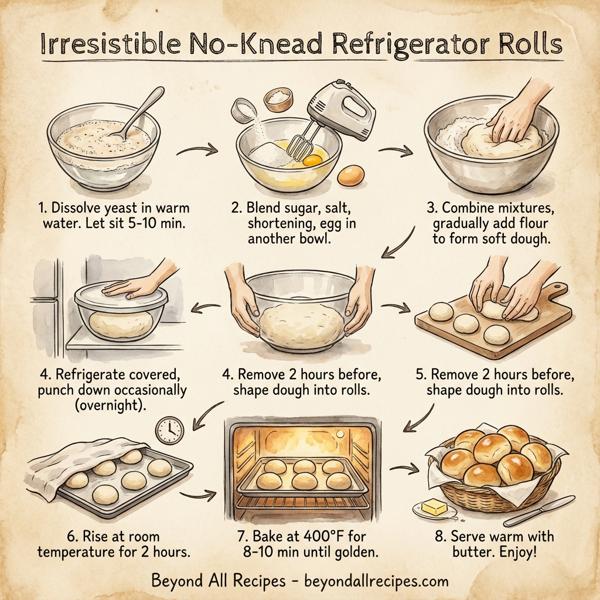
In a large mixing bowl, dissolve 4 1/2 teaspoons of active dry yeast in 2 cups of warm water. Allow it to sit for about 5 to 10 minutes until bubbly and frothy, showing that the yeast is activated.
2
In another bowl, combine 1/2 cup of white sugar, 2 teaspoons of salt, 1/4 cup of shortening, and 1 egg. Use an electric mixer on low speed to blend the ingredients until well mixed and smooth.
3
Carefully add the sugar mixture to the proofed yeast, stirring gently to combine. Gradually add 6 1/2 cups of all-purpose flour to the mixture, mixing until fully incorporated. Use your hands to mix in the last 3 cups of flour until a soft dough forms.
4
Cover the bowl with a damp cloth and place it in the refrigerator. The dough can rise slowly in the refrigerator; punch it down occasionally to help develop flavor. You can let it sit overnight for maximum flavor.
5
Two hours before you plan to bake, remove the dough from the refrigerator. Shape the chilled dough into rolls according to your desired size.
6
Arrange the shaped rolls on greased baking trays or muffin pans, leaving enough space between them for expansion. Cover lightly with a cloth and allow them to rise at room temperature for 2 hours.
7
Preheat your oven to 400 degrees F (200 degrees C). Once the rolls have risen, bake them for 8 to 10 minutes or until they are golden brown on top and sound hollow when tapped on the bottom.
8
Remove from the oven and let the rolls cool slightly before serving warm with butter or your favorite spread.
Nutrition Information
Frequently Asked Questions
Frequently Asked Questions
What makes Irresistible No-Knead Refrigerator Rolls unique?
These rolls are unique because the dough requires no kneading and can be stored in the refrigerator for convenience and flavor development.
How much active dry yeast is required for this recipe?
The recipe calls for 4 1/2 teaspoons of active dry yeast.
How should the yeast be prepared?
The yeast should be dissolved in 2 cups of warm water and allowed to sit for 5 to 10 minutes until it becomes bubbly and frothy.
What ingredients are combined in the second bowl?
In the second bowl, you combine 1/2 cup of white sugar, 2 teaspoons of salt, 1/4 cup of shortening, and 1 egg.
Do I need an electric mixer for this recipe?
An electric mixer is recommended on low speed to blend the sugar, salt, shortening, and egg until smooth.
How much all-purpose flour is needed in total?
A total of 6 1/2 cups of all-purpose flour is required for the dough.
How should the flour be added to the mixture?
The flour should be added gradually, mixing until fully incorporated, using your hands to mix in the final 3 cups.
How should the dough be stored in the refrigerator?
The dough should be placed in a large mixing bowl and covered with a damp cloth before being refrigerated.
Why should the dough be punched down while in the refrigerator?
Punching down the dough occasionally helps it rise slowly and develop a better flavor profile.
Can the dough be left in the refrigerator overnight?
Yes, letting the dough sit overnight in the refrigerator is recommended for maximum flavor.
How long before baking should the dough be removed from the fridge?
Remove the chilled dough from the refrigerator two hours before you plan to bake it.
What is the first step after taking the dough out of the refrigerator?
The first step is to shape the chilled dough into rolls according to your desired size.
What kind of baking containers can be used?
You can use greased baking trays or muffin pans to arrange the shaped rolls.
How long do the shaped rolls need to rise at room temperature?
The shaped rolls should be covered lightly and allowed to rise at room temperature for 2 hours.
What is the correct oven temperature for baking these rolls?
The oven should be preheated to 400 degrees F (200 degrees C).
How long should the rolls bake?
The rolls should be baked for 8 to 10 minutes.
How do I know when the rolls are done baking?
The rolls are done when they are golden brown on top and sound hollow when tapped on the bottom.
Can I add other flavors to the dough?
Yes, you can experiment by adding various herbs or cheeses to the dough for different flavor profiles.
Is this recipe suitable for beginner bakers?
Yes, the straightforward instructions and no-knead method make it a perfect choice for first-time bread bakers.
What type of shortening is used?
The recipe specifies 1/4 cup of shortening, which is mixed with sugar, salt, and egg.
How much warm water is used to dissolve the yeast?
You should use 2 cups of warm water to dissolve the yeast.
What should the texture of the dough be after adding the flour?
After adding all the flour, a soft dough should form.
Should the rolls be served warm?
Yes, for the best experience, they should be served warm with butter or your favorite spread.
What happens if I don't see bubbles in the yeast mixture?
If the yeast mixture does not become bubbly and frothy, the yeast may not be activated and you should start over with fresh yeast.
How much sugar is in the recipe?
The recipe calls for 1/2 cup of white sugar.
How much salt is included in the dough?
The dough includes 2 teaspoons of salt.
Does the recipe require many ingredients?
No, the recipe is simple and contains only 7 main ingredients.
What is the recommended serving size?
While specific serving sizes aren't listed, the recipe yields enough dough to shape into many rolls of your desired size.
Can the rolls be frozen?
While the recipe focuses on refrigeration, baked rolls can generally be frozen, though fresh or refrigerated dough provides the best results.
Why is a damp cloth used to cover the dough?
A damp cloth helps prevent the surface of the dough from drying out while it rises in the refrigerator.