Irish Guinness-Glazed Pork Loin
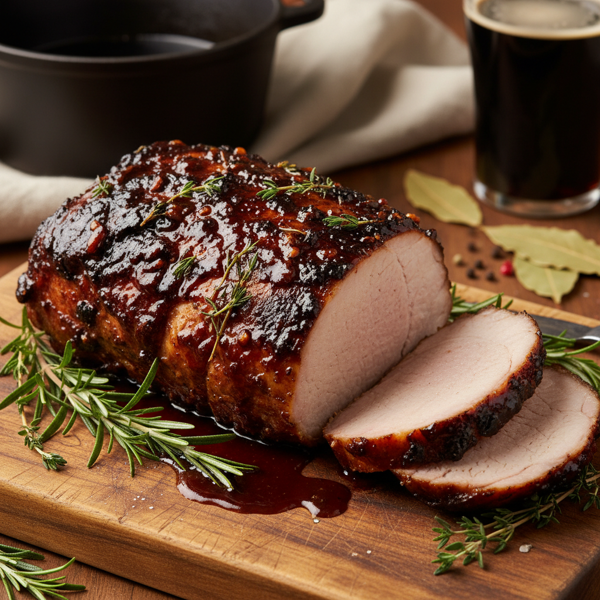
Discover the bold flavors of Ireland with this tender Irish Guinness-Glazed Pork Loin, a delightful centerpiece for any feast, especially on St. Patrick's Day. Inspired by chef Kevin Dundon from his acclaimed Las Vegas restaurant, The Nine Fine Englishmen, this dish boasts a rich glaze made from Guinness stout, honey, and muscovado sugar, creating a sweet yet savory caramelization that pairs perfectly with the pork's natural juiciness. Serve it alongside traditional Irish sides like colcannon and buttery cabbage for a complete and hearty meal that celebrates the essence of Irish cuisine. Ideal for gatherings, this recipe invites you to indulge in robust flavors and culinary tradition, making it a dish suitable for any time of year.
N/A
Servings
500
Calories
6
Ingredients
Ingredients
Guinness stout
300 ml (None)
Clear honey
100 ml (None)
Light muscovado sugar
250 g (None)
Boneless pork loin, skinless
2 kg (Ask your butcher for the thick end)
Champagne or water
to taste (None)
Flat leaf parsley
3 sprigs (For garnish)
Instructions
1
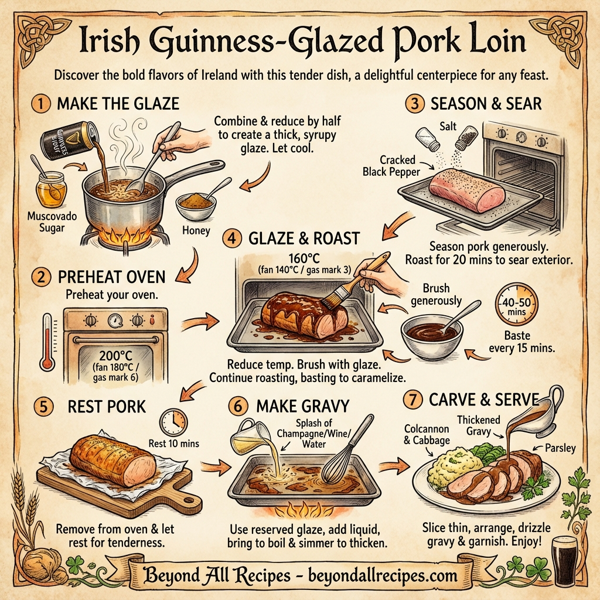
Prepare the glaze by combining the Guinness stout, honey, and light muscovado sugar in a saucepan. Heat over medium heat, stirring occasionally, until the mixture reduces by half. This will create a thick, syrupy glaze. Once reduced, remove it from heat and let it cool.
2
Preheat your oven to 200°C (fan 180°C / gas mark 6).
3
Season the skinless boneless pork loin generously with salt and cracked black pepper to taste. Place the pork on a baking tray and roast it in the preheated oven for 20 minutes to sear the exterior.
4
After 20 minutes, reduce the oven temperature to 160°C (fan 140°C / gas mark 3). Remove the pork from the oven, and brush it generously with most of the prepared glaze (reserve a few tablespoons for later). Return the pork to the oven and continue roasting for another 40-50 minutes. Baste the pork every 15 minutes with the remaining glaze to develop a rich, caramelized finish.
5
Once cooked, remove the pork from the oven and allow it to rest for at least 10 minutes. This ensures the juices redistribute throughout the meat, enhancing its tenderness.
6
While the pork rests, make the gravy. Pour the reserved glaze into the roasting tray, adding a splash of champagne, white wine, or water. Place the tray over medium heat and bring the mixture to a boil, scrapping any caramelized bits from the bottom. Simmer for a few minutes until the sauce thickens.
7
Carve the rested pork into thin slices. Arrange the slices on a plate, preferably over a bed of colcannon, and drizzle with the thickened gravy. Garnish with a sprig of flat-leaf parsley for a touch of elegance. Serve immediately, enjoying the rich flavors of this delightful dish.
Nutrition Information
25g
Fat
42g
Carbs
33g
Protein
1.67g
Fiber
25g
Sugar
Frequently Asked Questions
Frequently Asked Questions
What is Irish Guinness-Glazed Pork Loin?
It is a tender meat dish featuring a rich, sweet, and savory glaze made from Guinness stout, honey, and muscovado sugar, inspired by traditional Irish cuisine.
Who is the chef behind the inspiration for this dish?
This recipe is inspired by chef Kevin Dundon from his acclaimed Las Vegas restaurant, The Nine Fine Englishmen.
What are the primary ingredients for the pork glaze?
The glaze is made by combining 300 ml of Guinness stout, 100 ml of clear honey, and 250 g of light muscovado sugar.
How do I prepare the Guinness glaze?
Combine the stout, honey, and sugar in a saucepan and heat over medium heat, stirring occasionally, until the mixture reduces by half into a thick syrup.
At what temperature should the oven be preheated?
Preheat the oven to 200C (fan 180C or gas mark 6) for the initial roasting phase.
How long is the initial roasting period for the pork?
The pork should be roasted at the higher temperature for 20 minutes to sear the exterior.
What temperature should the oven be for the second phase of roasting?
Reduce the oven temperature to 160C (fan 140C or gas mark 3) after the first 20 minutes.
How long does the pork cook after the temperature is reduced?
Continue roasting for another 40 to 50 minutes at the lower temperature.
How often should I baste the pork loin?
Baste the pork with the remaining glaze every 15 minutes to develop a rich, caramelized finish.
Is it necessary to let the pork rest after cooking?
Yes, allow the pork to rest for at least 10 minutes to ensure juices redistribute, enhancing tenderness.
How do I make the gravy for this dish?
Pour reserved glaze into the roasting tray with champagne or water, boil while scraping bits, and simmer until thickened.
What liquids can be used to deglaze the roasting tray?
You can use a splash of champagne, white wine, or water to create the gravy.
What specific cut of pork is recommended?
A 2 kg skinless boneless pork loin is recommended, specifically the thick end requested from your butcher.
What are the nutritional facts for one serving?
One serving contains approximately 500 calories, 25g of fat, 42g of carbohydrates, and 33g of protein.
What is the calorie count per serving?
Each serving of this pork loin dish is estimated at 500 calories.
How much sugar is in this recipe?
There are 25g of sugar per serving due to the honey and muscovado sugar in the glaze.
What traditional sides pair well with this pork loin?
It is traditionally served with Irish sides like colcannon and buttery cabbage.
How should the pork be seasoned before roasting?
Season the meat generously with salt and cracked black pepper to taste.
Can I use a different type of sugar for the glaze?
While light muscovado is preferred for its flavor, clear honey also provides the necessary sweetness and consistency.
Is this dish suitable for St. Patricks Day?
Yes, it is considered a delightful centerpiece for a St. Patricks Day feast or any celebration of Irish cuisine.
What garnish is recommended for the final presentation?
Garnish the sliced pork with sprigs of flat-leaf parsley for a touch of elegance.
How should the pork be carved for serving?
The rested pork should be carved into thin slices and arranged on a plate.
Does the recipe include fiber?
Yes, it contains approximately 1.67g of fiber per serving.
Can I use water instead of champagne for the gravy?
Yes, water is a perfectly acceptable substitute for champagne or white wine in the gravy preparation.
What is the total number of ingredients listed?
There are 6 primary ingredients including the meat, glaze components, and garnish.
What makes the glaze thick and syrupy?
Reducing the mixture of Guinness, honey, and sugar by half over heat creates the desired syrupy texture.
What is the purpose of scraping the roasting tray?
Scraping the tray releases caramelized bits that add deep flavor to the gravy.
Is there any preparation required for the pork loin?
The pork should be skinless and boneless; it is helpful to ask your butcher for the thick end of the loin.
How much Guinness stout is needed?
The recipe calls for 300 ml of Guinness stout for the glaze.
What is the fat content of this dish?
There are 25g of fat per serving of the Irish Guinness-Glazed Pork Loin.