Iraqi Layered Mung Beans and Rice - Mash M'tubuq Delight

Mash M'tubuq Delight is a traditional Iraqi dish featuring a delightful layering of protein-rich mung beans and fluffy rice, enhanced with aromatic fresh dill and sautéed onions. This wholesome vegetarian recipe not only is a nutritional powerhouse, packed with protein and dietary fiber, but it also offers a unique fusion of flavors that burst with an authentic Middle Eastern essence. Serve it alongside creamy plain yogurt or drizzle with sweet date molasses (dibis) for a perfect balance of taste. This dish is a staple in Iraqi kitchens and is perfect for family gatherings or as a comforting weeknight dinner.
N/A
Servings
N/A
Calories
8
Ingredients
Ingredients
dry mung beans
1/2-3/4 cup (soaked overnight)
rice
1 cup (uncooked)
fresh dill
1-1 1/2 tablespoon (chopped)
onion
1 medium (chopped)
oil
2-3 tablespoons (for sautéing)
salt
1-1 1/2 teaspoon (to taste)
plain yogurt
as needed (optional, for serving)
date molasses (dibis)
as needed (optional, for serving)
Instructions
1
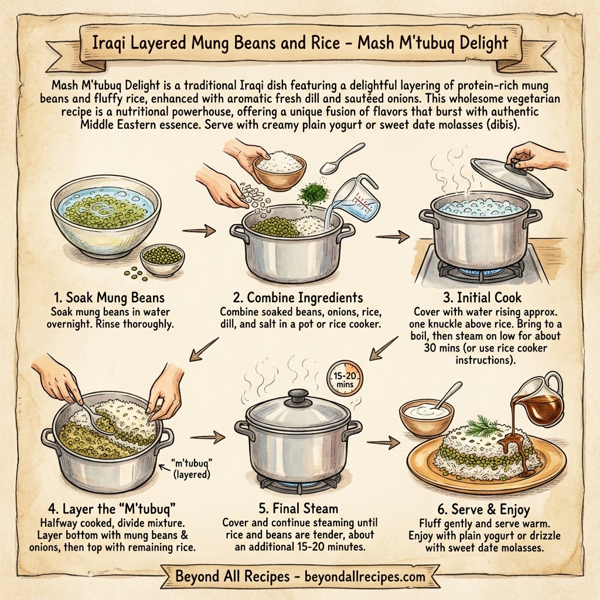
Begin by soaking the mung beans in water overnight to soften them. Rinse thoroughly before use.
2
In a rice cooker, measure the appropriate amount of water for cooking the rice, or use a large pot on the stovetop and combine all ingredients in the pot.
3
Add the soaked mung beans, chopped onions, rice, chopped dill, and salt to the pot or rice cooker. Mix well to ensure even distribution.
4
If using a pot, cover with water that rises approximately one knuckle above the rice line. Bring to a boil over medium-high heat, then reduce the heat to low and allow to steam for about 30 minutes. If using a rice cooker, close the lid and let it cook according to the rice cooker instructions.
5
As the cooking process progresses, check for doneness. Once the rice is halfway cooked, carefully divide the mixture in half. Layer the bottom half of the rice with mung beans and onions, then top with the remaining rice. This layering technique is essential to the dish's name, 'm'tubuq,' which means 'layered.'
6
Cover the pot or rice cooker and continue steaming until the rice and mung beans are tender and fully cooked, about an additional 15-20 minutes.
7
Once cooked, fluff the Mash M'tubuq gently and serve warm, accompanied by plain yogurt for a tangy contrast or a drizzle of sweet date molasses for a richer flavor.
Nutrition Information
Frequently Asked Questions
Frequently Asked Questions
What is Mash M'tubuq Delight?
Mash M'tubuq Delight is a traditional Iraqi dish featuring a layering of protein-rich mung beans and fluffy rice with aromatic herbs.
Is this recipe suitable for vegetarians?
Yes, this is a wholesome vegetarian recipe that is packed with plant-based protein and dietary fiber.
What does the name m'tubuq signify?
The name m'tubuq means layered, which refers to the essential technique of layering the rice and beans during cooking.
Do the mung beans require advance preparation?
Yes, the mung beans should be soaked in water overnight to soften them and then rinsed thoroughly before use.
Which herbs are used for flavoring?
Fresh chopped dill is used to provide an aromatic and authentic Middle Eastern essence to the dish.
Can I cook this dish in a rice cooker?
Yes, the recipe provides instructions for both rice cooker and traditional stovetop cooking methods.
What are the recommended side dishes?
It is traditionally served with plain yogurt for a tangy contrast or a drizzle of sweet date molasses (dibis).
Is Mash M'tubuq a high-protein meal?
Yes, the combination of mung beans and rice makes this dish a nutritional powerhouse high in protein.
How much water should I add for stovetop cooking?
The water should rise approximately one knuckle above the rice line in the pot.
At what point should the layering take place?
The mixture should be divided and layered once the rice is halfway cooked during the steaming process.
What are the nutritional benefits of this recipe?
This dish is high in dietary fiber, protein, and is considered a low cholesterol food option.
How do I perform the layering technique?
Layer the bottom half of the mixture with mung beans and onions, then top it with the remaining rice.
What heat setting is best for steaming the rice?
After bringing to a boil, you should reduce the heat to low to allow the dish to steam properly.
How many dry mung beans are needed?
The recipe calls for 1/2 to 3/4 cup of dry mung beans.
What is date molasses or dibis?
Dibis is a sweet Iraqi date syrup used to add a rich flavor and sweetness to the dish.
How much rice does this recipe require?
One cup of uncooked rice is used for this specific recipe.
Is oil necessary for this dish?
Yes, 2 to 3 tablespoons of oil are used for sautéing the onions to enhance the flavor.
How much salt should I add?
The recipe suggests 1 to 1.5 teaspoons of salt, adjusted to your personal taste.
What is the first step in the cooking process?
The process begins with soaking the mung beans overnight and then combining ingredients in a pot or rice cooker.
How long is the final steaming period after layering?
The dish requires an additional 15 to 20 minutes of steaming once the layering is complete.
Is this a common dish in Iraq?
Yes, Mash M'tubuq is a staple in Iraqi kitchens and a popular comfort food.
Can I use dry dill instead of fresh?
While the recipe specifies fresh dill for authenticity, dry dill could be used as a substitute in smaller quantities.
How should the onions be prepared?
One medium onion should be chopped and sautéed before being added to the rice and bean mixture.
Is this dish suitable for weeknight dinners?
Yes, it is described as a comforting and relatively simple dish perfect for family weeknight dinners.
Can I adjust the salt level?
Yes, the salt is added to taste, allowing for flexibility based on dietary preferences.
What should I do if the rice is not tender after the suggested time?
Continue steaming on low heat until both the rice and mung beans are fully tender.
How do I serve the finished dish?
Fluff the Mash M'tubuq gently and serve it warm with your choice of yogurt or molasses.
Does the dish have a specific cultural origin?
Yes, it is an authentic Middle Eastern dish specifically from Iraqi cuisine.
What provides the tangy contrast in the serving?
Creamy plain yogurt is used to provide a refreshing and tangy contrast to the savory rice.
How much total time is needed for steaming on the stovetop?
The total steaming time is approximately 45 to 50 minutes divided into two stages.