Honey-Drenched Greek Loukamades
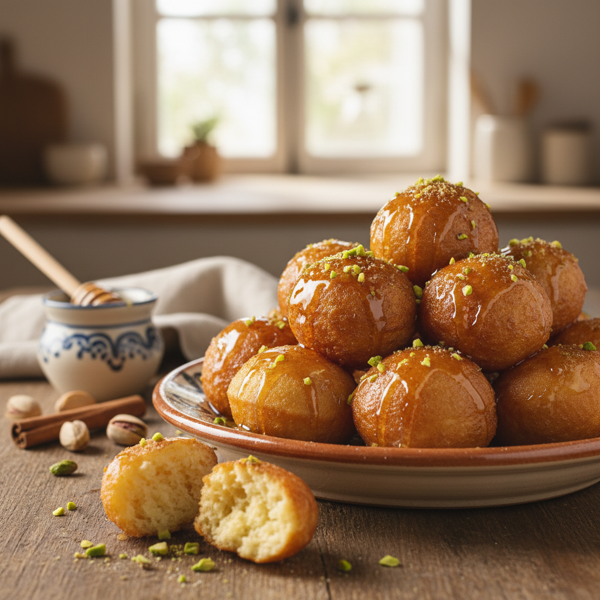
Indulge in the sweet and fluffy bite-sized delights of Greek Loukamades! These golden, honey-soaked dough puffs are reminiscent of the festive atmosphere of Greece, perfect for sharing at any gathering or enjoying as a decadent treat. With a slightly crispy exterior and a soft, airy interior, each loukamadi is drizzled with warm honey and dusted with cinnamon, making them irresistible. Follow this detailed recipe to create these delightful desserts that will transport you straight to the sun-kissed shores of the Mediterranean!
N/A
Servings
68
Calories
11
Ingredients
Ingredients
active dry yeast
2 packages (Sprinkle over warm water)
warm water
4 fluid ounces (Heated to 105 to 115°F)
warm milk
8 fluid ounces (Heated to 105 to 115°F)
sugar
1/4 cup
salt
1 teaspoon
eggs
2 (Lightly beaten)
unsalted butter
1/2 cup (Melted and cooled)
flour
3 cups (Sifted)
vegetable oil
for deep-frying (Enough to fill saucepan to a depth of 3 or 4 inches)
honey
8 fluid ounces (To taste, warmed)
ground cinnamon
to taste
Instructions
1
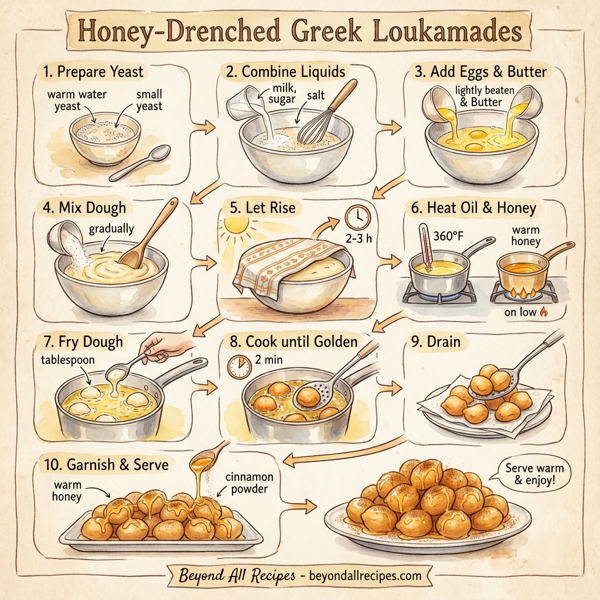
In a small bowl, sprinkle the active dry yeast over the warm water and let it stand for about 5 minutes until it softens and becomes frothy.
2
In a large mixing bowl, combine the warm milk, sugar, and salt. Once mixed, stir in the yeast mixture.
3
Add the lightly beaten eggs to the bowl, followed by the melted butter. Mix well until completely combined.
4
Gradually incorporate the sifted flour into the batter, mixing continuously until you achieve a smooth, thick, and sticky consistency. You may need to adjust the amount of flour to get the right texture.
5
Cover the bowl with a tea towel and place it in a warm area to allow the dough to rise until it has doubled in size, which should take about 2 to 3 hours.
6
Once the dough has risen, heat vegetable oil in a medium saucepan to a depth of 3 to 4 inches and bring the temperature to 360 degrees Fahrenheit.
7
While the oil heats, gently warm the honey in a small saucepan over very low heat.
8
Before frying, give the dough a good stir. Using a tablespoon, drop spoonfuls of the batter into the hot oil while keeping a little space between them.
9
Fry the loukamades for about 2 minutes, turning them occasionally, until they puff up and turn a beautiful golden brown on all sides.
10
Once cooked, carefully remove the loukamades with a slotted spoon and place them on paper towels to drain any excess oil.
11
On a serving platter, arrange a single layer of the loukamades, generously drizzle them with warm honey, and sprinkle with ground cinnamon. Repeat this process to create layers until all the loukamades are dressed.
12
Serve these delightful treats immediately, while they're warm and fresh!
Nutrition Information
2.2g
Fat
11g
Carbs
0.9g
Protein
Frequently Asked Questions
Frequently Asked Questions
What are Honey-Drenched Greek Loukamades?
They are golden, honey-soaked dough puffs that feature a crispy exterior and a soft, airy interior, commonly served as a festive Greek dessert.
How long does the dough need to rise?
The dough should be placed in a warm area and allowed to rise until it has doubled in size, which typically takes about 2 to 3 hours.
What is the ideal oil temperature for frying Loukamades?
The vegetable oil should be heated to a temperature of 360 degrees Fahrenheit for optimal frying.
What are the primary toppings for this dessert?
The loukamades are generously drizzled with warm honey and sprinkled with ground cinnamon.
How many calories are in a serving of Loukamades?
Each serving contains approximately 68 calories.
What type of yeast is required for this recipe?
The recipe calls for 2 packages of active dry yeast.
What temperature should the water and milk be?
Both the warm water and warm milk should be heated to between 105 and 115 degrees Fahrenheit to activate the yeast properly.
How much flour is used in the dough?
The recipe requires 3 cups of sifted flour, adjusted as needed to reach a smooth, thick, and sticky consistency.
How do you prepare the honey for drizzling?
Gently warm 8 fluid ounces of honey in a small saucepan over very low heat before serving.
How long do the loukamades need to fry?
They should be fried for about 2 minutes, turning occasionally until they turn a beautiful golden brown.
What is the protein content per serving?
Each serving provides approximately 0.9g of protein.
Should the butter be melted or solid?
The recipe specifies 1/2 cup of unsalted butter that has been melted and cooled.
How deep should the oil be in the saucepan?
You should fill a medium saucepan with vegetable oil to a depth of 3 to 4 inches.
What is the carbohydrate count for these treats?
There are 11g of carbohydrates per serving.
How should the eggs be prepared before adding to the batter?
The 2 eggs should be lightly beaten before being incorporated into the mixture.
What is the fat content of this recipe?
There are 2.2g of fat per serving.
Is the dough supposed to be thick or thin?
The batter should reach a smooth, thick, and sticky consistency.
Should Loukamades be served hot or cold?
They are best served immediately while they are still warm and fresh.
What tool is used to remove the puffs from the hot oil?
A slotted spoon should be used to carefully remove the loukamades and drain excess oil.
How do I prevent the loukamades from being too greasy?
Once removed from the oil, place them on paper towels to drain any excess oil before drizzling with honey.
What do I do if the yeast doesn't become frothy?
If the yeast doesn't soften and become frothy after 5 minutes in warm water, it may be inactive and should be replaced.
Can I use salted butter?
The recipe calls for unsalted butter; if using salted, you may want to reduce the additional teaspoon of salt.
Is there any sugar in the dough itself?
Yes, 1/4 cup of sugar is mixed into the warm milk and yeast mixture.
How should I arrange them for serving?
Arrange them in layers on a platter, drizzling honey and sprinkling cinnamon over each layer as you go.
What type of cuisine does this recipe belong to?
This is a traditional Mediterranean dish, specifically Greek cuisine.
How do I drop the dough into the oil?
Use a tablespoon to drop spoonfuls of the batter into the hot oil, leaving space between them.
Do I need to stir the dough after it rises?
Yes, the instructions suggest giving the dough a good stir once it has risen and before you begin frying.
What happens if the oil is not hot enough?
If the oil is below 360 degrees, the dough may absorb too much oil and become heavy rather than fluffy.
Can I add other toppings besides cinnamon?
While traditional loukamades use honey and cinnamon, you can experiment with crushed nuts or chocolate if desired.
Why is the water temperature specific?
The temperature of 105 to 115 degrees Fahrenheit is the optimal range to activate yeast without killing it.