Homemade Wild Grape Jam
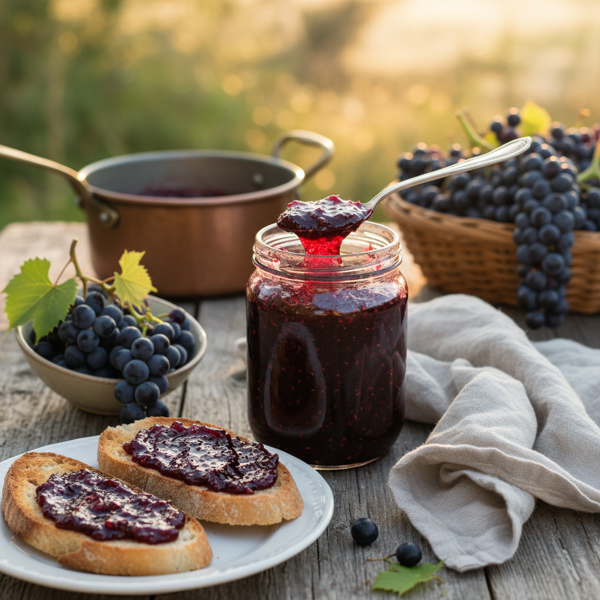
Discover the delightful taste of homemade Wild Grape Jam, a cherished recipe perfect for anyone looking to harness the unique flavors of foraged wild grapes. This no-fuss recipe, inspired by a Canadian Living classic, elevates your breakfast table with a burst of rich fruitiness. Gather your wild grapes in early autumn, and with a little patience as the juice drips overnight, you'll transform these tiny gems into sweet, luscious jam. This recipe isn't found on conventional pectin inserts, making it a hidden treasure for passionate home cooks. Enjoy on toast, in desserts, or straight from the jar!
N/A
Servings
N/A
Calories
4
Ingredients
Ingredients
wild grapes
3 lbs (stemmed)
water
3 cups (none)
sugar
4 1/2 cups (none)
liquid pectin
1 (85 ml) package (none)
Instructions
1
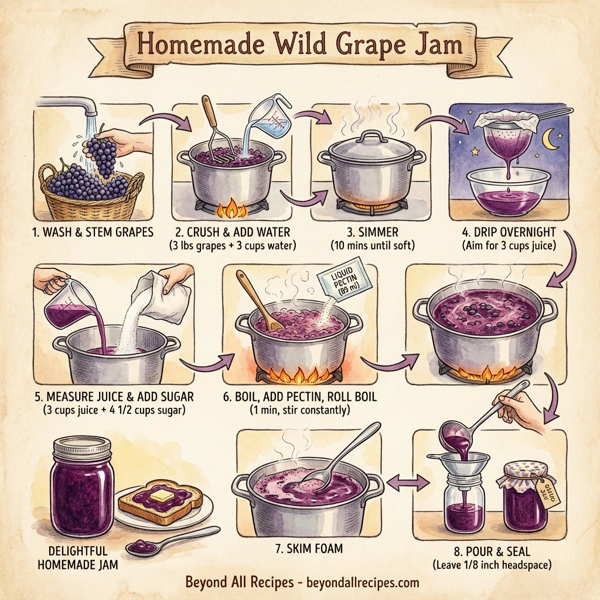
Begin by thoroughly washing 3 lbs of wild grapes. Stem the grapes to prepare them for extraction.
2
In a large saucepan, crush the grapes using a potato masher to release their juices.
3
Add 3 cups of water to the crushed grapes and bring the mixture to a boil over medium-high heat.
4
Once boiling, lower the heat and cover the saucepan. Let it simmer for about 10 minutes or until the grapes are very soft.
5
After simmering, transfer the mixture into a jelly bag or a fine-mesh colander lined with a double thickness of cheesecloth. Allow the juice to drip overnight, maximizing the yield (aim for 3 cups or 750 ml of juice).
6
In a large heavy saucepan, measure out the juice and add 4 1/2 cups of sugar, stirring well.
7
Bring the juice and sugar mixture to a boil over high heat, stirring constantly to dissolve the sugar completely.
8
Once the mixture is boiling, stir in one 85 ml package of liquid pectin carefully.
9
Return the mixture to a full rolling boil and maintain that boil for one minute, stirring constantly to prevent burning.
10
Remove from heat and skim off any foam that may have formed on the surface using a metal spoon.
11
Pour the hot jam into sterilized jars, making sure to leave 1/8 inch headspace. Seal the jars and let them cool before storing.
Nutrition Information
Frequently Asked Questions
Frequently Asked Questions
What is Homemade Wild Grape Jam?
Homemade Wild Grape Jam is a sweet and luscious fruit spread made from foraged wild grapes, sugar, and liquid pectin, offering a unique and rich fruitiness.
How many ingredients are required for this recipe?
This recipe requires 4 main ingredients: wild grapes, water, sugar, and liquid pectin.
How many pounds of wild grapes do I need?
You will need 3 lbs of wild grapes that have been washed and stemmed.
How much sugar is used in this grape jam recipe?
The recipe calls for 4 1/2 cups of sugar.
What type of pectin is used for Wild Grape Jam?
This recipe uses one 85 ml package of liquid pectin.
How much water should be added to the grapes?
Add 3 cups of water to the crushed grapes before boiling.
Why do I need to crush the grapes?
Crushing the grapes with a potato masher helps release their juices for a more effective extraction process.
How long should the grape mixture simmer?
The mixture should simmer for about 10 minutes or until the grapes become very soft.
What is the best way to strain the grape juice?
Transfer the simmered mixture into a jelly bag or a fine-mesh colander lined with a double thickness of cheesecloth.
How long does the grape juice need to drip?
For maximum yield, allow the juice to drip through the jelly bag overnight.
How much juice should I have for the jam?
You should aim for 3 cups or 750 ml of extracted grape juice.
When should the sugar be added to the juice?
Measure out the juice into a large heavy saucepan and add the sugar, stirring well before boiling.
How long should the juice and sugar mixture boil before adding pectin?
Bring the mixture to a boil over high heat, stirring constantly to ensure the sugar is completely dissolved before adding pectin.
How long is the final boil after adding pectin?
Once the pectin is added, return the mixture to a full rolling boil and maintain it for exactly one minute.
What should I do if foam forms on the jam?
Remove the jam from the heat and use a metal spoon to skim off any foam that forms on the surface.
How much headspace should be left in the jars?
Pour the hot jam into sterilized jars, leaving exactly 1/8 inch of headspace.
Is this recipe found on standard pectin box inserts?
No, this specific wild grape recipe is often missing from conventional pectin inserts, making it a unique find.
When is the best time to forage for wild grapes?
Early autumn is the ideal time to gather wild grapes for jam making.
What was the inspiration for this jam recipe?
This recipe was inspired by a classic recipe from Canadian Living.
What can I serve Wild Grape Jam with?
It is excellent on toast, as a topping for desserts, or enjoyed straight from the jar.
Should the jars be sterilized?
Yes, always pour the hot jam into sterilized jars to ensure proper preservation.
Can I use a potato masher for this recipe?
Yes, a potato masher is recommended for crushing the grapes in the saucepan.
What is the flavor profile of wild grapes?
Wild grapes have a unique, deep, and rich fruitiness that differs from store-bought varieties.
Why is constant stirring necessary during the boil?
Stirring constantly prevents the sugar from burning and ensures the pectin is distributed evenly.
Is this a no-fuss recipe?
Yes, it is described as a no-fuss recipe that primarily requires patience during the juice dripping stage.
What preparation is needed for the grapes?
The grapes should be thoroughly washed and removed from their stems.
How do you seal the jam jars?
After pouring the hot jam and leaving headspace, seal the jars and allow them to cool completely before storing.
Can I use dry pectin instead of liquid pectin?
This specific recipe is formulated for an 85 ml package of liquid pectin; substitutions may affect the set.
How much juice in milliliters should I get?
You should aim to extract 750 ml of juice.
What category of food does this belong to?
It belongs to the category of preserves, specifically fruit spreads and jams.