Homemade Walnut Infused Oil
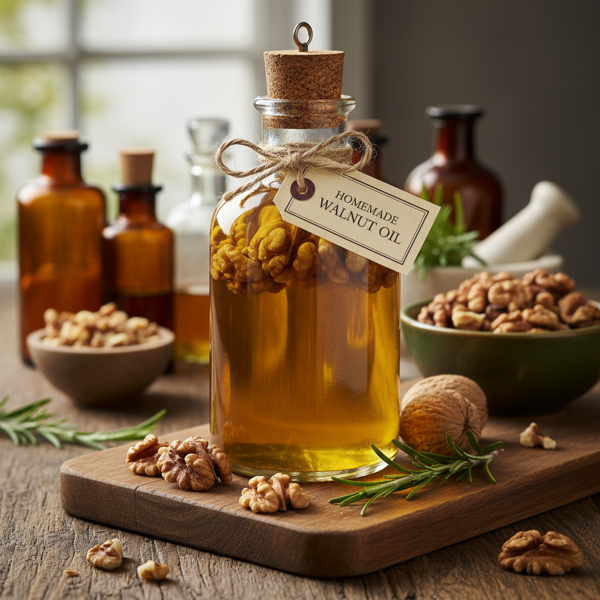
Elevate your culinary creations with this Homemade Walnut Infused Oil, a rich and flavorful oil that is both easy to make and significantly more cost-effective than store-bought options. With its nutty aroma and delicate flavor, this oil is perfect for drizzling over salads, finishing roasted vegetables, or enhancing your favorite pasta dishes. This simple recipe allows you to harness the goodness of walnuts and vegetable oil, creating a versatile kitchen staple that promises to enrich your meals while being entirely lactose-free.
N/A
Servings
160
Calories
2
Ingredients
Ingredients
walnut pieces
3/4 cup (chopped)
vegetable oil
1 1/3 cups (none)
Instructions
1
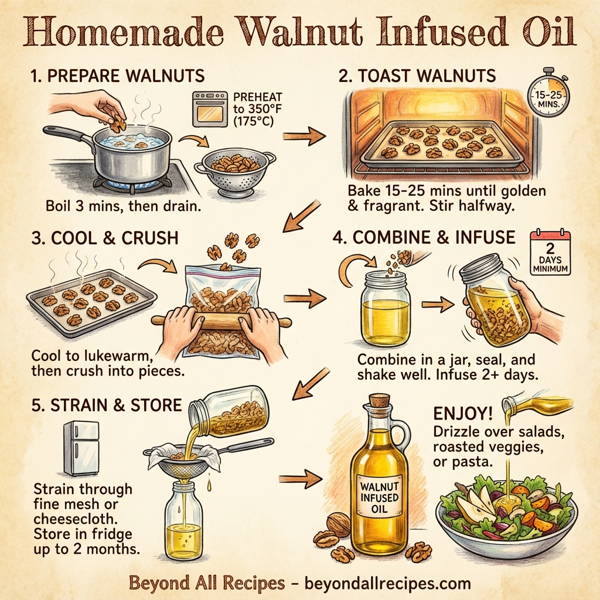
Preheat your oven to 350°F (175°C).
2
In a small saucepan, bring water to a boil and add walnut pieces. Boil for 3 minutes, then drain the walnuts in a colander.
3
Spread the drained walnuts evenly on a shallow baking sheet in a single layer.
4
Bake in the preheated oven for 15 to 25 minutes, stirring once halfway through, until the walnuts are golden brown and fragrant. Keep a close eye to avoid burning.
5
Remove the walnuts from the oven and allow them to cool to lukewarm.
6
Once cooled, place the walnuts into a plastic bag and crush them gently using a mallet or rolling pin to create smaller pieces.
7
In a large glass jar or container, combine the crushed walnuts with the vegetable oil. Seal the jar tightly and shake well to mix.
8
Let the mixture infuse for at least 2 days at room temperature, shaking it occasionally to enhance the flavor extraction.
9
When you are ready to use the walnut oil, strain the mixture through a fine-mesh sieve or cheesecloth to separate the walnuts from the oil. Store the infused oil in a sealed container in the refrigerator for up to 2 months.
Nutrition Information
17.25g
Fat
0g
Carbs
0.37g
Protein
Frequently Asked Questions
Frequently Asked Questions
What is Homemade Walnut Infused Oil?
Homemade Walnut Infused Oil is a rich, flavorful, and nutty oil made by infusing roasted walnuts into vegetable oil, ideal for various culinary applications.
What ingredients are needed for this walnut oil?
You only need two ingredients: 3/4 cup of chopped walnut pieces and 1 1/3 cups of vegetable oil.
How many walnuts are used in this recipe?
The recipe calls for 3/4 cup of chopped walnut pieces.
What kind of oil is used as the base?
This recipe uses 1 1/3 cups of vegetable oil as the base for the infusion.
How do I prepare the walnuts for infusion?
Walnuts are boiled for 3 minutes, drained, roasted until golden brown, cooled, and then gently crushed.
Why do I need to boil the walnuts first?
Boiling the walnuts for 3 minutes before roasting helps prepare them for the infusion process and ensures they are clean.
How long should I boil the walnuts?
The walnut pieces should be boiled in water for exactly 3 minutes before being drained.
At what temperature should I roast the walnuts?
The oven should be preheated and set to 350 degrees Fahrenheit (175 degrees Celsius).
How long do the walnuts need to bake?
Walnuts should bake for 15 to 25 minutes, stirring once halfway through to ensure even roasting.
How do I know when the walnuts are done roasting?
The walnuts are ready when they turn golden brown and become fragrant; be careful not to let them burn.
What is the next step after roasting the walnuts?
Remove the walnuts from the oven and allow them to cool until they are lukewarm before crushing them.
Why is it necessary to crush the walnuts?
Crushing the walnuts creates smaller pieces, which increases the surface area and allows for better flavor extraction into the oil.
How should I crush the roasted walnuts?
Place the lukewarm walnuts in a plastic bag and use a mallet or rolling pin to crush them into smaller pieces.
How do I combine the ingredients for infusion?
Place the crushed walnuts into a large glass jar, add the vegetable oil, seal tightly, and shake well.
How long does the infusion process take?
The mixture should sit at room temperature for at least 2 days to properly extract the walnut flavor.
Where should I keep the oil while it is infusing?
Keep the jar at room temperature for the duration of the 2-day infusion period.
Should I shake the jar during the infusion period?
Yes, shaking the jar occasionally during the 2 days will help enhance the flavor extraction.
How do I separate the oil from the walnuts?
Once infused, strain the mixture through a fine-mesh sieve or cheesecloth to remove the walnut pieces.
What is the best way to store the finished walnut oil?
The infused oil should be stored in a sealed container and kept in the refrigerator.
How long does homemade walnut oil last?
The finished walnut oil can be stored in the refrigerator for up to 2 months.
Is this walnut oil recipe lactose-free?
Yes, this recipe is entirely lactose-free, making it a great option for those with dairy sensitivities.
Is this recipe suitable for vegans?
Yes, this is a vegan recipe as it contains only walnuts and vegetable oil.
What is the calorie count for this walnut oil?
There are approximately 160 calories per serving of this infused oil.
How much fat does the oil contain?
Each serving of the walnut infused oil contains approximately 17.25 grams of fat.
Does this oil contain any protein?
Yes, there is a small amount of protein, roughly 0.37 grams per serving.
Are there any carbohydrates in this oil?
No, this walnut infused oil contains 0 grams of carbohydrates.
What are the best uses for walnut infused oil?
It is perfect for drizzling over salads, finishing roasted vegetables, or adding flavor to pasta dishes.
Is making walnut oil at home cost-effective?
Yes, this homemade version is significantly more cost-effective than buying pre-infused oils at the store.
What kind of aroma does this oil have?
The oil features a delicate, nutty aroma and flavor profile thanks to the roasted walnuts.
What kitchen tools are needed to make this?
You will need a saucepan, a baking sheet, a plastic bag, a mallet or rolling pin, a glass jar, and a sieve.