Homemade Scented Waters: Rose & Orange Blossom Elixirs
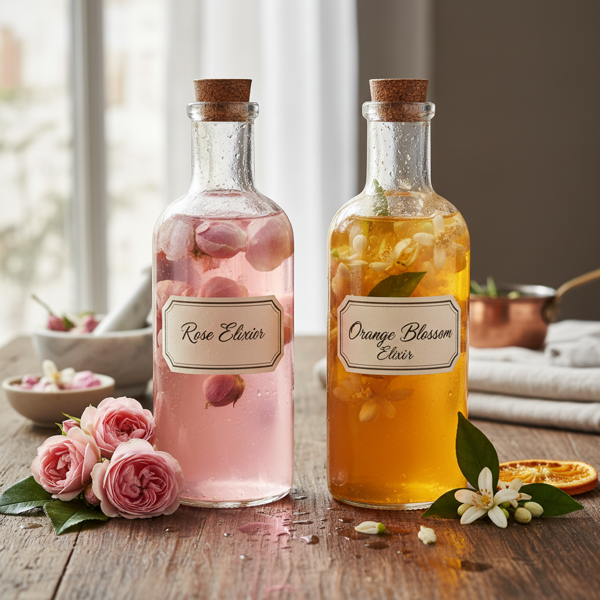
Unlock the enchanting world of culinary aromas with your very own rose and orange blossom water creations. These delicate infusions capture the essence of heritage cooking, bringing a touch of the Middle East and historical European charm to your kitchen. Ideal for elevating desserts and other dishes, these fragrant waters save you from pricey store-bought alternatives. Perfectly suited for the meticulous gardener or an adventurous cook, these elixirs boast not only timeless tradition but also the satisfying joy of crafting your own gourmet ingredients.
1-4 Jars or bottles
Servings
N/A
Calories
3
Ingredients
Ingredients
Rose petals
4 ounces (Collected fresh from pesticide-free red or pink roses)
Orange blossoms
4 ounces (Collected fresh from pesticide-free orange trees)
Distilled water
As needed (Used for infusing the petals and blossoms)
Instructions
1
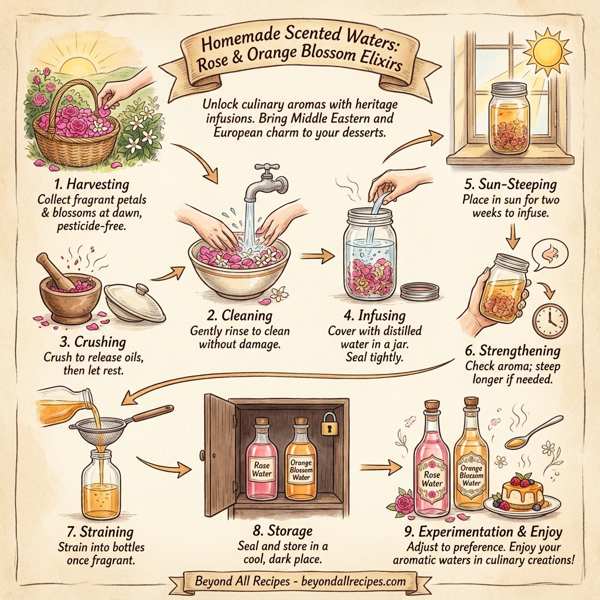
1. Harvesting: Collect your rose petals and orange blossoms in the early morning when their fragrance is most potent. Ensure these have been grown free from pesticides and pollutants.
2
2. Cleaning: Gently rinse the petals and blossoms in cold water to remove any dirt or insects without damaging their delicate structures.
3
3. Crushing: Using a mortar and pestle, carefully crush the petals or blossoms to release their natural oils. You may leave them to rest for a couple of hours to enhance the aroma.
4
4. Infusing: Place the crushed petals or blossoms into a mason jar and cover with distilled water. Use just enough water to submerge them, as you can adjust later. Secure the lid tightly.
5
5. Sun-Steeping: Position the jar in a sunny spot to steep for about two weeks. The sun will gently warm the mixture, allowing the natural fragrances to infuse into the water.
6
6. Strengthening: Check the scent after two weeks. If the aroma is too subtle, let the jar sun-steep for an additional week.
7
7. Straining: Once the desired fragrance is achieved, strain the liquid through a fine sieve or cheesecloth into clean bottles for storage.
8
8. Storage: Seal the bottles tightly and store them in a cool, dark place to preserve the scent and freshness.
9
9. Experimentation: Adjust water and petal quantities to suit your personal fragrance preference. Enjoy the luxury of your homemade aromatic waters.
Nutrition Information
Frequently Asked Questions
Frequently Asked Questions
What are Homemade Scented Waters?
They are delicate infusions made from rose petals or orange blossoms used to add aroma to culinary dishes.
What is the benefit of making your own floral waters?
Crafting your own allows you to save money compared to store-bought versions and ensures the use of high-quality, organic ingredients.
Which flowers are needed for these elixirs?
You will need 4 ounces of fresh rose petals and 4 ounces of fresh orange blossoms.
What kind of roses should I use?
It is recommended to use pesticide-free red or pink roses for the best fragrance and color.
When is the best time to harvest the blossoms?
Collect your flowers in the early morning when their fragrance is at its most potent.
Why is it important to use pesticide-free flowers?
Since these waters are used in food preparation, they must be free from harmful chemicals and pollutants.
How should I clean the fresh petals?
Gently rinse them in cold water to remove dirt or insects without damaging the delicate petals.
Why use a mortar and pestle in the recipe?
Crushing the petals or blossoms with a mortar and pestle helps release their natural essential oils.
How long should the crushed petals rest?
Allow them to rest for a couple of hours after crushing to enhance the natural aroma.
What type of water is best for infusing?
Distilled water is used to ensure a pure infusion and to help preserve the scent.
How much water should I add to the jar?
Use just enough distilled water to completely submerge the crushed petals or blossoms.
What kind of container should I use for steeping?
A glass mason jar with a tight-fitting lid is ideal for the sun-steeping process.
What is sun-steeping?
It is a method where the jar is placed in a sunny spot so the sun's natural warmth can gently extract the floral essence.
How long does the sun-steeping process take?
The mixture should steep in the sun for approximately two weeks.
How do I know if the scent is strong enough?
Check the aroma after two weeks; it should be distinct and fragrant.
What should I do if the aroma is too subtle after two weeks?
If the scent is not strong enough, let the jar sun-steep for an additional week.
How do I remove the petals from the water?
Once finished, strain the liquid through a fine sieve or cheesecloth into clean bottles.
What is the best way to store the finished scented water?
Seal the bottles tightly and store them in a cool, dark place to maintain freshness.
Can I adjust the intensity of the fragrance?
Yes, you can adjust the water and petal quantities to suit your personal preference.
What culinary traditions use these waters?
They are staples in Middle Eastern cuisine and historical European cooking.
Are these waters suitable for desserts?
Yes, they are perfect for elevating desserts with a floral and gourmet touch.
Can I use these waters for historical cooking?
Absolutely, these elixirs capture the essence of heritage cooking and historical charm.
Is it possible to make a larger batch?
Yes, you can increase the ingredients proportionally to yield 1 to 4 jars or bottles.
Why is morning harvesting recommended?
The essential oils in flowers are most concentrated before the sun gets too hot.
What if I don't have a mortar and pestle?
You can gently bruise the petals by hand or with a wooden spoon, though a mortar is more effective.
Can I use tap water instead of distilled water?
Distilled water is preferred to avoid minerals or chlorine that might alter the scent.
How many bottles does this recipe make?
The recipe typically yields between 1 and 4 small jars or bottles.
Does the color of the rose matter?
Yes, pink and red roses are traditional because they offer the most classic rose aroma.
Can I use orange leaves instead of blossoms?
This specific recipe requires orange blossoms to achieve the correct floral flavor profile.
Is this recipe suitable for beginners?
Yes, it is a simple DIY project suited for adventurous cooks and gardeners alike.