Homemade Polish Fermented Dill Pickles
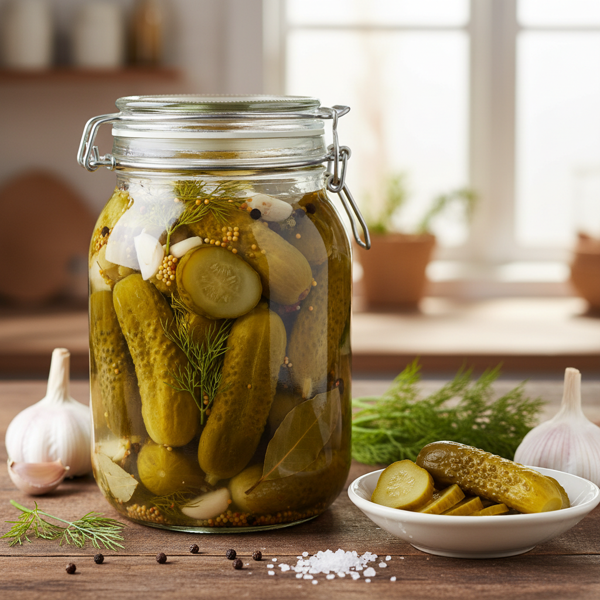
Indulge in the traditional taste of Poland with these delightful homemade dill pickles, crafted in a rustic crock. Inspired by my grandmother's cherished recipe, these pickles celebrate the vibrant flavors of fresh cucumbers, aromatic dill, and zesty garlic. Unlike canned pickles, these fermented beauties offer a tangy crunch that our family could never get enough of. Perfect for enjoying on their own, as a garnish, or added to your favorite dishes, these pickles highlight the best of summer’s bounty. The process is simple but requires patience as they ferment, developing their signature flavor over a few days. If you're missing grape leaves, don't fret – they’re optional but add an extra touch to the brine. Get ready to transform your cucumber surplus into a beloved homemade staple!
N/A
Servings
N/A
Calories
7
Ingredients
Ingredients
Washed Cucumbers
4 gallons (Thoroughly washed)
Fresh Dill
2 bunches (Whole sprigs)
Garlic Cloves
10 cloves (Peeled)
Grape Leaves
10 leaves (Optional, rinsed)
White Vinegar
1 cup (N/A)
Water
1 gallon (N/A)
Salt
1 - 1 1/4 cups (N/A)
Instructions
1
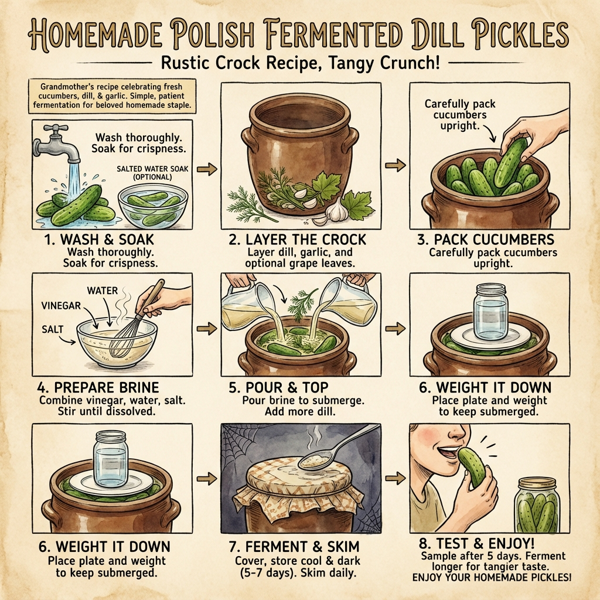
Begin with thoroughly washing the cucumbers under cold running water to remove any dirt. Submerge them in salted water for a few hours, if desired, to help them stay crisp.
2
In a large crock, layer the bottom with a couple of handfuls of fresh dill sprigs and peeled garlic cloves. If using grape leaves, arrange them in the crock as well.
3
Carefully pack the washed cucumbers upright in the crock, ensuring not to break them.
4
In a separate container, combine the white vinegar, water, and salt. Stir until the salt is fully dissolved, creating your brine.
5
Pour the brine mixture over the cucumbers, making sure they are completely submerged. Add a few more sprigs of dill on top for extra flavor.
6
To keep the cucumbers submerged, place a clean plate on top, weighing it down with a jar filled with water. This will help prevent spoilage.
7
Cover the crock with a clean cloth and store it in a cool, dark place for 5 to 7 days. Check daily for any film that may form on the surface; gently skim it off with a spoon.
8
After 5 days, sample a pickle to test the flavor. Allow them to ferment longer if you prefer a tangier taste.
Nutrition Information
Frequently Asked Questions
Frequently Asked Questions
What are Polish fermented dill pickles?
They are traditional, rustic crock-fermented pickles made with fresh cucumbers, dill, and garlic, known for their tangy crunch.
How many cucumbers do I need for this recipe?
You will need 4 gallons of cucumbers that have been thoroughly washed.
What is the preparation for the cucumbers?
The cucumbers should be thoroughly washed under cold running water to remove any dirt.
How much dill is required?
The recipe calls for 2 bunches of fresh dill sprigs.
How many garlic cloves should I use?
You should use 10 peeled cloves of garlic.
Are grape leaves required for these pickles?
No, grape leaves are optional, but they add an extra touch to the brine if used.
What type of vinegar is used in the brine?
The recipe uses 1 cup of white vinegar.
How much water is needed for the brine?
You will need 1 gallon of water.
What is the salt measurement for the brine?
The recipe requires 1 to 1 1/4 cups of salt.
How do I prepare the brine mixture?
Combine the white vinegar, water, and salt in a container and stir until the salt is fully dissolved.
How should I layer the ingredients in the crock?
Layer the bottom with dill and garlic, then pack the cucumbers upright before pouring the brine over them.
What is the best way to pack the cucumbers?
Pack the washed cucumbers upright in the crock, making sure not to break them.
How do I keep the cucumbers submerged?
Place a clean plate on top of the cucumbers and weigh it down with a jar filled with water.
Why must the cucumbers stay submerged?
Keeping them submerged helps prevent spoilage during the fermentation process.
What should I use to cover the crock?
Cover the crock with a clean cloth while it stores.
Where should the crock be stored during fermentation?
The crock should be stored in a cool, dark place.
How long does the fermentation process take?
The process typically takes between 5 to 7 days.
What should I do if a film forms on the surface of the brine?
Check the crock daily and gently skim off any film that forms on the surface with a spoon.
When can I first taste the pickles?
You can sample a pickle to test the flavor after 5 days of fermentation.
Can I ferment the pickles for longer than a week?
Yes, you can allow them to ferment longer if you prefer a tangier taste.
How do these differ from canned pickles?
Unlike canned pickles, these are fermented, which provides a unique tangy crunch and probiotic benefits.
Are these pickles suitable for vegans?
Yes, these homemade pickles are vegan and vegetarian-friendly.
Is this a traditional recipe?
Yes, this recipe is inspired by a traditional Polish method passed down from the author's grandmother.
Can these pickles be used in other dishes?
Absolutely; they are perfect on their own, as a garnish, or added to various recipes.
How many ingredients are in this recipe?
There are 7 primary ingredients used in this pickle recipe.
How can I ensure the pickles stay crisp?
Submerging the cucumbers in salted water for a few hours before starting can help them stay crisp.
What is the flavor profile of these pickles?
They are tangy, zesty, and aromatic, highlighting fresh dill and garlic.
What is the total yield of this recipe?
The recipe uses 4 gallons of cucumbers, making it a large-batch staple.
Do I need special equipment?
A large rustic crock is recommended for the traditional fermentation process.
Is the salt level adjustable?
The recipe suggests between 1 and 1 1/4 cups of salt to achieve the proper brine balance.