Homemade Laban: Traditional Buttermilk Delight
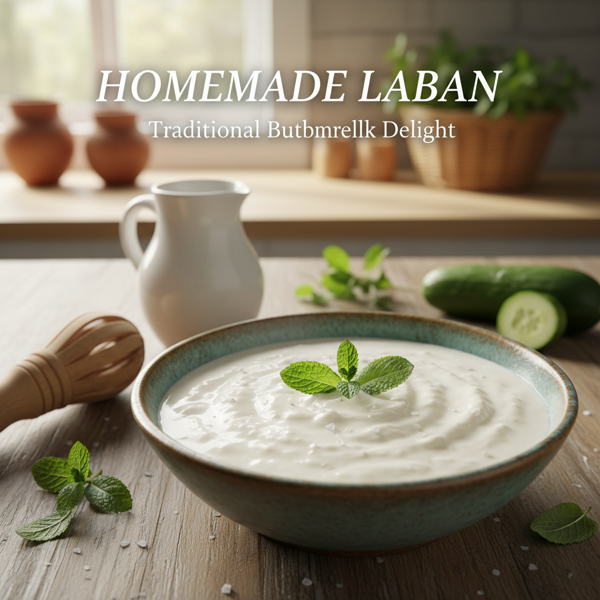
Laban, or buttermilk, is a cherished ingredient across North Africa and the Middle East, known for its tangy flavor and creamy texture. While store-bought versions are widely available today, nothing beats the authenticity of homemade laben. This recipe draws on traditional methods, utilizing fresh whole milk to create a truly rich and immersive taste. Ideal for dipping, marinating, or enjoyed on its own, laben is incredibly versatile. This easy-to-follow guide will walk you through making your own laben from scratch, whether you're looking to replicate flavors from your home country or simply enjoy a wholesome probiotic-rich beverage. Note: For the most authentic result, source raw or fresh farm milk; however, full-fat milk from the store works perfectly well. Adjust the quantities to suit your needs!
N/A
Servings
N/A
Calories
2
Ingredients

Ingredients
Whole Milk
3.5 liters (Fresh or full-fat, poured into the pot)
Warm Water
0.5 liters (Warmed slightly before adding to the milk)
Instructions
1
Begin by pouring the 3.5 liters of whole milk into a clean pot. Cover the pot with a plate or tray to protect it from dust and insects.
2
Place the covered pot in a warm area, away from direct sunlight, and allow the milk to sit undisturbed for 24 to 48 hours. The time required will vary depending on your climate; warmer conditions accelerate the process.
3
After 1-2 days, check the milk. It should have thickened and coagulated, resembling a light custard or blancmange. If using store-bought milk, you should see clear separation.
4
Carefully transfer the coagulated milk into a large bottle or container (approximately 6 liters in capacity).
5
Next, add half a liter of warm water to the bottle. Secure the lid tightly.
6
Vigorously shake the bottle for about 20 minutes. This step is crucial to ensure the milk and water fully incorporate into a smooth consistency.
7
After 20 minutes, inspect the mixture. If it has not blended to a creamy texture, continue shaking until the laben resembles single cream.
8
Once ready, pour the laben into a clean pan, and you'll notice little yellow blobs of butter floating on the surface. Carefully scoop these out and store them in a separate container for later use.
9
Transfer the finished laben into a storage jar or bottle and refrigerate. It's best enjoyed chilled, and can be used right away or stored for later consumption.
Nutrition Information
Frequently Asked Questions
Frequently Asked Questions
What is Laban?
Laban is a traditional fermented buttermilk known for its tangy flavor and creamy texture, commonly found in North Africa and the Middle East.
Where is Laban most popular?
It is a cherished ingredient across North Africa and the Middle East.
What are the primary ingredients for homemade Laban?
The recipe requires 3.5 liters of whole milk and 0.5 liters of warm water.
Can I use store-bought milk to make Laban?
Yes, full-fat milk from the store works perfectly well for this recipe.
What type of milk provides the most authentic result?
For the most authentic taste, it is recommended to source raw or fresh farm milk.
How long does the fermentation process take?
The milk should sit undisturbed for 24 to 48 hours, depending on the climate.
Why should I cover the pot during the first stage?
Covering the pot with a plate or tray protects the milk from dust and insects while it sits.
Where should the milk be placed while it ferments?
The milk should be placed in a warm area away from direct sunlight.
How does temperature affect the Laban making process?
Warmer conditions accelerate the fermentation and coagulation process.
What should the milk look like after 1-2 days?
It should be thickened and coagulated, resembling a light custard or blancmange.
What happens if I use store-bought milk during fermentation?
You should see a clear separation in the milk once it has properly coagulated.
What size container is needed for the shaking process?
You will need a large bottle or container with a capacity of approximately 6 liters.
When is the warm water added to the recipe?
The warm water is added to the bottle after the coagulated milk has been transferred into it.
How long do you need to shake the mixture?
The mixture should be shaken vigorously for about 20 minutes.
Why is shaking the bottle necessary?
Shaking ensures the milk and water fully incorporate to create a smooth, creamy consistency.
What if the Laban is not creamy after 20 minutes?
If it has not reached a creamy texture, continue shaking until it resembles single cream.
What are the yellow blobs that form on top?
The yellow blobs are small pieces of butter that separate during the shaking process.
What should I do with the butter blobs?
Carefully scoop them out and store them in a separate container for later use.
How should the final Laban be stored?
The finished Laban should be transferred to a storage jar or bottle and refrigerated.
Is Laban served hot or cold?
Laban is best enjoyed chilled.
Is Laban a probiotic beverage?
Yes, Laban is a wholesome, probiotic-rich beverage.
What are common uses for Laban in cooking?
Laban is versatile and ideal for dipping, marinating, or being enjoyed as a standalone drink.
What consistency should the finished Laban have?
It should have a creamy texture that resembles single cream.
Can I adjust the recipe quantities?
Yes, you can adjust the quantities of milk and water to suit your specific needs.
What is the first step of the recipe?
The first step is pouring 3.5 liters of whole milk into a clean pot and covering it.
How many ingredients are used in this recipe?
There are only two ingredients: whole milk and warm water.
Is Laban another name for buttermilk?
Yes, Laban is a type of traditional buttermilk.
Does the milk need to be stirred while it sits?
No, the milk should sit undisturbed for the entire 24 to 48 hour period.
Can Laban be used immediately after shaking?
Yes, it can be used right away, although it is better after being chilled in the refrigerator.
What is the goal of using traditional methods for Laban?
Using traditional methods helps create a truly rich, authentic, and immersive taste.