Homemade Italian Pasta Dough
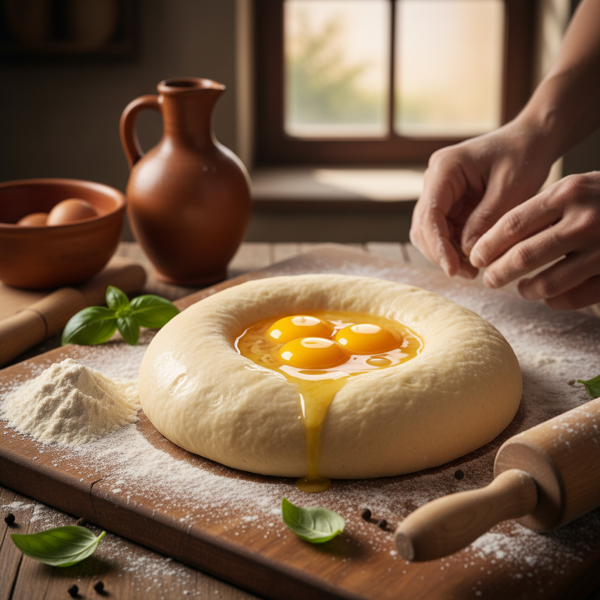
This homemade pasta dough recipe is a celebration of simplicity and refinement, honed over countless culinary experiments. The dough is incredibly easy to work with, yielding wonderfully rich and tender pasta. For those watching cholesterol levels or preferring a lighter pasta, substitute 2–3 eggs with approximately half a cup of water, adding it gradually until the dough reaches the desired texture and consistency. Always crack eggs individually into a small bowl to prevent contamination with a bad egg. Lightly beat each egg before incorporating it into the flour. While the hands-on time doesn’t include resting, refrigerating the dough for at least one hour enhances the texture and flavor. Investing in a pasta machine can simplify the process significantly, transforming homemade pasta-making into an enjoyable experience.
6
Servings
300
Calories
4
Ingredients
Ingredients
white flour
500g (sifted)
eggs
5 (room temperature, lightly beaten)
water
as needed (for adjusting dough consistency)
salt
2 tsp (for cooking)
Instructions
1
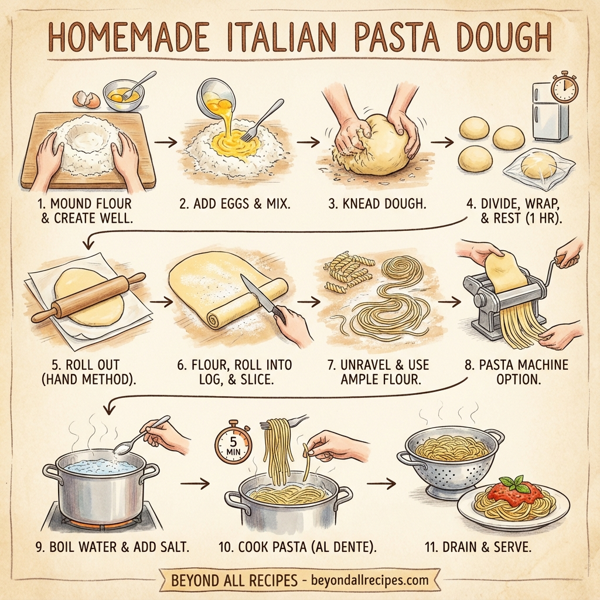
On a clean flat surface, mound the sifted flour and create a well in its center.
2
Pour each lightly beaten egg into the well individually, mixing them gently with a fork until fully incorporated with the flour.
3
Use your hands to knead the mixture into a smooth and cohesive dough, adjusting with water if too dry or flour if too wet. Aim for a non-sticky consistency.
4
Divide the dough into three equal portions, each sufficient for two servings. For optimal results, wrap these portions in plastic wrap and refrigerate for at least 1 hour.
5
If rolling by hand, place a portion between two sheets of baking paper and roll to a thickness of approximately 3 mm.
6
Sprinkle the rolled dough with flour, remove the top sheet, and roll it into a log as if making a Swiss roll.
7
Slice the dough log into pieces of your desired width, typically around 5 mm. Unravel the spirals immediately.
8
Use ample flour throughout shaping to prevent sticking and breaking.
9
For a pasta machine, follow the manufacturer's instructions for creating your desired pasta shapes.
10
Bring a large saucepan of water to a rolling boil, adding 2 teaspoons of salt.
11
Drop the pasta into the boiling water, cooking for about 5 minutes or until al dente, testing occasionally.
12
Drain and serve immediately with your favorite pasta sauce.
Nutrition Information
5.8g
Fat
52g
Carbs
12g
Protein
2.5g
Fiber
400mg
Sodium
Frequently Asked Questions
Frequently Asked Questions
What are the primary ingredients for this homemade Italian pasta dough?
The main ingredients are 500g of sifted white flour, 5 room temperature eggs, water as needed for consistency, and 2 teaspoons of salt for the cooking water.
How many servings does this recipe provide?
This recipe makes 6 servings.
What is the calorie count per serving?
Each serving contains approximately 300 calories.
How can I make a lower cholesterol version of this pasta?
You can substitute 2 to 3 eggs with approximately half a cup of water, adding it gradually until the desired texture is reached.
Why should I crack eggs individually into a small bowl first?
Cracking them individually prevents a single bad egg from contaminating the rest of your ingredients.
How long should the pasta dough rest before rolling?
The dough should be wrapped in plastic wrap and refrigerated for at least 1 hour to enhance texture and flavor.
What is the recommended thickness for hand-rolled pasta?
You should aim for a thickness of approximately 3 mm.
How wide should I slice the pasta noodles?
The typical recommended width is around 5 mm.
How long does fresh homemade pasta take to cook?
It takes about 5 minutes in boiling water, or until it reaches an al dente consistency.
What is the protein content per serving?
There are 12g of protein per serving.
Is a pasta machine required for this recipe?
No, while a machine simplifies the process, you can roll the dough by hand using baking paper.
How do I prevent the dough from sticking during shaping?
Use ample flour throughout the shaping and unraveling process to prevent sticking and breaking.
What should the consistency of the dough be after kneading?
The dough should be smooth, cohesive, and non-sticky.
What is the total fat content per serving?
The total fat content is 5.8g per serving.
How much salt should be added to the boiling water?
Add 2 teaspoons of salt to a large saucepan of rolling boiling water.
Can I use a pasta machine with this dough?
Yes, if using a machine, follow the manufacturer's instructions for creating your desired shapes.
How many portions should the dough be divided into for storage?
Divide the dough into three equal portions, with each portion being sufficient for two servings.
What is the carbohydrate count for this pasta?
There are 52g of carbohydrates per serving.
Should the eggs be cold or room temperature?
The eggs should be at room temperature and lightly beaten before being added to the flour.
What is the fiber content of this recipe?
This recipe contains 2.5g of fiber per serving.
How do I incorporate the eggs into the flour?
Create a well in the center of the flour mound and mix the beaten eggs in gently with a fork.
What should I do if the dough is too dry?
Gradually add small amounts of water until the dough reaches the desired texture.
What should I do if the dough is too wet?
Adjust the consistency by adding a small amount of additional flour.
How do I slice the dough into noodles without a machine?
Roll the dough into a log like a Swiss roll and slice it into pieces of your desired width.
When should I unravel the pasta spirals?
Unravel the spirals immediately after slicing to prevent them from sticking together.
Is this recipe suitable for beginners?
Yes, it is tagged as beginner friendly and designed to be simple and easy to work with.
What is the sodium content per serving?
The sodium content is 400mg per serving.
What is the best way to roll the dough by hand?
Place a portion of dough between two sheets of baking paper to help achieve an even thickness.
What should I serve with this fresh pasta?
Drain the pasta and serve it immediately with your favorite pasta sauce.
How many ingredients are required in total?
There are 4 main ingredients: flour, eggs, water, and salt.