Homemade Hard Apple Cider
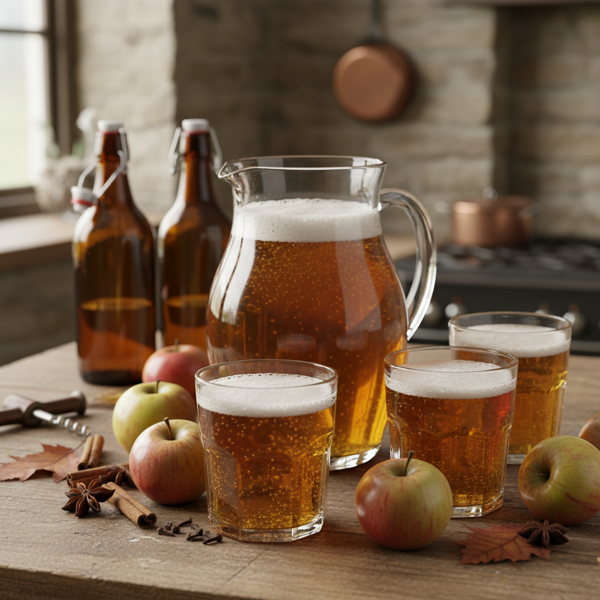
Craft your very own homemade hard apple cider with this simple and delightful recipe. Perfect for autumn gatherings or cozy evenings, this refreshing beverage combines the natural sweetness of apple cider with the rich notes of honey and the effervescence of fermentation. Whether you're sharing with friends or enjoying a quiet moment alone, this harder version of apple cider is sure to impress. Using just a handful of ingredients and a little patience, you can create a delicious drink that showcases the flavors of fresh apples. Cheers to your brewing adventure!
10
Servings
N/A
Calories
3
Ingredients
Ingredients
Apple Cider
1 gallon (Unfiltered and fresh is best)
Honey
1 lb (Use raw honey for the best flavor)
Yeast
1 teaspoon (Choose a champagne or cider yeast for optimal results)
Instructions
1
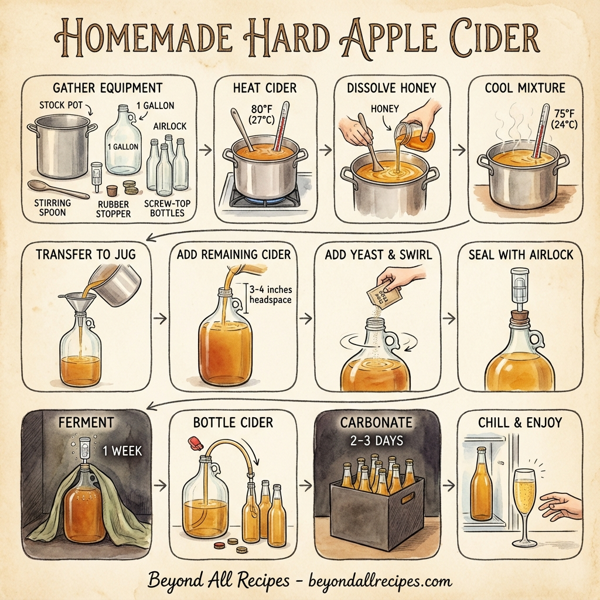
Gather all necessary equipment: a stock pot, stirring spoon, a 1-gallon glass jug, a rubber stopper with an airlock hole, an airlock, and enough screw-top bottles to hold one gallon of cider.
2
Pour approximately half of the apple cider into the stock pot and gently heat it until it reaches 80°F (27°C).
3
Add the honey to the warm cider, stirring continuously until fully dissolved, then remove from heat.
4
Allow the cider mixture to cool down to around 75°F (24°C).
5
Using a funnel, transfer the warm cider into the 1-gallon glass jug.
6
Add the remaining apple cider to the jug, leaving about 3 to 4 inches of space at the top for fermentation.
7
Sprinkle the yeast into the jug and gently swirl to combine the ingredients.
8
Seal the jug with the rubber stopper and attach the airlock to ensure proper fermentation.
9
Place the jug in a cool, dark area and let it ferment for about one week, monitoring for bubbling in the airlock.
10
After a week, carefully transfer the cider to screw-top bottles, allowing some headspace for carbonation.
11
Let the bottled cider sit in the same cool, dark place for an additional 2 to 3 days to develop carbonation.
12
Chill in the refrigerator before serving, and enjoy your homemade hard apple cider responsibly!
Nutrition Information
Frequently Asked Questions
Frequently Asked Questions
What is the primary ingredient for this homemade hard cider?
The primary ingredient is one gallon of fresh, unfiltered apple cider.
Why is unfiltered cider recommended?
Unfiltered and fresh cider is best because it retains more natural apple flavor and nutrients which enhance the fermentation process.
How much honey is required for this recipe?
You will need 1 lb of honey to provide the necessary sugars for fermentation and flavor.
What kind of honey should I use?
Raw honey is recommended for the best flavor profile in the finished hard cider.
What type of yeast is best for hard apple cider?
Champagne yeast or a specific cider yeast is recommended for optimal results.
How much yeast do I need to add?
The recipe calls for 1 teaspoon of yeast to be sprinkled into the gallon jug.
To what temperature should I heat the cider initially?
You should gently heat approximately half of the cider to 80°F (27°C).
Why do I need to heat the cider?
Heating the cider helps the honey dissolve more easily and ensures a consistent mixture.
What temperature should the cider reach before adding the yeast?
The mixture should cool down to around 75°F (24°C) before you transfer it and add the yeast.
What equipment is needed for the fermentation process?
You will need a 1-gallon glass jug, a rubber stopper with an airlock hole, and an airlock.
How much headspace should be left in the fermentation jug?
Leave about 3 to 4 inches of space at the top of the jug to allow for fermentation activity.
How should I combine the yeast with the cider?
Sprinkle the yeast into the jug and then gently swirl the jug to combine the ingredients.
Where should I store the jug while it ferments?
Place the jug in a cool, dark area to maintain a stable environment for the yeast.
How long does the initial fermentation take?
The initial fermentation takes about one week.
How can I tell if the cider is fermenting?
Monitor the airlock for bubbling; consistent bubbles indicate active fermentation.
What kind of bottles are used for storing the cider?
You should use enough screw-top bottles to hold one gallon of liquid.
Is headspace needed in the bottles?
Yes, you should allow some headspace in each bottle to facilitate carbonation.
How long does it take for the cider to carbonate in the bottles?
Let the bottled cider sit for an additional 2 to 3 days to develop carbonation.
Should the bottles be refrigerated immediately?
No, let them sit in a cool, dark place for 2-3 days first, then chill them in the refrigerator before serving.
How many servings does this 1-gallon recipe produce?
This recipe yields approximately 10 servings.
Can I use a plastic jug for fermentation?
The recipe specifies a 1-gallon glass jug, which is preferred for sanitation and visibility.
Why is the airlock important?
The airlock allows carbon dioxide to escape without letting oxygen or contaminants in.
What is the purpose of the honey in this recipe?
Honey adds flavor depth and provides extra fermentable sugar, which increases the alcohol content.
Can I use store-bought cider with preservatives?
It is best to avoid cider with preservatives like potassium sorbate, as they can prevent yeast from fermenting.
Is this drink served hot or cold?
This hard cider is best enjoyed chilled after being refrigerated.
How should I transfer the cider to bottles?
Carefully transfer or siphon the cider to avoid disturbing any sediment that has settled at the bottom of the jug.
What tools are used for the transfer?
A funnel is used to move the liquid into the fermentation jug initially.
Can I stir the honey into cold cider?
It is much more difficult; heating half the cider to 80°F ensures the honey dissolves smoothly.
What tags are associated with this recipe?
Tags include hard cider, fermentation, alcoholic drinks, and autumn recipes.
Is this recipe suitable for autumn gatherings?
Yes, the combination of apple and honey makes it a perfect beverage for autumn occasions.