Homemade English Muffins (Bread Machine Method)
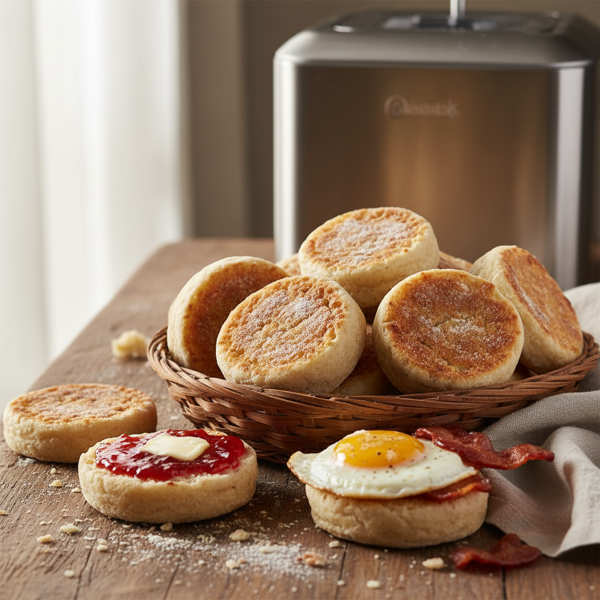
Indulge in the warm, wholesome goodness of these homemade English muffins, made effortlessly in your bread machine. This recipe produces deliciously soft and lightly chewy muffins, perfect for breakfast or brunch. By starting with a simple mix of ingredients and allowing your bread machine to do the kneading, you'll enjoy the satisfaction of freshly baked muffins with minimal effort. They are delightful when toasted and spread with butter, jam, or your favorite toppings. With easy-to-follow instructions and handy tips learned from experience, these muffins are sure to become a favorite in your home. Try them fresh or freeze extras for a quick meal on busy mornings!
N/A
Servings
N/A
Calories
8
Ingredients
Ingredients
milk
1 cup (heated or at room temperature)
butter
3 tablespoons (softened)
egg
1 (beaten)
salt
1/2 teaspoon (n/a)
sugar
2 teaspoons (n/a)
all-purpose flour
3 cups (sifted or leveled)
dry yeast
1 1/2 teaspoons (n/a)
cornmeal
as needed (for dusting)
Instructions
1
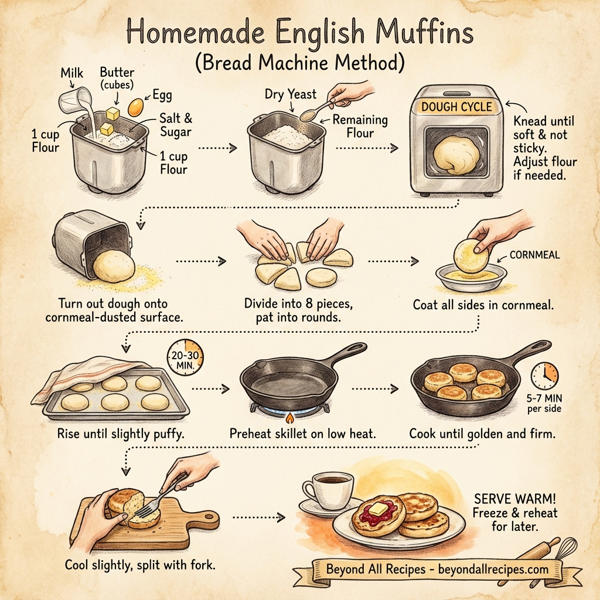
Pour the milk into your bread machine pan, followed by the butter, egg, salt, sugar, and 1 cup of the all-purpose flour.
2
Sprinkle the dry yeast over the flour, then add the remaining flour until you've incorporated it all.
3
Start the dough cycle on your bread machine. Allow it to knead until the dough is soft but not sticky—adjust with extra flour if necessary.
4
Once the cycle is complete, turn the dough out onto a cornmeal-dusted surface.
5
Instead of pressing it into a rectangle, divide the dough into 8 equal pieces and gently pat each piece into a round that is about 1/2 inch thick.
6
Turn each round in a small dish of cornmeal to lightly coat all sides.
7
Arrange the rounds on a baking sheet, cover them with a clean towel, and let them rise for 20 to 30 minutes, or until slightly puffy but not quite doubled in size.
8
Preheat a dry cast-iron skillet or griddle over low heat (spraying with cooking spray, if desired).
9
Cook each muffin for 5 to 7 minutes on each side or until golden brown and firm to the touch.
10
Once cooked, remove from the skillet, allow to cool slightly, and then split the muffins using a fork or serrated knife for the best texture.
11
Serve the muffins warm. These can be stored in the freezer and reheated in the microwave or toasted for future enjoyment.
Nutrition Information
Frequently Asked Questions
Frequently Asked Questions
What is the Homemade English Muffins bread machine method?
This method uses a bread machine's dough cycle to automate the kneading process, producing soft and lightly chewy muffins with minimal effort.
How many muffins does this recipe make?
This recipe yields 8 equal-sized English muffins.
What ingredients are needed for these English muffins?
The ingredients include milk, butter, egg, salt, sugar, all-purpose flour, dry yeast, and cornmeal for dusting.
In what order should I add ingredients to the bread machine?
Pour in the milk first, followed by butter, egg, salt, sugar, 1 cup of flour, then the yeast, and finally the remaining flour.
What temperature should the milk be?
The milk should be heated or at room temperature before being added to the bread machine.
How much butter is required for the recipe?
The recipe calls for 3 tablespoons of softened butter.
What type of flour is best for these muffins?
All-purpose flour that has been sifted or leveled is recommended for this recipe.
How much yeast do I need?
You will need 1 1/2 teaspoons of dry yeast.
Which bread machine cycle should I use?
You should use the standard dough cycle on your bread machine.
What should the dough consistency feel like?
The dough should be soft but not sticky; you can adjust with extra flour during the kneading process if necessary.
How do I shape the English muffins?
Divide the dough into 8 pieces and gently pat each piece into a round that is about 1/2 inch thick.
Why is cornmeal used in this recipe?
Cornmeal is used to dust the surface and coat the muffins to prevent sticking and provide a traditional texture.
How long should the muffin rounds rise?
The rounds should rise for 20 to 30 minutes, or until they are slightly puffy but not doubled in size.
How are these muffins cooked?
They are cooked on a dry cast-iron skillet or griddle over low heat rather than being baked in an oven.
Do I need to grease the skillet?
The skillet should generally be dry, though you can use cooking spray if desired.
How long do I cook the muffins on each side?
Cook each muffin for 5 to 7 minutes per side until golden brown and firm to the touch.
What is the best way to split an English muffin?
Use a fork or a serrated knife to split the muffins to preserve their internal texture.
Can I freeze these homemade English muffins?
Yes, they can be stored in the freezer and reheated later.
How do I reheat frozen English muffins?
Frozen muffins can be reheated in the microwave or toasted until warm.
What are the best toppings for these muffins?
They are delicious when toasted and spread with butter, jam, or your favorite breakfast toppings.
Does this recipe require sugar?
Yes, the recipe uses 2 teaspoons of sugar.
How much salt is included?
The recipe calls for 1/2 teaspoon of salt.
How much flour is used in total?
A total of 3 cups of all-purpose flour is required.
What should I do after the dough cycle finishes?
Turn the dough out onto a cornmeal-dusted surface to begin shaping.
Can these muffins be used for brunch?
Yes, they are perfect for breakfast, brunch, or even as a snack.
Is an egg necessary for this dough?
Yes, the recipe requires 1 beaten egg.
What kind of skillet is recommended?
A cast-iron skillet is recommended for even heating and a good crust.
How thick should I pat the dough rounds?
The dough rounds should be approximately 1/2 inch thick.
What is the purpose of sifting the flour?
Sifting or leveling the flour ensures accurate measurement and a better dough consistency.
Can I make these without a bread machine?
While this specific recipe is designed for a bread machine dough cycle, the ingredients could be kneaded by hand before following the same rising and cooking steps.