Homemade Dark Rye Bread Inspired by Outback Steakhouse

Experience the rich and hearty flavor of this homemade dark rye bread, reminiscent of the famous Outback Steakhouse recipe. Made with a blend of dark molasses and cocoa, this bread boasts a rich color and a deep, comforting flavor profile without any artificial coloring. This version uses wholesome ingredients and no blackstrap molasses, ensuring a balanced sweetness that enhances the bread’s depth. Perfect for serving alongside a savory meal or as a delicious sandwich base, this bread is sure to impress family and friends alike. With instructions tailored for both active and instant yeast enthusiasts, it’s accessible for bakers of all levels. Enjoy the warmth of fresh-baked bread right from your own oven!
N/A
Servings
800
Calories
10
Ingredients
Ingredients
active dry yeast
6 3/4 teaspoons (Soften in warm water with sugar.)
warm water
1/2 cup (For yeast activation.)
sugar
1 tablespoon (To activate yeast.)
warm water
1 cup (For the bread mixture.)
dark molasses
1/2 cup (Adds sweetness and color.)
cocoa powder
2 tablespoons (Adds depth of flavor.)
salt
1 tablespoon (For flavor enhancement.)
oil
2 tablespoons (For moisture.)
rye flour
2 cups (8 oz.) (Main flour ingredient.)
all-purpose flour
2 1/2-3 cups (11.25 - 13.5 oz.) (To adjust dough consistency.)
Instructions
1
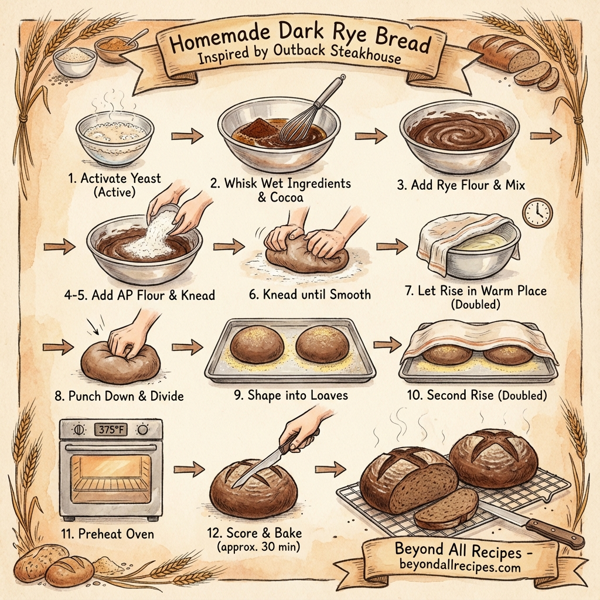
In a small bowl, combine 1/2 cup of warm water with the active dry yeast and sugar. Stir and let sit for about 6 minutes until the mixture becomes bubbly and frothy. (If using instant yeast, simply mix the yeast and sugar directly into the flour later.)
2
In a large mixing bowl, whisk together 1 cup of warm water, dark molasses, cocoa powder, salt, and oil until well combined.
3
Add the rye flour to the wet mixture and beat until smooth and fully incorporated, creating a thick batter.
4
Once the yeast mixture is ready, pour it into the bowl with the rye flour blend (only if using active dry yeast) and stir to combine.
5
Gradually add the all-purpose flour, 1/2 cup at a time, mixing until the dough is smooth, elastic, and no longer sticky.
6
Lightly flour a clean surface and knead the dough for about 5-7 minutes until it is pliable and soft.
7
Place the kneaded dough in a greased bowl, cover with a damp towel, and let it rise in a warm place until it doubles in size (about 1-2 hours).
8
Once risen, punch down the dough to release the air and turn it onto a floured surface. Divide the dough into two equal portions.
9
Shape each portion into a round loaf and place them a few inches apart on a greased and cornmeal-dusted baking sheet.
10
Lightly spray the tops of the loaves with cooking spray, then cover with a towel and allow to rise again in a warm place until doubled in size (about 30-60 minutes).
11
Preheat your oven to 375°F (190°C).
12
Before baking, score the tops of the loaves with a sharp knife. Bake for about 30 minutes, or until the internal temperature reaches 200°F (93°C) or the crust sounds hollow when tapped.
13
Remove the loaves from the oven and let cool on a wire rack before slicing. Enjoy your homemade dark rye bread!
Nutrition Information
4.5g
Fat
170g
Carbs
17.5g
Protein
Frequently Asked Questions
Frequently Asked Questions
What inspired this Homemade Dark Rye Bread recipe?
This recipe is inspired by the famous dark bread served at Outback Steakhouse.
What ingredients give this bread its deep dark color?
The rich color comes from a natural blend of dark molasses and cocoa powder, rather than artificial food coloring.
Does this recipe require blackstrap molasses?
No, this version specifically uses dark molasses to ensure a balanced sweetness and depth without the intensity of blackstrap molasses.
Can I use instant yeast instead of active dry yeast?
Yes, if using instant yeast, simply mix the yeast and sugar directly into the flour instead of proofing it in water first.
How do I activate the active dry yeast for this recipe?
Combine 1/2 cup of warm water with the yeast and sugar, then let it sit for about 6 minutes until bubbly and frothy.
What is the purpose of cocoa powder in rye bread?
Cocoa powder adds both a rich, dark color and a complex depth of flavor that complements the rye.
How long should the dough be kneaded?
The dough should be kneaded for approximately 5-7 minutes until it becomes pliable, soft, and elastic.
How many times does the dough need to rise?
The dough requires two rises: the first until it doubles in size (1-2 hours) and a second rise after shaping (30-60 minutes).
At what temperature should the oven be preheated?
The oven should be preheated to 375°F (190°C).
How can I tell when the bread is finished baking?
The bread is done when the internal temperature reaches 200°F (93°C) or the crust sounds hollow when tapped.
How many loaves does this recipe yield?
This recipe yields two equal-sized round loaves.
Should I prepare the baking sheet in a specific way?
Yes, the baking sheet should be greased and lightly dusted with cornmeal to prevent sticking and add texture.
What is the total baking time for the loaves?
The loaves typically bake for about 30 minutes.
What types of flour are used in this recipe?
This recipe uses a combination of 2 cups of rye flour and 2.5 to 3 cups of all-purpose flour.
How should the loaves be shaped?
Divide the dough into two equal portions and shape each into a round loaf.
What should I do to the top of the bread before baking?
You should score the tops of the loaves with a sharp knife just before placing them in the oven.
How much protein is in this bread?
The recipe contains approximately 17.5g of protein.
How many calories are in this bread recipe?
The provided nutritional information estimates the recipe at 800 calories.
What is the role of salt in this recipe?
Salt is used for flavor enhancement and to regulate the yeast activity.
Can I slice the bread immediately after it comes out of the oven?
It is recommended to let the loaves cool completely on a wire rack before slicing to ensure the best texture.
What is the purpose of spraying the loaves with cooking spray during the second rise?
Lightly spraying the tops helps keep the surface moist and prevents the towel from sticking to the dough.
Is this recipe suitable for beginner bakers?
Yes, the instructions are tailored for bakers of all levels and include tips for different types of yeast.
What provides moisture to the bread?
Moisture is provided by the warm water, molasses, and 2 tablespoons of oil.
How much yeast is required?
The recipe calls for 6 3/4 teaspoons of active dry yeast.
What is the ideal serving suggestion for this rye bread?
It is perfect for serving alongside savory meals or using as a base for hearty sandwiches.
How much molasses is used?
The recipe uses 1/2 cup of dark molasses.
What texture should the dough have after adding the all-purpose flour?
The dough should be smooth, elastic, and no longer sticky.
What is the total amount of water used?
The recipe uses a total of 1.5 cups of warm water (1/2 cup for yeast and 1 cup for the mixture).
Should the dough rise in a specific environment?
The dough should rise in a warm place, covered with a damp towel to prevent the surface from drying out.
Is there any fat in this bread?
Yes, the bread contains 4.5g of fat, primarily from the 2 tablespoons of oil used in the dough.