Homemade Classic Mayonnaise
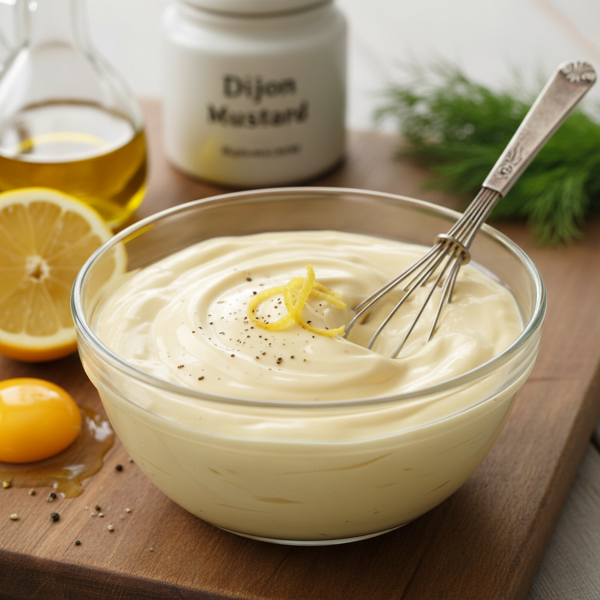
Elevate your culinary creations with this luscious homemade mayonnaise! Made with fresh ingredients and customizable to your taste, this mayonnaise is a delightful alternative to commercial brands. With no preservatives, it offers a rich and creamy texture that enhances everything from sandwiches to salads. You can easily adjust the flavor profile by choosing different oils or infusing herbs right into the mix. If you're wary of raw eggs, a convenient alternative is included that maintains the delicious essence of traditional mayonnaise. Just remember to store it in the fridge for optimal freshness!
1.5
Servings
800
Calories
4
Ingredients

Ingredients
large egg
1 (raw)
freshly squeezed lemon juice
1 tablespoon (none)
Dijon mustard
1 tablespoon (none)
canola oil
1.25 cups (none)
Instructions
1
Choose an oil of your preference; for a classic approach, stick with canola oil. Feel free to experiment by blending different oils, such as using 1 cup of canola oil and 1/4 cup of olive oil for a unique flavor.
2
For an extra thick mayo, consider using two egg yolks instead of a whole egg.
3
If you're looking to avoid raw eggs, you can substitute 2 tablespoons of Egg Beaters for the whole egg, omitting the lemon juice or vinegar in this case. However, this substitution may alter the flavor, so use with caution.
4
In your food processor fitted with the metal blade, add the egg, lemon juice, mustard, and 1 tablespoon of the chosen oil.
5
Process the mixture for one minute to combine.
6
Utilize the food pusher with the small hole at the bottom for this next step. Pour 1/4 cup of oil into the food pusher, and while the machine runs, allow this small amount to trickle in slowly.
7
Once the 1/4 cup of oil is fully incorporated, stop the machine and remove the food pusher. Restart the processor and gradually pour in the remaining oil in a slow stream.
8
Once all the oil is added, taste the mayonnaise and incorporate salt and pepper to your liking.
9
For an herby variation, you can add 1/4 cup of lightly packed fresh herbs (such as parsley) at the start, right along with the egg.
10
Store the mayonnaise in the refrigerator, as it is made without preservatives and should not be kept at room temperature for an extended period.
Nutrition Information
90
Fat
3
Carbs
2
Protein
Frequently Asked Questions
Frequently Asked Questions
What is the best oil for homemade classic mayonnaise?
For a classic approach, canola oil is recommended. However, you can experiment by blending oils, such as using 1 cup of canola oil with 1/4 cup of olive oil for a unique flavor.
How can I make my mayonnaise extra thick?
To achieve an extra thick consistency, you can use two egg yolks instead of one whole egg in the recipe.
Can I make this mayonnaise without raw eggs?
Yes, you can substitute 2 tablespoons of Egg Beaters for the whole egg. Note that if you use this substitution, you should omit the lemon juice or vinegar, and be aware it may slightly alter the flavor.
What equipment is needed to make this recipe?
A food processor fitted with a metal blade is required, along with a food pusher that has a small hole at the bottom for dripping oil.
How do I incorporate the oil properly?
Start by pouring 1/4 cup of oil into the food pusher and letting it trickle in slowly while the machine runs. Once incorporated, restart the processor and pour the remaining oil in a slow, steady stream.
Can I add fresh herbs to the mayonnaise?
Yes, for an herby variation, add 1/4 cup of lightly packed fresh herbs, such as parsley, at the very beginning when you add the egg.
How should I store homemade mayonnaise?
Store the mayonnaise in the refrigerator immediately. Because it contains no preservatives, it should never be kept at room temperature for an extended period.
What are the nutritional facts for this mayonnaise?
The recipe contains approximately 800 calories, 90 grams of fat, 3 grams of carbohydrates, and 2 grams of protein per 1.5 serving batch.
Does this mayonnaise contain preservatives?
No, this homemade recipe is free from the preservatives often found in commercial brands, which is why refrigeration is essential.
When should I add salt and pepper?
Salt and pepper should be incorporated at the very end of the process, after all the oil has been added, to suit your personal taste.
What type of mustard is used in this recipe?
The recipe calls for 1 tablespoon of Dijon mustard.
How long do I process the initial ingredients?
The initial mixture of egg, lemon juice, mustard, and one tablespoon of oil should be processed for exactly one minute to combine properly.
What kind of lemon juice is best?
Freshly squeezed lemon juice is recommended for the best flavor profile.
How many ingredients are in the basic recipe?
The basic recipe consists of 4 main ingredients: a large egg, lemon juice, Dijon mustard, and canola oil.
Can this mayonnaise be used in salads?
Yes, its rich and creamy texture makes it perfect for enhancing salads, sandwiches, and other culinary creations.
Why is a food pusher with a small hole used?
The small hole allows the oil to trickle in very slowly, which is crucial for creating a stable emulsion and preventing the mayonnaise from breaking.
Is the egg used in this recipe cooked or raw?
The traditional recipe uses one raw large egg, though a pasteurized egg substitute can be used if preferred.
What is the total amount of oil used?
The recipe uses a total of 1.25 cups of canola oil.
Can I use vinegar instead of lemon juice?
Yes, while the recipe specifies lemon juice, it mentions that vinegar can be omitted in the same way as lemon juice if using egg substitutes, implying it can be used as the acid component.
How many servings does this recipe make?
This recipe yields approximately 1.5 servings (likely 1.5 cups).
What should I do if the flavor is too mild?
You can adjust the flavor profile by adding more salt, pepper, or experimenting with herb infusions like parsley.
Is there any fiber in this mayonnaise?
No, this mayonnaise recipe contains zero fiber.
How much protein is in one batch?
There are 2 grams of protein in the total recipe.
What is the category of this recipe?
This recipe falls under the Sauces category.
Does the recipe contain any sugar?
No, there is no sugar listed in the ingredients or nutritional data for this mayonnaise.
What is the primary fat source in this recipe?
The primary fat source is canola oil, which contributes to the 90 grams of fat per batch.
When should the food processor be stopped?
Stop the machine once the initial 1/4 cup of oil is fully incorporated to remove the food pusher before adding the remaining oil.
Can I use olive oil exclusively?
While you can use olive oil, the recipe suggests a blend (1 cup canola, 1/4 cup olive) because pure olive oil can sometimes create a very strong or bitter flavor.
What is the first step of the instructions?
The first step is choosing your preferred oil, specifically selecting canola oil for a classic taste.
How do I ensure the mayonnaise remains fresh?
Keep it tightly sealed in the refrigerator and use it promptly since it lacks the chemical preservatives of store-bought versions.