Heritage Potted Beef Delight
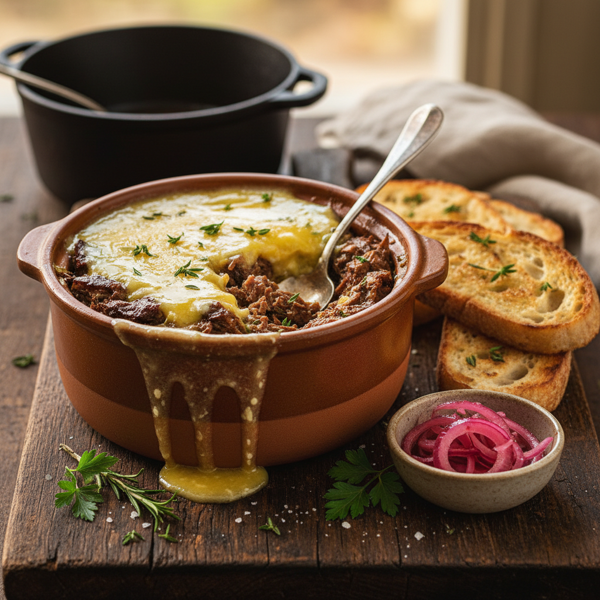
Step into the past with this classic Heritage Potted Beef Delight, a savory dish inspired by the resourceful culinary techniques of the 18th century. Before the advent of modern refrigeration, ingenious methods such as root cellars were used to preserve food. This authentic recipe from Scottish heritage offers a delectable blend of tender beef mingled with aromatic spices, perfect as a spread on bread or toast. While traditionally stored in a cool cellar, today we recommend refrigeration to ensure the utmost in safety and freshness.
2
Servings
N/A
Calories
6
Ingredients

Ingredients
stewing beef
1 lb (remove skin and as much fat as possible, cut into cubes)
stock or water
1/2 cup (none)
butter
4 tablespoons (melted)
clove
1 (whole)
mace
1 pinch (none)
salt and pepper
to taste (none)
Instructions
1
Preheat your oven to 350°F (180°C).
2
Trim the stewing beef by removing the skin and as much fat as possible, then cut it into smaller cubes.
3
Place the beef cubes into an ovenproof dish, adding your choice of stock or water along with the whole clove and mace.
4
Season generously with salt and pepper to taste.
5
Cover the dish and bake in the preheated oven for approximately 1 1/2 to 2 hours, or until the beef is tender and can be easily shredded.
6
Once cooked, drain the liquid from the meat and discard the clove.
7
Finely mince the beef using a mincer or a blender until it reaches a smooth texture.
8
Melt the butter and mix half of it into the minced beef to enhance the flavor and texture.
9
Spoon the beef mixture into sterilized jars, ensuring an even distribution.
10
Seal the jars by pouring the remaining melted butter over the top, creating a protective layer.
11
Refrigerate immediately to preserve freshness, and consume within a reasonable time for best taste.
12
Serve this delightful potted beef on slices of fresh bread or toast for a timeless treat.
Nutrition Information
Frequently Asked Questions
Frequently Asked Questions
What is Heritage Potted Beef Delight?
Heritage Potted Beef Delight is a savory dish inspired by 18th-century Scottish culinary techniques, consisting of tender minced beef blended with aromatic spices and sealed with butter.
What is the historical origin of this recipe?
This recipe is rooted in 18th-century Scottish heritage, reflecting traditional methods used to preserve food before modern refrigeration.
How was potted beef traditionally stored?
Historically, potted beef was stored in cool root cellars to maintain its freshness, though modern refrigeration is now recommended.
What type of beef is recommended for this recipe?
The recipe calls for 1 lb of stewing beef, which should be trimmed of skin and fat before being cubed.
What temperature should the oven be set to?
The oven should be preheated to 350 degrees Fahrenheit or 180 degrees Celsius.
How long does the beef need to bake?
The beef should be baked in a covered dish for approximately 1 1/2 to 2 hours until it is tender enough to shred.
What spices are used in Heritage Potted Beef Delight?
The dish is seasoned with a whole clove, a pinch of mace, and salt and pepper to taste.
Is it necessary to remove the clove after cooking?
Yes, once the beef is cooked, you should drain the liquid and discard the whole clove before mincing the meat.
How do I achieve the right texture for the beef?
You can use a mincer or a blender to process the cooked beef until it reaches a smooth texture.
How is butter used in this recipe?
Four tablespoons of melted butter are used; half is mixed into the beef for flavor and the other half is poured over the top to seal the jars.
Why is butter poured over the top of the beef?
The butter creates a protective layer that helps seal the beef mixture and preserve its freshness.
What kind of jars should be used for storage?
The beef mixture should be spooned into sterilized jars to ensure food safety.
How should I serve potted beef?
It is traditionally served as a spread on slices of fresh bread or toast.
Is this recipe suitable for snacks?
Yes, it is categorized under Lunch and Snacks and makes a great timeless treat.
Can I use water instead of stock for cooking the beef?
Yes, the recipe allows for either 1/2 cup of stock or water to be added to the beef before baking.
How many servings does this recipe yield?
This recipe is designed to yield 2 servings.
What makes this recipe 'authentic'?
Its authenticity comes from the use of historic ingredients like mace and traditional 18th-century preservation techniques.
Should the beef be hot or cold when served?
It is typically served chilled as a spread after it has been refrigerated to set the butter seal.
Is there any sugar in this recipe?
No, this is a savory dish with no sugar listed in the ingredients.
Is mace the same as nutmeg?
Mace is the lacy outer covering of the nutmeg seed and has a similar but more delicate flavor profile often used in historic recipes.
What should I do with the cooking liquid?
The recipe instructions state to drain the liquid from the meat after cooking and discard it.
Does the beef need to be seasoned before or after baking?
The beef is seasoned with salt and pepper before it goes into the oven to bake.
Is this recipe part of English or Scottish cuisine?
While it has roots in Scottish heritage, it is also associated with traditional English cuisine.
How soon should the beef be refrigerated?
The jars should be refrigerated immediately after the top layer of butter is poured to ensure safety.
Can I use a food processor instead of a mincer?
Yes, a blender or food processor can be used to achieve the desired smooth consistency.
What is the ingredient count for this recipe?
The recipe contains 6 main ingredients: stewing beef, stock or water, butter, clove, mace, and salt and pepper.
What are some common tags for this recipe?
Common tags include Scottish, heritage, potted beef, historic recipe, and traditional beef spread.
Is it important to trim the fat from the beef?
Yes, removing the skin and as much fat as possible is a key step in preparing the meat for mincing.
Why were root cellars mentioned in the description?
Root cellars were the historical method for keeping items like potted beef cool before the invention of refrigerators.
How long will the potted beef stay fresh?
It should be consumed within a reasonable time after refrigeration for the best taste and safety.