Heritage Marbled Easter Eggs
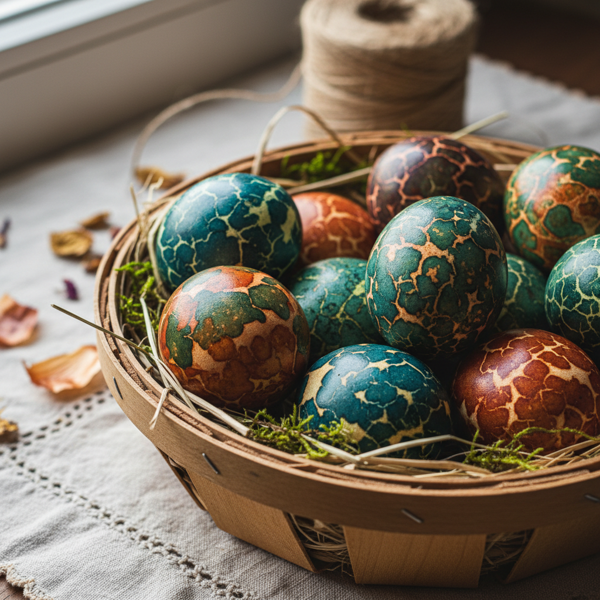
Celebrate Easter with the time-honored tradition of Heritage Marbled Easter Eggs. This delightful recipe showcases the art of natural dyeing using everyday ingredients like onion skins, beetroot, and spinach to create vibrant and beautiful eggs. Not only do these lovingly crafted eggs offer a unique alternative to commercial chocolates, but they also carry deep cultural significance. The name 'Pace' is believed to originate from the French word 'Pâques,' reflecting the historical connection of this method to Easter festivities. In parts of Britain, particularly Lancashire, these eggs are playfully rolled down hills during Easter celebrations, adding a touch of friendly competition to the holiday. Share the joy of this sustainable and eco-friendly tradition by gifting these stunning eggs to visitors throughout the Easter season. Perfect for Brightening up your breakfast, tea, or brunch table, these eggs are both a feast for the eyes and a delicious treat to enjoy.
N/A
Servings
N/A
Calories
7
Ingredients

Ingredients
fresh organic eggs
12 (None)
onion skins (red and yellow)
6-8 (Peeled from onions)
aluminum foil
As needed (For wrapping eggs)
natural non-coloured string
As needed (For tying around eggs)
butter
to taste (optional) (For polishing)
beetroot water
optional (For dyeing eggs red)
spinach water
optional (For dyeing eggs green)
Instructions
1
Carefully peel the outer skin from red and yellow onions, setting the skins aside for dyeing.
2
Randomly wrap the onion skins around each egg, ensuring coverage is uneven to create a marbled effect.
3
To secure the onion skins, encase each egg in a piece of aluminum foil or tie them with non-coloured string, ensuring they are well-covered.
4
In a large pot, bring water to a boil and gently place the wrapped eggs inside.
5
Boil the eggs for approximately 5-7 minutes, depending on your preferred level of doneness.
6
Once boiled, remove the pot from heat and allow the eggs to cool in the water for a few minutes.
7
Carefully unwrap the eggs from the foil or string, removing the onion skins to reveal the beautifully dyed surface.
8
Arrange the marbled eggs in a decorative basket or egg holder, showcasing them as the centerpiece of your Easter breakfast, tea, or brunch table.
9
For an extra touch, lightly polish the eggs with a bit of butter to enhance their colors and impart a glossy finish.
10
For alternative colors, utilize beetroot water for vibrant red eggs or spinach water for lovely green hues!
Nutrition Information
Frequently Asked Questions
Frequently Asked Questions
What are Heritage Marbled Easter Eggs?
They are eggs dyed using natural ingredients like onion skins to create a unique marbled pattern, following a time-honored tradition.
What does the name Pace Eggs mean?
The name is believed to originate from the French word Pâques, reflecting its historical connection to Easter.
How do you achieve the marbled effect on the eggs?
By randomly wrapping onion skins around each egg unevenly before boiling them.
What natural dyes can be used for these eggs?
Onion skins, beetroot water for red, and spinach water for green are recommended.
How long should I boil the eggs?
The eggs should be boiled for approximately 5 to 7 minutes depending on your preferred level of doneness.
Why is aluminum foil used in this recipe?
Aluminum foil is used to encase the eggs and secure the onion skins in place during the boiling process.
Can I use string instead of foil?
Yes, you can use natural non-coloured string to tie the onion skins around the eggs.
What is the significance of rolling eggs down hills?
In parts of Britain like Lancashire, these eggs are rolled down hills as part of a friendly Easter competition.
Are these eggs sustainable?
Yes, they are described as a sustainable and eco-friendly alternative to commercial chocolate eggs.
How do I make the finished eggs look glossy?
You can lightly polish the dyed eggs with a bit of butter to enhance their colors and add a glossy finish.
What type of onion skins should I use?
The recipe calls for a mix of red and yellow onion skins.
Should I use organic eggs?
Yes, the recipe specifies using 12 fresh organic eggs.
How do I get a green color on the eggs?
Utilize spinach water to achieve lovely green hues.
How do I get a vibrant red color?
Utilize beetroot water for vibrant red eggs.
What should I do after the eggs finish boiling?
Remove the pot from heat and allow the eggs to cool in the water for a few minutes before unwrapping.
How should I present the Marbled Easter Eggs?
Arrange them in a decorative basket or egg holder as a centerpiece for your table.
Are these eggs suitable for breakfast?
Yes, they are perfect for brightening up a breakfast, tea, or brunch table.
How many eggs does this recipe make?
The recipe is designed for 12 eggs.
Can I gift these eggs to visitors?
Yes, sharing these lovingly crafted eggs with visitors is a suggested way to share the joy of the tradition.
What kind of string should I avoid?
You should avoid colored strings and use natural non-coloured string to prevent unwanted dye transfer.
Where is the tradition of Pace Eggs most popular?
The tradition is particularly strong in Lancashire, Britain.
Do I need to peel the onions before dyeing?
Yes, carefully peel the outer skin from the onions and set those skins aside for the dyeing process.
Is this recipe complicated?
No, it is a simple DIY project using everyday kitchen ingredients.
Can I use these for a tea party?
Yes, they are a great addition to any Easter tea or brunch.
What creates the color on the egg shell?
The natural pigments from the onion skins, beetroot, or spinach transfer to the shell during boiling.
Should the onion skins be applied evenly?
No, they should be applied unevenly to ensure a unique marbled effect.
Is the dye safe to touch?
Yes, because the process uses natural food ingredients like onions and spinach.
Are these eggs an alternative to chocolate?
Yes, they provide a unique and traditional alternative to commercial Easter chocolates.
Do I need special equipment?
Only a large pot for boiling water and common items like foil or string are needed.
Is the polishing step mandatory?
No, polishing with butter is optional but recommended for an extra touch of color and shine.