Herb-Infused Slow Roasted Lamb
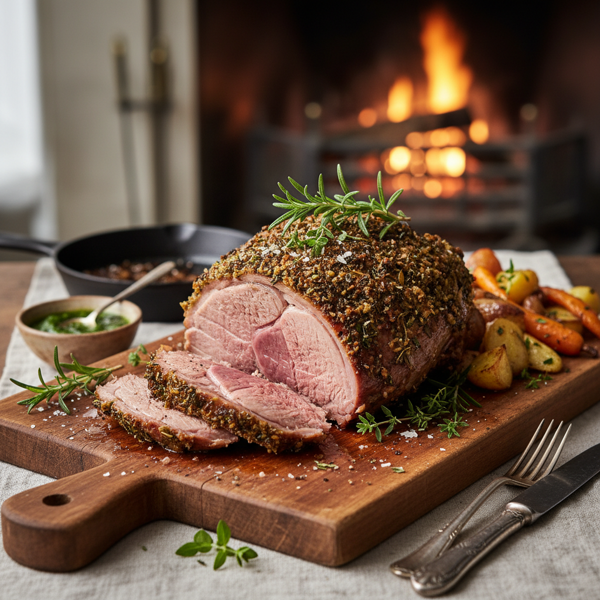
This Herb-Infused Slow Roasted Lamb is a delightful twist inspired by Ina Garten's classic recipe. Perfect for a special occasion or a cozy family dinner, this dish features a tender leg of lamb slow-cooked in a fragrant medley of white wine, garlic, and fresh herbs including rosemary and thyme. The result is a succulent, fall-off-the-bone meal that is not only delicious but also deeply aromatic, filling your home with warmth and inviting scents. Basting periodically and allowing the lamb to rest after cooking ensures maximum flavor and tenderness, making this a gourmet experience achievable in the comfort of your own kitchen.
N/A
Servings
N/A
Calories
9
Ingredients
Ingredients
Leg of lamb
1 (Bone-in or boneless, tied)
Olive oil
2 tablespoons (For rubbing)
Kosher salt
1 tablespoon (For seasoning)
Fresh ground black pepper
2 teaspoons (For seasoning)
Dry white wine
750 ml (For braising)
Garlic
2 heads (Broken apart but not peeled)
Fresh rosemary sprigs
15 large (For flavor)
Fresh thyme sprigs
15 large (For flavor)
Bay leaves
6 (For flavor)
Instructions
1
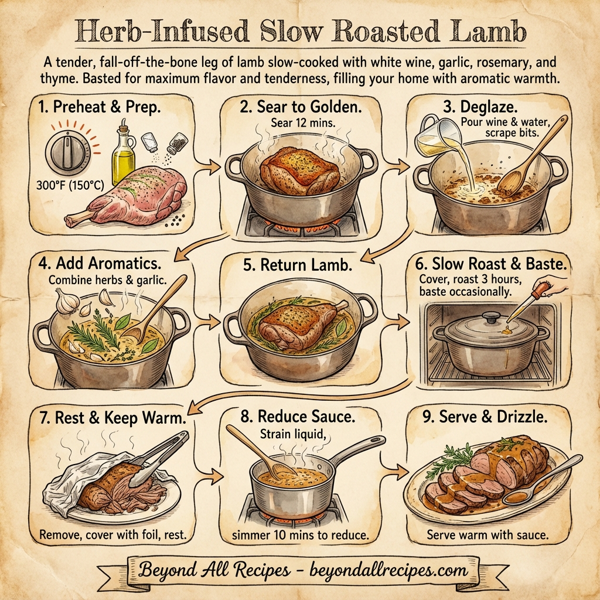
Preheat your oven to 300 degrees F (150 degrees C).
2
Prepare the leg of lamb by rubbing it all over with olive oil, generously seasoning it with kosher salt and freshly ground black pepper.
3
In a large Dutch oven or heavy pot, heat over medium-high heat until hot. Carefully add the seasoned lamb and sear it on all sides for about 12 minutes, until it develops a rich, golden-brown crust. Once browned, transfer the lamb to a plate.
4
Pour the dry white wine and 2 cups of water into the hot pot, using a wooden spoon to scrape up all the flavorful brown bits stuck to the bottom. This adds depth to your sauce.
5
Add the broken garlic cloves (unpeeled), fresh rosemary and thyme sprigs, and bay leaves into the pot, stirring to combine.
6
Return the lamb to the pot, placing it on top of the herb and garlic mixture. Ensure the lamb is partially submerged in the liquids.
7
Cover the pot with a lid (or tightly with two layers of aluminum foil if you don't have a lid) and place it in the preheated oven to slow roast for 3 hours, basting the lamb occasionally with the pan juices.
8
After 3 hours, the lamb should be incredibly tender, practically falling apart. Carefully remove it from the oven. Use tongs to take the lamb from the pot and place it on a plate, covering it tightly with foil to keep it warm while it rests.
9
Strain the cooking liquid into a saucepan and bring it to a boil over medium-high heat. Lower the heat and let it simmer for about 10 minutes to reduce slightly and concentrate the flavors.
10
Serve the tender lamb warm, using spoons to help plate the meat, drizzling the reduced sauce over the top for an added burst of flavor.
Nutrition Information
Frequently Asked Questions
Frequently Asked Questions
What is the recommended oven temperature for this slow roasted lamb?
The oven should be preheated to 300 degrees F (150 degrees C).
How long does the lamb need to cook in the oven?
The lamb should slow roast for a total of 3 hours until it is incredibly tender.
Should the garlic be peeled before adding it to the pot?
No, the 2 heads of garlic should be broken apart into cloves but left unpeeled.
Can I use a boneless leg of lamb for this recipe?
Yes, you can use either a bone-in or a boneless leg of lamb for this preparation.
How much white wine is required for the braising liquid?
The recipe requires 750 ml of dry white wine.
What should I do if my pot does not have a lid?
If you don't have a lid, you can cover the pot tightly with two layers of aluminum foil.
Is it necessary to sear the lamb before roasting?
Yes, searing the lamb for about 12 minutes on all sides creates a rich, golden-brown crust and adds flavor.
How much water is added to the pot along with the wine?
You should add 2 cups of water into the pot with the wine.
How many rosemary and thyme sprigs are used in this recipe?
The recipe calls for 15 large fresh rosemary sprigs and 15 large fresh thyme sprigs.
What is the purpose of scraping the bottom of the pot after adding wine?
Scraping up the flavorful brown bits (deglazing) adds significant depth to the final sauce.
How do I finish the sauce after the lamb is cooked?
Strain the cooking liquid into a saucepan, bring it to a boil, and simmer for about 10 minutes to reduce and concentrate the flavors.
Should the lamb be completely submerged in the cooking liquid?
No, the lamb should be partially submerged in the liquids when placed in the pot.
Why is it important to let the lamb rest after cooking?
Allowing the lamb to rest ensures maximum tenderness and helps the meat retain its flavorful juices.
What type of salt and pepper should be used for seasoning?
The recipe specifies 1 tablespoon of kosher salt and 2 teaspoons of freshly ground black pepper.
What is the inspiration behind this Herb-Infused Slow Roasted Lamb?
This recipe is a delightful twist inspired by Ina Garten's classic roasting techniques.
How often should I baste the lamb while it is in the oven?
You should baste the lamb occasionally with the pan juices throughout the 3-hour roasting process.
How many bay leaves are needed for this dish?
You will need 6 bay leaves to flavor the braising liquid.
What is the best way to serve the tender meat?
Because it is fall-off-the-bone tender, you should use spoons to help plate the meat and then drizzle the reduced sauce over the top.
What heat setting should be used for searing the lamb?
The lamb should be seared in the Dutch oven over medium-high heat.
What kind of cooking vessel is recommended?
A large Dutch oven or a heavy pot is recommended for even cooking and heat retention.
Is the garlic peeled before being broken apart?
The garlic heads should be broken apart but the cloves should remain unpeeled.
What color should the lamb be after searing?
The lamb should develop a rich, golden-brown crust after searing on all sides.
How do you prepare the lamb before putting it in the pot?
Rub it all over with olive oil and season it generously with kosher salt and freshly ground black pepper.
What should the final texture of the lamb be?
The lamb should be succulent and fall-off-the-bone tender.
What kind of wine is best for this recipe?
A dry white wine is best for braising this lamb dish.
How many servings does this recipe provide?
While not specifically listed, a single leg of lamb typically serves a large family or a small dinner party.
Can I substitute fresh herbs with dried ones?
The recipe emphasizes fresh rosemary and thyme for the best fragrance and aromatic results.
What happens to the garlic cloves during cooking?
The garlic cloves soften and infuse the braising liquid and meat with flavor during the 3-hour roast.
What type of olive oil is used for the rub?
The recipe calls for standard olive oil for rubbing the meat before seasoning.
How do you keep the lamb warm while reducing the sauce?
Place the lamb on a plate and cover it tightly with aluminum foil to keep it warm while it rests and the sauce finishes.