Herb-Infused Mustard Vinaigrette
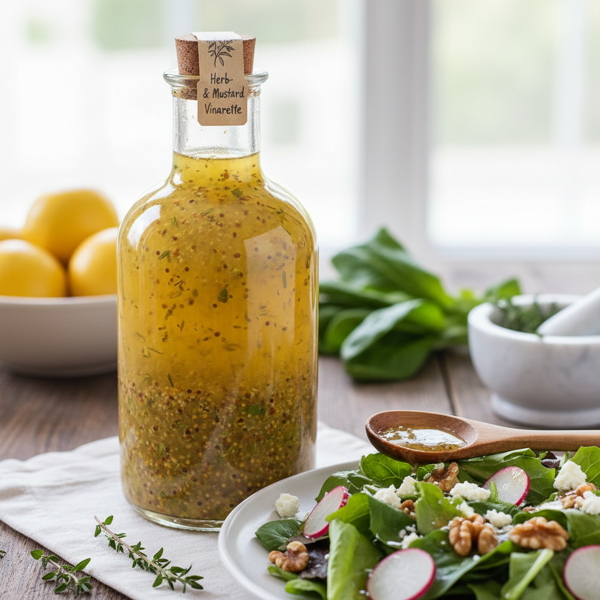
This delightful Herb-Infused Mustard Vinaigrette is a vibrant and versatile dressing that brings a burst of flavor to your meals. Rooted in the traditions of a beloved local bread shop, this vinaigrette combines the richness of olive oil with the tang of red wine vinegar and the zest of Dijon mustard. Infused with fresh herbs like basil, chives, and oregano, it pairs beautifully with crusty bread as a dip or spread, and effortlessly enhances salads of all kinds. Perfect for adding a touch of sophistication to any dish, this vinaigrette is easy to whip up and contains fresh ingredients that elevate your dining experience.
1
Servings
N/A
Calories
8
Ingredients
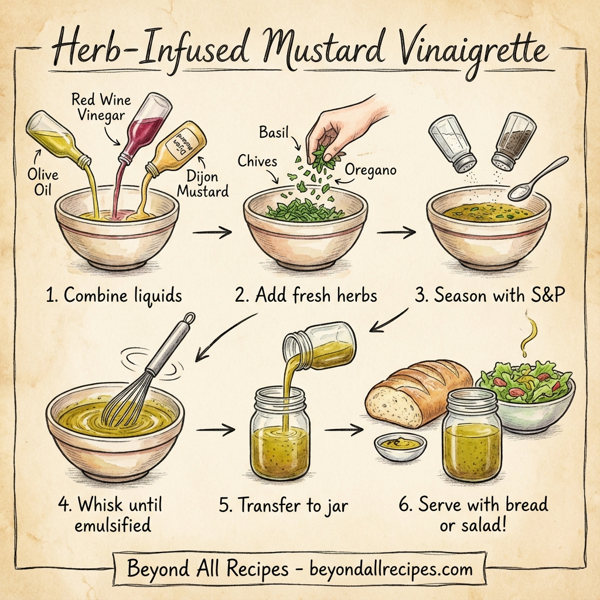
Ingredients
Olive oil
1/4 cup (measured)
Red wine vinegar
2 tablespoons (measured)
Dijon mustard
1 teaspoon (measured)
Basil
1/4 cup (finely chopped)
Chives
2 tablespoons (chopped)
Oregano
1 teaspoon (chopped)
Salt
1/2 teaspoon (measured)
Black pepper
1/2 teaspoon (measured)
Instructions
1
In a mixing bowl, combine the olive oil, red wine vinegar, and Dijon mustard.
2
Add the finely chopped basil, chopped chives, and chopped oregano to the mixture.
3
Season with salt and black pepper.
4
Whisk the ingredients together until well combined and the vinaigrette is emulsified.
5
Taste and adjust seasoning if necessary.
6
Transfer the vinaigrette to a serving container.
7
Serve as a dip for crusty bread, spread it onto sandwiches, or drizzle over your favorite salads for a fresh flavor boost.
Nutrition Information
Frequently Asked Questions
Frequently Asked Questions
What is Herb-Infused Mustard Vinaigrette?
It is a vibrant and versatile dressing made from olive oil, red wine vinegar, Dijon mustard, and a blend of fresh herbs like basil, chives, and oregano.
What are the primary ingredients for this recipe?
The main ingredients include olive oil, red wine vinegar, Dijon mustard, fresh basil, chives, oregano, salt, and black pepper.
How do you prepare this vinaigrette?
Combine the oil, vinegar, and mustard in a bowl, add the chopped herbs and seasonings, and whisk until the mixture is emulsified.
What can I serve with Herb-Infused Mustard Vinaigrette?
It is perfect as a dip for crusty bread, a spread for sandwiches, or a dressing for fresh salads.
Can I use dried herbs instead of fresh ones?
Yes, you can use dried herbs, but remember to use about one-third of the amount called for since dried herbs are more potent.
Is this vinaigrette recipe vegan?
Yes, all the listed ingredients are plant-based, making this recipe suitable for a vegan diet.
Is this recipe gluten-free?
Yes, the ingredients are naturally gluten-free, though you should always check the label on your Dijon mustard to be certain.
How should the vinaigrette be stored?
Store the vinaigrette in an airtight container or a glass jar in the refrigerator.
How long does the vinaigrette stay fresh?
Because it contains fresh herbs, it is best consumed within 3 to 5 days when kept refrigerated.
What type of oil is best for this dressing?
A high-quality olive oil, such as extra virgin olive oil, provides the best flavor for this vinaigrette.
Can I substitute red wine vinegar?
Yes, you can substitute it with white wine vinegar, apple cider vinegar, or lemon juice for a different citrusy profile.
Do I need a blender to make this vinaigrette?
No, a simple whisk or shaking the ingredients in a sealed jar is enough to achieve a well-combined emulsion.
Can I use this vinaigrette as a marinade?
Absolutely! It works wonderfully as a marinade for chicken, fish, or roasted vegetables.
What if I don't have Dijon mustard?
You can use whole grain mustard or yellow mustard as a substitute, though the flavor profile will change slightly.
Is this dressing keto-friendly?
Yes, it is high in healthy fats and contains no added sugars, making it an excellent choice for a ketogenic diet.
Can I add a sweetener to the recipe?
If you prefer a sweeter dressing, you can whisk in a teaspoon of honey or maple syrup.
What is the best way to chop the fresh herbs?
The herbs should be finely chopped to ensure they are evenly distributed and release their maximum flavor into the oil.
Does this recipe contain any common allergens?
Mustard is considered an allergen by some; otherwise, the recipe is free from dairy, nuts, and soy.
How many servings does this recipe provide?
This specific recipe is scaled for 1 serving, but it can be easily doubled or tripled as needed.
What kind of bread pairs best with this vinaigrette?
Crusty artisan breads, sourdough, or warm baguettes are ideal for dipping into this herb-infused dressing.
Can I use different herbs than the ones listed?
Yes, you can experiment with parsley, tarragon, or thyme depending on your personal preference.
What does 'emulsified' mean in this context?
It means whisking the oil and vinegar together until they combine into a smooth, uniform mixture that doesn't immediately separate.
Is this vinaigrette spicy?
No, it is savory and tangy with a hint of herb freshness, but it does not contain any spicy heat.
Can I use balsamic vinegar instead?
Yes, but balsamic will create a much darker, sweeter, and more robust flavor than red wine vinegar.
How much basil is required?
The recipe calls for 1/4 cup of finely chopped fresh basil.
Is there any sugar in this recipe?
No, this recipe does not include any added sugars.
What is the origin of this recipe?
The recipe is inspired by the traditional flavors found in a beloved local bread shop.
Can I make this vinaigrette ahead of time?
Yes, making it a few hours in advance allows the flavors of the herbs to meld and intensify.
What is the category of this recipe?
This is categorized as a Savory dressing/vinaigrette.
How much oregano should I use?
The recipe requires 1 teaspoon of chopped fresh oregano.