Herb-Infused Greek Style Rotisserie Boneless Leg of Lamb

Discover the rich, vibrant flavors of Greek cuisine with this Herb-Infused Greek Style Rotisserie Boneless Leg of Lamb. Marinated in high-quality extra virgin olive oil and a blend of aromatic Greek spices, this succulent lamb is stuffed with fresh rosemary and creamy feta cheese, creating a delightful contrast in flavors and textures. Perfectly cooked to juicy perfection, each bite bursts with savory notes and is balanced with the zesty brightness of lemon. Serve this elegant dish with a creamy risotto or crisp steamed vegetables, paired with a glass of dry red wine, for an unforgettable dining experience that showcases the best of Greek culinary tradition.
N/A
Servings
350
Calories
7
Ingredients
Ingredients
boneless leg of lamb
4 (lbs)
extra virgin olive oil
1/4 (cup)
Cavender's all-purpose Greek seasoning
1/2 (cup)
fresh rosemary
6 (sprigs)
crumbled feta cheese
1 (cup, preferably mixed with garlic and herbs)
garlic cloves
3 (minced)
lemon juice
to taste
Instructions
1
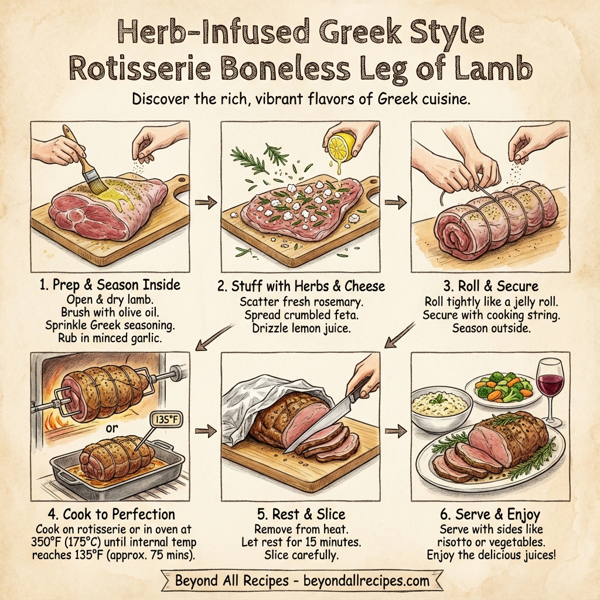
Preheat your rotisserie or oven to 350°F (175°C).
2
Open the boneless leg of lamb to expose the inner 'boned' side and pat it dry with paper towels.
3
Generously brush the entire leg with good quality extra virgin olive oil.
4
Evenly sprinkle Cavender's Greek seasoning over the entire surface of the lamb, ensuring full coverage.
5
Minced garlic cloves should be rubbed into the exposed surface of the leg for enhanced flavor.
6
Strip the fresh rosemary leaves from the stems and scatter them across the exposed side of the lamb.
7
Spread crumbled feta cheese over the rosemary layer, pressing gently to adhere it to the lamb.
8
Drizzle fresh lemon juice over the cheese to impart a bright, tangy flavor.
9
Carefully roll the leg of lamb into a tight log, like a jelly roll, and secure it with cooking string to maintain its shape during cooking.
10
Sprinkle any remaining Cavender's seasoning over the outer surface of the rolled lamb.
11
Place the prepared leg on the rotisserie and cook until internal temperature reaches 135°F (about 75 minutes). Alternatively, roast in the oven at 350°F (175°C) until the same temperature is reached.
12
Once cooked, remove the lamb from the heat and let it rest for 15 minutes before slicing.
13
Serve with your choice of sides, such as savory risotto or steamed vegetables, and enjoy the delicious juices as a flavorful gravy.
Nutrition Information
25g
Fat
1.25g
Carbs
31.25g
Protein
0g
Fiber
Frequently Asked Questions
Frequently Asked Questions
What is the primary cut of meat used in this recipe?
The recipe uses a 4 lb boneless leg of lamb.
What is the recommended cooking temperature for the rotisserie?
The rotisserie or oven should be preheated to 350°F (175°C).
What specific Greek seasoning is recommended?
Cavender's all-purpose Greek seasoning is used to flavor the lamb.
How much olive oil is needed for the marinade?
The recipe calls for 1/4 cup of high-quality extra virgin olive oil.
What ingredients are used for the stuffing?
The stuffing consists of minced garlic, fresh rosemary leaves, crumbled feta cheese, and lemon juice.
How many garlic cloves should be used?
Three minced garlic cloves should be rubbed into the lamb.
What is the best way to prepare the rosemary?
Strip the fresh rosemary leaves from six sprigs and scatter them across the meat.
What type of feta cheese works best for this recipe?
One cup of crumbled feta cheese is used, preferably a variety mixed with garlic and herbs.
How do you secure the lamb before cooking?
Roll the lamb into a tight log and secure it with cooking string to maintain its shape.
What is the target internal temperature for the lamb?
The lamb should be cooked until it reaches an internal temperature of 135°F.
How long does it take to cook the lamb on a rotisserie?
It typically takes about 75 minutes to reach the desired internal temperature.
Can I cook this recipe in a regular oven?
Yes, you can roast it in the oven at 350°F (175°C) until the internal temperature reaches 135°F.
Is it necessary to let the lamb rest after cooking?
Yes, let the lamb rest for 15 minutes before slicing to ensure it stays juicy.
What side dishes pair well with this Greek lamb?
It is excellent when served with savory risotto or crisp steamed vegetables.
What kind of wine is recommended for pairing?
A dry red wine is the perfect pairing for this elegant dish.
How many calories are in a serving of this lamb?
There are approximately 350 calories per serving.
What is the protein content of this recipe?
Each serving provides 31.25g of protein.
How much fat is in one serving?
There are 25g of fat per serving.
Are there many carbohydrates in this dish?
No, it is very low in carbs with only 1.25g per serving.
Does this recipe contain fiber?
No, the fiber content is listed as 0g.
Should the lamb be dried before seasoning?
Yes, you should pat the inner 'boned' side dry with paper towels before applying oil and seasoning.
What role does lemon juice play in the recipe?
Lemon juice is drizzled over the cheese to add a bright, tangy flavor.
How is the seasoning applied to the lamb?
It is sprinkled evenly over the internal surface before rolling, and the remainder is applied to the outside.
Can the cooking juices be used?
Yes, the juices can be enjoyed as a flavorful gravy for the meat.
Is this dish suitable for a family dinner?
Yes, it is tagged as an easy recipe and a great choice for a family dinner.
What makes this dish 'Greek Style'?
The combination of olive oil, Greek spices, rosemary, feta, and lemon juice defines its Greek culinary profile.
Should the lamb be cooked until well done?
The recipe recommends cooking to an internal temperature of 135°F, which is medium-rare to medium.
Is the rosemary used whole or chopped?
The leaves are stripped from the stems and scattered across the exposed side of the meat.
How is the feta cheese applied?
It is spread over the rosemary layer and pressed gently to adhere to the lamb before rolling.
Does this recipe use fresh or dried garlic?
It specifically calls for fresh minced garlic cloves for enhanced flavor.