Herb-Infused Brined Pork Roast
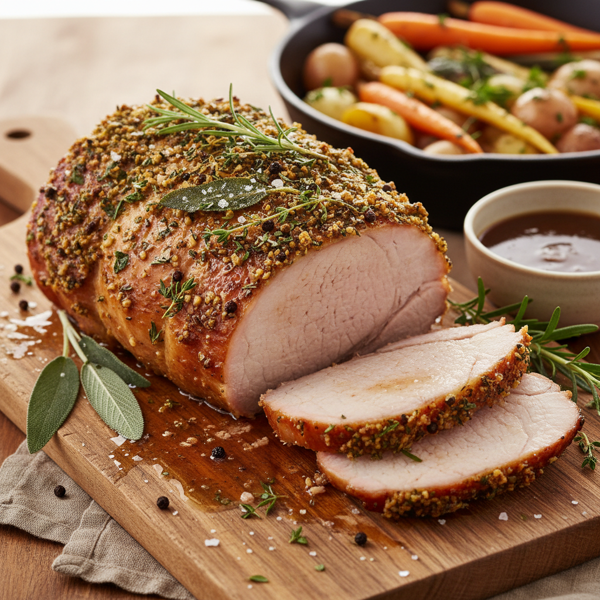
Elevate your pork roast experience with this herb-infused brining technique that ensures a mouthwatering, juicy outcome. Brining not only enhances moisture retention but also infuses the meat with subtle flavors from a combination of herbs, spices, and sweet undertones. This process transforms ordinary pork into a succulent centerpiece for any meal, perfect for family gatherings or special occasions. The brine consists of a carefully balanced salt-to-water ratio, which optimizes the preservation and flavor infusion. Enjoy the rich depth of flavor achieved through this method, topped off with your favorite glaze or crust for an exquisite finish.
N/A
Servings
N/A
Calories
10
Ingredients
Ingredients
water or apple juice
2 quarts (cool)
kosher salt
1/3 cup (coarse grain)
granulated sugar or brown sugar
1/4 cup (granulated)
thyme
1 teaspoon (dried)
bay leaves
3 (whole)
whole cloves
5 (whole)
juniper berries
10 (crushed (optional))
anise seed
1 teaspoon (whole)
black peppercorns
1 teaspoon (crushed)
pork roast
1 (any size)
Instructions
1
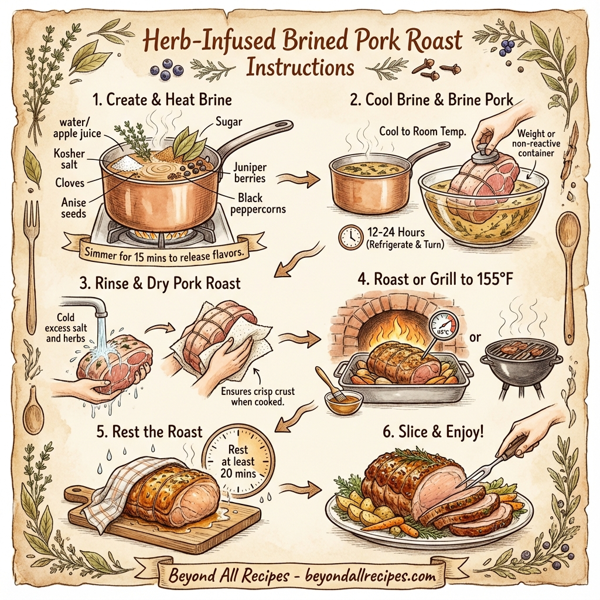
Begin by combining the water (or apple juice), kosher salt, granulated sugar (or brown sugar), thyme, bay leaves, whole cloves, juniper berries (if using), anise seed, and black peppercorns in a large saucepan.
2
Heat the mixture over medium-high heat until it reaches a boil, then reduce the heat to low and let it simmer gently for about 15 minutes, allowing the herbs and spices to release their flavors.
3
Remove the brine from heat and let it cool to room temperature. Once cooled, transfer it to a large, non-reactive container.
4
Carefully immerse the pork roast into the cooled brine. Ensure the meat is fully submerged; use a weight if necessary to keep it down.
5
Refrigerate the brined pork for 12 hours or overnight, turning it occasionally to promote even flavor distribution. Do not exceed 24 hours to prevent over-salting.
6
After brining, remove the pork roast and rinse under cold water to remove excess salt. Pat it dry with paper towels to ensure a crisp crust when cooked.
7
Cook the roast according to your preferred recipe, ensuring it reaches an internal temperature of 155°F, using either a roasting pan or grill setup.
8
Let the roast rest for at least 20 minutes before carving to allow juices to redistribute, resulting in superior tenderness.
9
Feel free to enhance your roast with a coating of mustard, breadcrumbs, or a glaze of your choice before or during the cooking process.
Nutrition Information
Frequently Asked Questions
Frequently Asked Questions
What is Herb-Infused Brined Pork Roast?
It is a succulent pork dish that uses a brining technique with herbs, spices, and sugar to ensure a juicy and flavorful outcome.
What are the benefits of brining pork?
Brining enhances moisture retention and infuses the meat with subtle flavors from the herbs and spices.
How long should I brine the pork roast?
The pork should be brined for 12 hours or overnight for the best results.
Can I brine the pork for longer than 24 hours?
No, you should not exceed 24 hours to prevent the meat from becoming over-salted.
What liquid is used for the brine base?
You can use either water or apple juice as the base for the brine.
What type of salt is recommended for this recipe?
Kosher salt is recommended, specifically 1/3 cup for the brine mixture.
Can I use brown sugar instead of granulated sugar?
Yes, you can use either 1/4 cup of granulated sugar or brown sugar.
Which herbs are included in the herb-infused brine?
The brine includes thyme and bay leaves to add savory notes.
Are juniper berries required for this recipe?
No, juniper berries are optional, but they can be added for extra flavor if desired.
How do I prepare the brine?
Combine the ingredients in a saucepan, bring to a boil, and then simmer for 15 minutes.
How long should the brine simmer?
The brine should simmer gently for about 15 minutes to allow the herbs and spices to release their flavors.
Do I need to cool the brine before adding the pork?
Yes, the brine must be cooled to room temperature before the pork roast is immersed.
Why must the pork be fully submerged in the brine?
Full submersion ensures that the meat is evenly seasoned and hydrated throughout.
What should I do if the pork roast floats in the brine?
You can use a weight to keep the meat fully submerged in the container.
Where should the pork be kept while brining?
The brined pork should be kept in the refrigerator in a non-reactive container.
Should I turn the pork during the brining process?
Yes, turning the meat occasionally helps promote even flavor distribution.
What is the first step after removing the pork from the brine?
You should rinse the pork under cold water to remove any excess salt from the surface.
Why is it important to pat the roast dry?
Patting the roast dry with paper towels ensures a crisp crust forms when the meat is cooked.
What is the target internal temperature for the pork roast?
The pork roast should reach an internal temperature of 155 degrees Fahrenheit.
How long should the roast rest after cooking?
The roast should rest for at least 20 minutes before carving.
Why is resting the meat important?
Resting allows the juices to redistribute throughout the meat, resulting in superior tenderness.
Can I add a glaze to this pork roast?
Yes, you can enhance the roast with a coating of mustard, breadcrumbs, or a glaze of your choice.
What spices are used in the brine?
The brine uses whole cloves, anise seed, and crushed black peppercorns.
What type of container is best for brining?
A large, non-reactive container is recommended for the brining process.
Can I cook this roast on a grill?
Yes, the roast can be prepared using either a roasting pan or a grill setup.
Is this recipe suitable for special occasions?
Yes, it is a succulent centerpiece perfect for family gatherings or special occasions.
How many ingredients are in the brine mixture?
There are 9 ingredients in the brine mixture, including liquids, salt, sugar, herbs, and spices.
What size pork roast should I use?
The recipe is versatile and can be used with a pork roast of any size.
How is the salt-to-water ratio determined?
The recipe uses a carefully balanced ratio to optimize flavor infusion and preservation.
What flavor profile does the anise seed provide?
Anise seed adds a subtle, sweet, and aromatic flavor to the brine infusion.