Herb-Infused Beer Pizza Dough
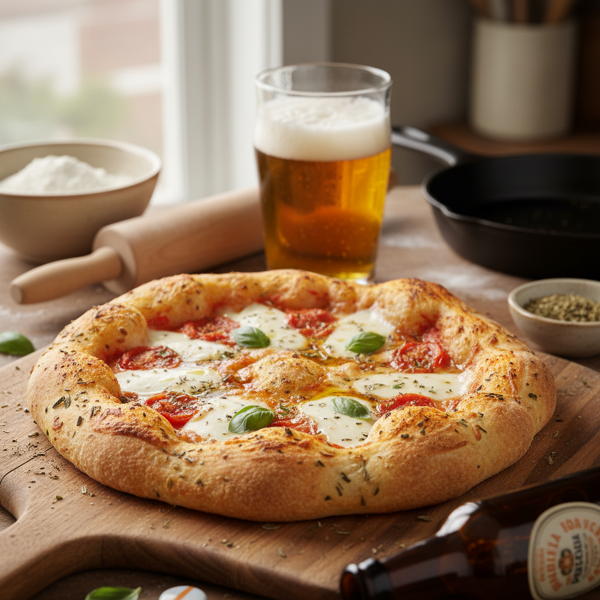
This delightful Herb-Infused Beer Pizza Dough is a twist on the classic pizza base, featuring the unique flavor of basil combined with the richness of beer. Inspired by Canada's Best Bread Machine Baking Recipes, this dough can be crafted using a bread machine or by hand, catering to your baking preference. Whether you choose to create two medium pizzas or roll out a single, larger pie, this versatile crust provides a satisfying texture and flavor that pairs perfectly with your favorite toppings. Enjoy the pleasant aroma of freshly baked bread, enhanced by aromatic herbs, as you savor each delicious slice of your homemade pizza masterpiece.
4
Servings
N/A
Calories
6
Ingredients
Ingredients
Beer
1 cup (room temperature)
Salt
1 teaspoon (none)
Granulated Sugar
2 teaspoons (none)
All-Purpose Flour or Bread Flour
3 cups (none)
Dried Basil
2 teaspoons (none)
Bread Machine Yeast or Quick-Rising Yeast
1 1/2 teaspoons (none)
Instructions
1
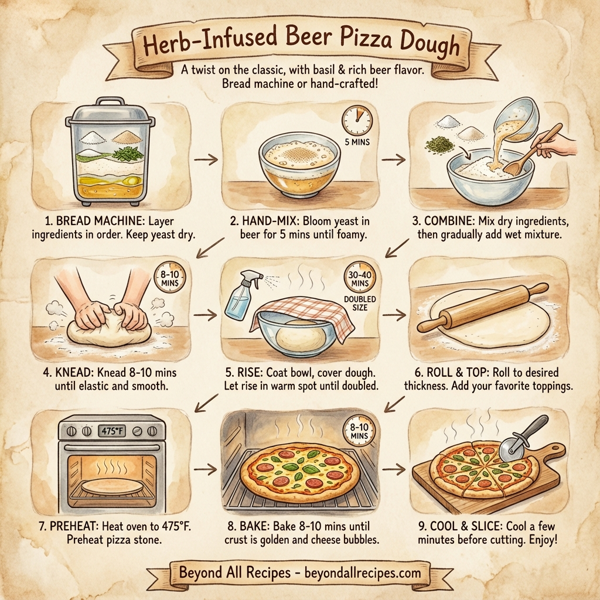
If using a bread machine, add the ingredients in the order listed, ensuring that the salt and yeast do not come into direct contact. The yeast should not touch the liquid early on.
2
For those making the dough by hand, start by pouring the beer into a bowl and sprinkling the yeast over the top. Allow it to sit for 5 minutes until it becomes bubbly and foamy.
3
In a separate bowl, combine all the dry ingredients (flour, salt, sugar, dried basil). Gradually add the beer and yeast mixture to the dry ingredients, mixing until everything is well combined.
4
Transfer the dough onto a lightly floured surface and knead it for 8-10 minutes. Incorporate more flour as needed to prevent sticking. The dough should be elastic and show small bubbles once it is ready.
5
Coat a bowl with non-stick spray, place the kneaded dough inside, and cover it with a dish towel. Set the bowl in a warm area (like a cooled oven preheated to 200°F) and allow the dough to rise for 30-40 minutes, or until it has doubled in size.
6
After rising, roll out the dough on a lightly floured surface to your desired thickness. Top the dough with your choice of ingredients.
7
Preheat your oven to 475°F. If using a pizza stone, ensure that it is preheated in the oven.
8
Bake the pizza in the preheated oven for 8-10 minutes, or until the crust is golden brown and any cheese is bubbly and begins to brown.
9
Once baked, remove the pizza from the oven and let it cool for a few minutes before slicing. This will help the cheese set and make for easier cutting.
Nutrition Information
Frequently Asked Questions
Frequently Asked Questions
What is Herb-Infused Beer Pizza Dough?
It is a flavorful variation of traditional pizza dough that uses beer for richness and dried basil for a pleasant herbal aroma.
What ingredients do I need for this recipe?
You will need 1 cup of room temperature beer, 1 teaspoon of salt, 2 teaspoons of granulated sugar, 3 cups of flour, 2 teaspoons of dried basil, and 1.5 teaspoons of yeast.
Can I use a bread machine to make this dough?
Yes, this recipe is designed to be made either in a bread machine or by hand.
What is the correct order for adding ingredients to a bread machine?
Add the ingredients in the order listed in the recipe, ensuring the salt and yeast do not touch and the yeast stays dry until the machine starts.
How do I prepare the yeast when making the dough by hand?
Pour the room temperature beer into a bowl and sprinkle the yeast over it, letting it sit for 5 minutes until it becomes bubbly and foamy.
What type of flour should I use?
You can use either All-Purpose Flour or Bread Flour for this recipe.
How long should I knead the dough if making it manually?
The dough should be kneaded for approximately 8 to 10 minutes on a lightly floured surface.
How do I know when the dough is sufficiently kneaded?
The dough is ready when it becomes elastic and you can see small bubbles forming within it.
How long does the dough need to rise?
The dough should rise for 30 to 40 minutes, or until it has doubled in size.
Where is the best place to let the dough rise?
Place the dough in a warm area, such as a cooled oven that was previously preheated to 200°F.
What herb is used to flavor this pizza dough?
The recipe calls for 2 teaspoons of dried basil to provide the herb infusion.
What temperature should the oven be for baking the pizza?
The oven should be preheated to 475°F (245°C) for baking.
How long does the pizza take to bake?
The pizza typically bakes for 8 to 10 minutes.
How many pizzas does this recipe make?
This recipe yields enough dough for two medium-sized pizzas or one single large pizza.
Do I need to preheat a pizza stone?
Yes, if you are using a pizza stone, ensure it is preheated in the oven before placing the dough on it.
What should the beer temperature be?
The beer should be at room temperature to properly activate the yeast.
Why should I let the pizza cool before slicing?
Letting the pizza cool for a few minutes helps the cheese set, which makes it much easier to cut into clean slices.
What type of yeast is best for this recipe?
You should use either Bread Machine Yeast or Quick-Rising Yeast.
How do I prevent the dough from sticking during kneading?
Lightly flour your surface and incorporate small amounts of additional flour into the dough as needed while kneading.
What are the signs that the pizza is finished baking?
The pizza is done when the crust is golden brown and the cheese is bubbly and starting to brown.
Can I roll the dough to any thickness?
Yes, you can roll out the dough on a floured surface to your desired thickness based on your preference for thin or thick crust.
What is the purpose of the granulated sugar in the dough?
The sugar acts as food for the yeast and helps the crust achieve a better color during baking.
Is there a specific way to prepare the rising bowl?
Yes, coat the bowl with non-stick spray before placing the kneaded dough inside.
Should I cover the dough while it rises?
Yes, cover the bowl with a dish towel to keep the dough protected and help it retain moisture while rising.
Can I use a different herb besides basil?
While this recipe specifies basil, you could experiment with other dried herbs, though the flavor profile will change.
Why shouldn't the salt and yeast touch in the bread machine?
Direct contact with salt can kill or inhibit the yeast before the mixing process begins, preventing the dough from rising properly.
How much salt is required for the dough?
The recipe requires 1 teaspoon of salt.
What is the texture of the finished crust?
The crust offers a satisfying texture that is enhanced by the richness of the beer and the aroma of the herbs.
Is this recipe suitable for beginners?
Yes, with clear instructions for both manual and machine methods, it is an easy and versatile recipe for home bakers.
What was the inspiration for this recipe?
This recipe was inspired by Canada's Best Bread Machine Baking Recipes.