Herb-Crusted Ribeye Roast with Savory Au Jus
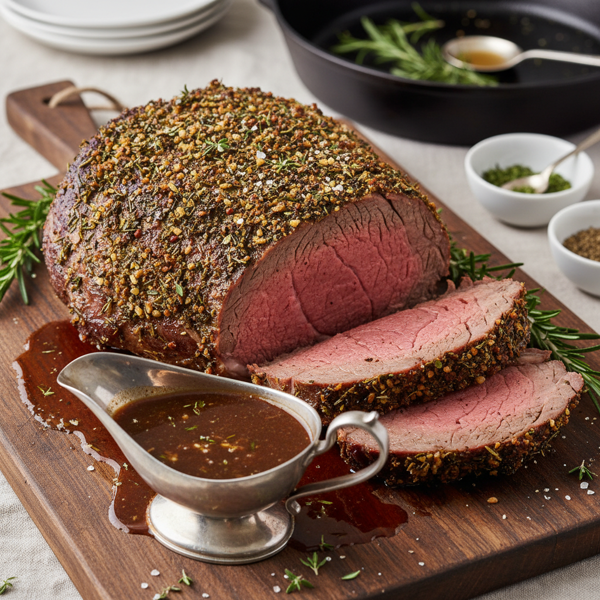
Delight your guests with a succulent Herb-Crusted Ribeye Roast accompanied by a rich, flavorful Au Jus. This elegant and impressive dish is perfect for special occasions or a lavish family dinner, tender and juicy with a crispy herb-infused crust, served with a beautifully complementary savory au jus!
12
Servings
N/A
Calories
9
Ingredients
Ingredients
beef rib eye roast
4 lbs
kosher salt
1 teaspoon
cracked black pepper
1/2 teaspoon
seasoning of your choice
to taste
garlic powder
1 teaspoon
dried thyme
1 teaspoon
dried rosemary
1 teaspoon
boiling water
2 cups
instant beef bouillon granules
2 teaspoons
Instructions
1
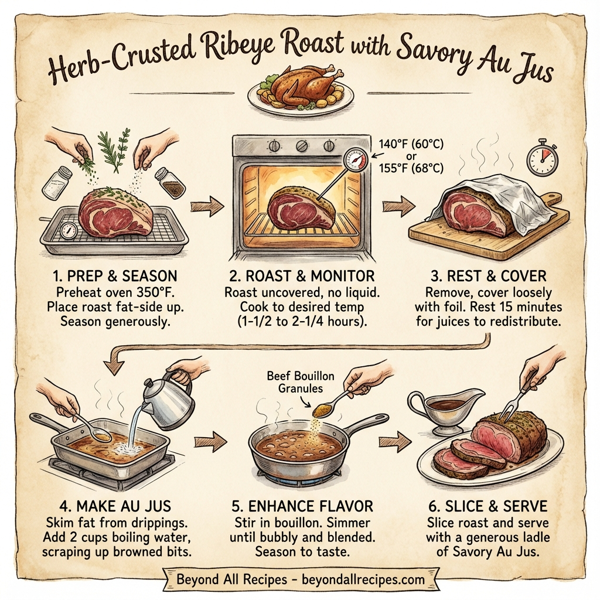
Preheat your oven to 350°F (175°C).
2
Place the ribeye roast on a rack in a shallow roasting pan, ensuring the fat side is facing up to allow for self-basting as it cooks.
3
Generously season the roast with kosher salt, cracked black pepper, garlic powder, dried thyme, dried rosemary, and any additional favorite seasonings.
4
Insert a meat thermometer into the thickest part of the roast to ensure accurate cooking.
5
Avoid adding water or other liquids, and do not cover the roast as it cooks.
6
Roast the ribeye in the oven for approximately 1-1/2 to 2 hours for medium-rare preference or until your meat thermometer reads 140°F (60°C). For a medium roast, cook for 2 to 2-1/4 hours or until the internal temperature reaches 155°F (68°C).
7
Once cooked to your desired level, remove the roast from the oven and loosely cover it with foil. Let it rest for 15 minutes to allow the juices to redistribute and the temperature to rise about 5 degrees during this resting period.
8
Meanwhile, prepare the savory au jus: Spoon off excess drippings from the pan and skim the fat.
9
Add 2 cups of boiling water to the pan, carefully stirring and scraping up the browned bits from the bottom to release all flavors.
10
Incorporate the pan drippings into this mix, and continue to cook until the mixture is bubbly, achieving a harmonious blend.
11
For an enhanced savory depth, add 2 teaspoons of instant beef bouillon granules into the pan, stirring until dissolved, and season the au jus to taste.
12
Slice the herb-crusted ribeye roast and serve each portion with a generous ladle of the savory au jus.
Nutrition Information
Frequently Asked Questions
Frequently Asked Questions
What is the main cut of meat used in this recipe?
The recipe uses a 4 lb beef rib eye roast.
At what temperature should the oven be preheated?
Preheat your oven to 350°F (175°C) before roasting.
How should the ribeye roast be positioned in the roasting pan?
Place the roast on a rack in a shallow roasting pan with the fat side facing up to allow for self-basting.
What seasonings are used for the herb crust?
The crust is made using kosher salt, cracked black pepper, garlic powder, dried thyme, and dried rosemary.
Should I add water to the pan while the meat is roasting?
No, you should avoid adding water or other liquids to the pan during the roasting process.
Should I cover the roast with foil while it is in the oven?
No, do not cover the roast as it cooks to ensure a crispy herb-infused crust.
How long does it take to cook a medium-rare ribeye roast?
It typically takes approximately 1-1/2 to 2 hours for a medium-rare preference.
What is the target internal temperature for a medium-rare roast?
The meat thermometer should read 140°F (60°C) for medium-rare.
How long should I cook the roast for a medium level of doneness?
Cook for 2 to 2-1/4 hours until the internal temperature reaches 155°F (68°C).
Where should the meat thermometer be inserted?
Insert the meat thermometer into the thickest part of the roast for an accurate reading.
How long should the roast rest after being removed from the oven?
Let the roast rest for 15 minutes loosely covered with foil.
Why is it important to let the roast rest?
Resting allows the juices to redistribute and the internal temperature to rise about 5 degrees.
How do I prepare the savory au jus?
Spoon off excess drippings, add boiling water to the pan, and scrape up the browned bits.
How much boiling water is needed for the au jus?
You will need 2 cups of boiling water.
What is the purpose of adding beef bouillon to the au jus?
It provides an enhanced savory depth and a harmonious blend of flavors.
How many teaspoons of beef bouillon are required?
The recipe calls for 2 teaspoons of instant beef bouillon granules.
What should I do with the browned bits in the roasting pan?
Carefully stir and scrape them up to release all the flavor into the au jus mixture.
How many servings does this 4 lb roast provide?
This recipe is designed to serve 12 people.
Is this recipe suitable for special occasions?
Yes, it is described as an elegant and impressive dish perfect for holidays or lavish family dinners.
Can I use other seasonings on the roast?
Yes, you can add any additional favorite seasonings to taste.
What type of salt is recommended for the crust?
The recipe specifically recommends using 1 teaspoon of kosher salt.
What kind of pepper should I use?
Use 1/2 teaspoon of cracked black pepper for the best texture and flavor.
Do I need to skim the fat from the pan drippings?
Yes, you should skim the fat before adding water to make the au jus.
How do I know the au jus is ready?
Continue to cook the mixture until it is bubbly and the bouillon is fully dissolved.
Is the ribeye roast served sliced?
Yes, slice the roast and serve each portion with a generous ladle of au jus.
What makes the crust 'herb-infused'?
The combination of dried thyme, dried rosemary, and garlic powder creates the herb crust.
What equipment is needed for roasting?
You will need a shallow roasting pan and a roasting rack.
What is the role of the roasting rack?
The rack keeps the roast elevated so it cooks evenly and doesn't sit in its own juices.
Can I adjust the amount of bouillon?
Yes, you can season the au jus to your personal taste after adding the granules.
What is the primary flavor profile of the au jus?
It is a rich, savory, and flavorful liquid that complements the beef.