Herb-Crusted Prime Rib Roast
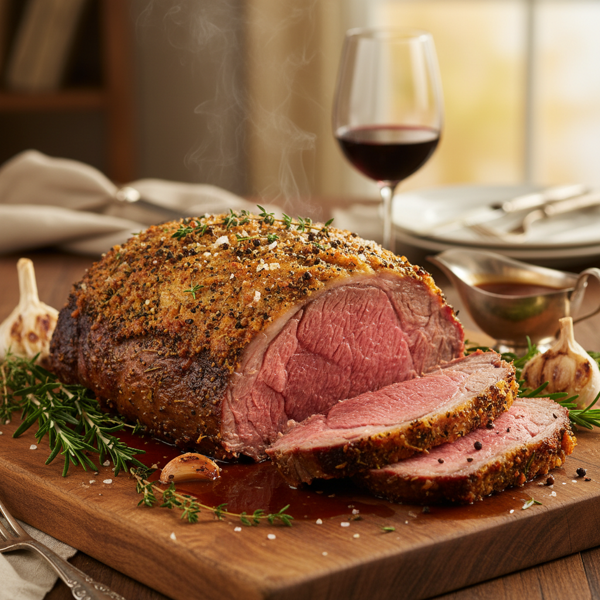
This Herb-Crusted Prime Rib Roast recipe is a showstopper for any special occasion, especially during the holiday season. Inspired by Saveur Magazine, this dish features a beautifully aged five-bone standing rib roast seasoned with kosher salt, dry mustard, and fresh rosemary, creating a savory crust that perfectly complements the rich, tender beef. This prime cut of meat is ideal for festive gatherings, where it can be the centerpiece of your dining table, delighting family and friends alike. Serve it with your choice of sides and the delicious pan juices for an unforgettable dining experience.
8-10
Servings
N/A
Calories
5
Ingredients
Ingredients
Five-bone standing rib roast
10-12 lbs (Chine bone removed and tied back on)
Kosher salt
2 tablespoons (For seasoning)
Dry mustard
1.5 tablespoons (Preferably Coleman's, for rubbing)
Fresh rosemary leaves
1.5 tablespoons (Chopped for seasoning)
Fresh coarse ground black pepper
To taste (For seasoning)
Instructions
1
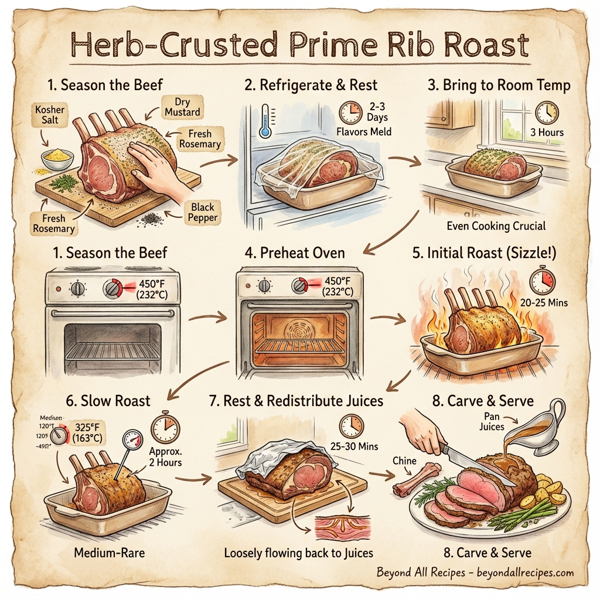
1. Start by seasoning the beef with kosher salt, ensuring to cover the entire roast, including the rack of bones. Rub the dry mustard generously over the beef, then sprinkle the chopped fresh rosemary and freshly cracked black pepper evenly across the surface.
2
2. Place the seasoned beef in a large 12x14-inch roasting pan. Cover it loosely with plastic wrap and refrigerate for 2 to 3 days to allow the flavors to meld and the beef to develop a deep, savory taste.
3
3. On the day of roasting, remove the beef from the refrigerator and let it rest at room temperature for about 3 hours before cooking. This step is crucial for even cooking.
4
4. Preheat your oven to 450°F (232°C) and arrange an oven rack in the lower third of the oven.
5
5. Place the rib roast in the preheated oven, rib side up, and roast for 20 to 25 minutes until the exterior starts to brown and sizzle.
6
6. Reduce the oven temperature to 325°F (163°C) and continue roasting until a meat thermometer inserted into the thickest part of the meat registers 120°F (49°C) for medium-rare, approximately 2 hours.
7
7. Once the roast reaches the desired internal temperature, transfer it to a carving board and let it rest for 25 to 30 minutes. This resting period allows the juices to redistribute throughout the meat, ensuring a juicy roast.
8
8. Carefully remove and discard the chine bone. Carve the roast into slices and serve it with the reserved pan juices for a touch of extra flavor.
Nutrition Information
Frequently Asked Questions
Frequently Asked Questions
What is the main cut of meat used in this Herb-Crusted Prime Rib Roast recipe?
The recipe uses a ten to twelve pound five-bone standing rib roast.
How many servings does this prime rib roast provide?
This recipe provides approximately 8-10 servings.
What are the primary ingredients for the herb crust?
The crust is made using kosher salt, dry mustard (preferably Coleman's), chopped fresh rosemary leaves, and coarse ground black pepper.
How long should the beef be refrigerated after seasoning?
The seasoned beef should be refrigerated loosely covered with plastic wrap for 2 to 3 days.
Why is the beef refrigerated for several days before roasting?
Refrigerating for 2 to 3 days allows the flavors to meld and helps the beef develop a deep, savory taste.
How long should the roast sit at room temperature before it goes into the oven?
Remove the beef from the refrigerator and let it rest at room temperature for about 3 hours before cooking.
What is the initial preheating temperature for the oven?
The oven should be preheated to 450°F (232°C).
Where should the oven rack be placed?
The oven rack should be arranged in the lower third of the oven.
How should the rib roast be positioned in the roasting pan?
The rib roast should be placed in the roasting pan rib side up.
How long do you roast the meat at the initial high temperature?
Roast at 450°F for 20 to 25 minutes until the exterior starts to brown and sizzle.
What temperature should the oven be reduced to after the initial browning?
Reduce the oven temperature to 325°F (163°C).
What is the target internal temperature for a medium-rare roast?
The target internal temperature is 120°F (49°C) when measured in the thickest part of the meat.
Approximately how long does the roasting take at 325°F?
It takes approximately 2 hours to reach the desired internal temperature.
How long should the roast rest after being removed from the oven?
The roast should rest on a carving board for 25 to 30 minutes before slicing.
Why is it important to let the roast rest after cooking?
Resting allows the juices to redistribute throughout the meat, ensuring a juicy result.
What should be done with the chine bone before carving?
The chine bone should be carefully removed and discarded before slicing the meat.
What size roasting pan is recommended?
A large 12x14-inch roasting pan is recommended.
How should the roast be served?
Serve the carved slices with the reserved pan juices for extra flavor.
What preparation is required for the chine bone before cooking?
The chine bone should be removed and then tied back on before the seasoning process begins.
Is this recipe suitable for the holiday season?
Yes, it is specifically described as a showstopper for special occasions like Christmas dinner.
What type of mustard is best for this recipe?
The recipe suggests dry mustard, preferably Coleman's brand.
What source inspired this Herb-Crusted Prime Rib Roast recipe?
This recipe was inspired by Saveur Magazine.
Does the recipe include nutritional information like calories or fat?
No, the nutritional values for calories, fat, protein, and other metrics are not provided in this specific data.
What is the total number of ingredients in this recipe?
There are 5 main ingredients: rib roast, kosher salt, dry mustard, fresh rosemary, and black pepper.
How much kosher salt is used for seasoning?
The recipe calls for 2 tablespoons of kosher salt.
How much dry mustard is used?
The recipe requires 1.5 tablespoons of dry mustard.
How should the fresh rosemary be prepared?
The fresh rosemary leaves should be chopped before being sprinkled over the meat.
What determines the final flavor of the crust?
The combination of kosher salt, dry mustard, rosemary, and cracked black pepper creates the savory crust.
Should the beef be seasoned on the rack of bones?
Yes, the instructions specify seasoning the entire roast, including the rack of bones.
Can this recipe be prepared on the same day it is served?
While roasting takes place on the day of serving, the seasoning and refrigeration steps require 2 to 3 days of lead time.