Herb-Crusted Crispy Skin Pork Shoulder
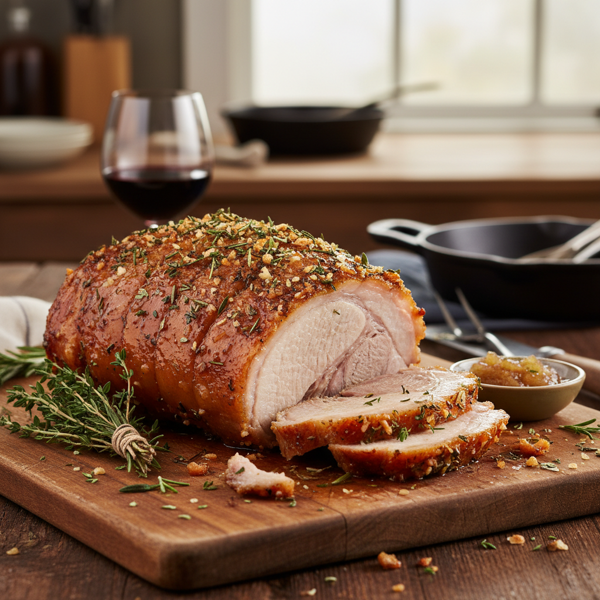
This Herb-Crusted Crispy Skin Pork Shoulder transforms a classic cut of pork into a savory centerpiece that is sure to impress at any gathering. With a tantalizing blend of fresh herbs and spices, the pork shoulder is marinated overnight to enhance its flavor and tenderness. As it roasts, the skin crisps up beautifully, creating a delightful contrast to the succulent, juicy meat underneath. Perfect for family dinners or special occasions, this dish not only pleases the palate but also creates an inviting aroma that will have everyone eagerly awaiting the meal. Serve it alongside roasted vegetables or with creamy mashed potatoes for a truly satisfying feast.
N/A
Servings
N/A
Calories
11
Ingredients
Ingredients
pork shoulder
4-5 lbs (bone-in is best)
onion
1 medium (sliced thick)
garlic
1 bulb (peeled)
oregano
1 tablespoon (fresh)
cumin
2 teaspoons
salt
2 teaspoons
black peppercorns
1 teaspoon
bay leaves
2
oil
1 tablespoon
orange
1 (zested then juiced)
lemon
1 (zested then juiced)
Instructions
1
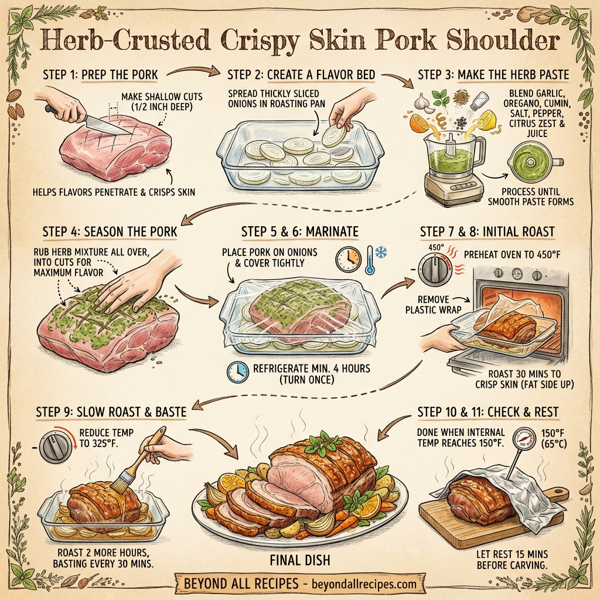
Using a sharp knife, make several shallow cuts about 1/2 inch deep all over the pork shoulder. This will help the flavors penetrate the meat and ensure a crispy skin.
2
Spread thickly sliced onion on the bottom of a glass roasting pan to create a flavorful bed for the pork.
3
In a food processor, combine peeled garlic, fresh oregano, cumin, salt, black peppercorns, orange zest and juice, lemon zest and juice. Process until a smooth paste forms.
4
Generously rub the herb mixture all over the pork shoulder, ensuring it gets into the cuts made earlier for maximum flavor.
5
Place the seasoned pork shoulder on top of the onion slices in the roasting pan.
6
Cover the pan tightly with plastic wrap and refrigerate for a minimum of 4 hours, turning the meat at least once to allow for even marinating.
7
Preheat your oven to 450°F (232°C). Once ready, remove the plastic wrap from the pan.
8
Place the pork shoulder fat side up in the oven and roast for 30 minutes to get the skin crispy.
9
After 30 minutes, reduce the oven temperature to 325°F (163°C) and continue to roast for an additional 2 hours, basting the pork with its own juices every 30 minutes.
10
The pork is done when the internal temperature reaches 150°F (65°C).
11
Remove from the oven and let it rest for 15 minutes before carving to allow the juices to redistribute.
Nutrition Information
Frequently Asked Questions
Frequently Asked Questions
What is the primary cut of meat used in this recipe?
The recipe uses a 4-5 lb pork shoulder, ideally bone-in.
How should the pork shoulder be prepared before marinating?
Using a sharp knife, make several shallow cuts about 1/2 inch deep all over the meat to help flavors penetrate and ensure crispy skin.
What serves as the bed for the pork in the roasting pan?
One medium onion, sliced thickly, is spread on the bottom of the glass roasting pan.
What ingredients are used to make the herb paste?
The paste consists of peeled garlic, fresh oregano, cumin, salt, black peppercorns, orange zest and juice, and lemon zest and juice.
How much garlic is required for the Herb-Crusted Pork Shoulder?
The recipe calls for one full bulb of garlic, peeled.
What tool is recommended for making the herb mixture?
A food processor is used to combine the ingredients into a smooth paste.
How long should the pork marinate in the refrigerator?
The pork should marinate for a minimum of 4 hours, though the description suggests overnight is best for flavor.
Should the meat be turned while it is marinating?
Yes, you should turn the meat at least once during the refrigeration period to allow for even marinating.
What is the initial oven temperature for roasting?
Preheat the oven to 450 degrees Fahrenheit (232 degrees Celsius).
How long do you roast the pork at the high temperature?
Roast the pork for 30 minutes at 450 degrees Fahrenheit to get the skin crispy.
What do you do after the first 30 minutes of roasting?
Reduce the oven temperature to 325 degrees Fahrenheit (163 degrees Celsius) and continue roasting.
How long is the second stage of roasting?
The pork continues to roast for an additional 2 hours after the temperature is reduced.
How often should the pork shoulder be basted?
Baste the pork with its own juices every 30 minutes during the secondary roasting phase.
What is the target internal temperature for the pork?
The pork is done when the internal temperature reaches 150 degrees Fahrenheit (65 degrees Celsius).
How long should the meat rest after coming out of the oven?
Allow the pork to rest for 15 minutes before carving.
Why is it important to let the meat rest before carving?
Resting allows the juices to redistribute throughout the meat, keeping it succulent.
Does the recipe use fresh or dried oregano?
The recipe specifies using 1 tablespoon of fresh oregano.
What type of citrus juice is included in the marinade?
The marinade includes both orange juice and lemon juice.
Is the pork roasted fat side up or fat side down?
The pork shoulder should be placed fat side up in the roasting pan.
What are the key spices used in the herb crust?
The key spices include cumin, black peppercorns, and salt.
Are bay leaves used in the recipe?
Yes, two bay leaves are included in the list of ingredients.
How much oil is required?
The recipe calls for 1 tablespoon of oil.
What side dishes are suggested for this pork shoulder?
It is recommended to serve the dish alongside roasted vegetables or creamy mashed potatoes.
Is the roasting pan covered during the cooking process?
No, the plastic wrap used during marinating must be removed before roasting, and the pan remains uncovered.
What type of pan is best for this recipe?
A glass roasting pan is specifically mentioned in the instructions.
How many ingredients are in this recipe in total?
There are 11 ingredients in total.
What is the flavor profile of the pork?
The flavor is described as a tantalizing blend of fresh herbs, earthy cumin, and bright citrus.
Is this recipe suitable for a dinner party?
Yes, it is tagged as 'dinner party' and 'main course' and is described as a savory centerpiece that will impress guests.
How do you ensure the herb mixture gets deep into the meat?
When rubbing the mixture over the pork, ensure it gets into the shallow cuts made earlier.
What texture does the skin have after roasting?
The roasting process creates a crispy skin that contrasts with the succulent, juicy meat.