Herb Butter Roasted Turkey with Balsamic Onion Gravy
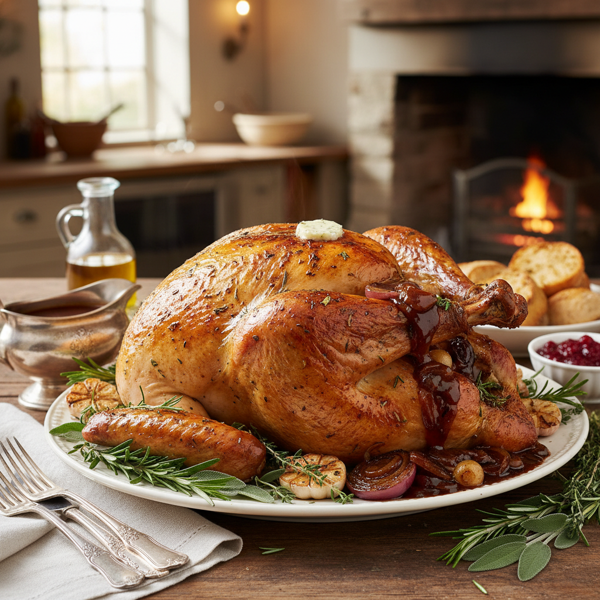
Elevate your holiday dining experience with this exquisitely flavored roasted turkey, meticulously rubbed with a herb-infused butter and served alongside a rich, caramelized onion balsamic gravy. Perfect for family gatherings, this dish combines classic flavors with gourmet touches to create a memorable feast. The buttery herb crust complements the moist, succulent meat, while the gravy, further enhanced with pan drippings and a touch of balsamic vinegar, adds a sophisticated depth to each bite. Follow this recipe to impress your guests and become known for serving the turkey of all turkeys!
10
Servings
N/A
Calories
14
Ingredients
Ingredients
turkey
16-18 lbs (neck and giblets reserved for gravy)
fresh rosemary sprig
2 (optional)
fresh sage sprig
2 (optional)
butter
12 tablespoons (divided)
fresh rosemary
4 tablespoons (chopped)
fresh sage
4 tablespoons (chopped)
orange peel
1 1/2 tablespoons (grated)
black pepper
1 tablespoon
salt
4 teaspoons
low sodium chicken broth
5 1/2 cups
onion
3 (1 quartered, 2 halved and thinly sliced)
bay leaf
1
flour
1/3 cup
balsamic vinegar
1/2 cup
Instructions
1
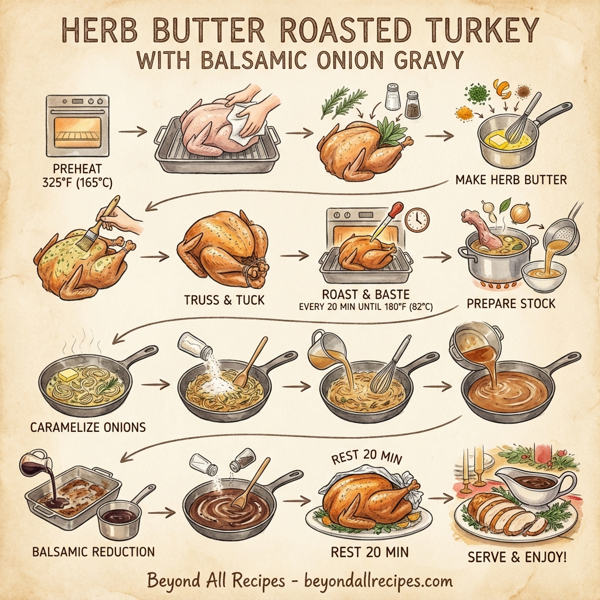
1. Preheat your oven to 325°F (165°C).
2
2. Thoroughly rinse the turkey both inside and out, then pat it dry with paper towels. Position the turkey on a rack placed in a roasting pan, ensuring it's centered and steady.
3
3. Gently season the turkey cavities with salt and pepper. Nestle the rosemary and sage sprigs inside the main cavity if you're not using stuffing.
4
4. In a small saucepan, melt 6 tablespoons of butter over medium heat. Stir in the chopped rosemary, sage, grated orange peel, black pepper, and salt. Maintain a gentle heat as you whisk these ingredients together to form a fragrant herb butter.
5
5. Using a brush, generously coat the turkey with the prepared herb butter. Ensure even coverage across the skin for the best flavor infusion.
6
6. Tuck the wing tips under the body of the turkey, and bind the legs together with kitchen twine to maintain its shape during roasting.
7
7. Transfer the turkey to the preheated oven and roast for 1 hour initially. Following this, begin basting the turkey with the accumulating pan juices every 20 minutes. Continue this process until the internal temperature of the thigh reaches 180°F (82°C). This should take approximately 2 3/4 hours for an unstuffed turkey or about 3 1/4 hours if stuffed.
8
8. To prepare the gravy, combine the turkey neck, giblets, 5 1/2 cups of low sodium chicken broth, quartered onion, and bay leaf in a large saucepan. Bring to a simmer and reduce until approximately 3 cups of liquid remains, skimming any foam or impurities that rise to the surface (about 1 hour). Strain and reserve the stock.
9
9. In a large skillet over medium-high heat, melt another 6 tablespoons of butter. Sauté the thinly sliced onions for about 10 minutes until fragrant and soft.
10
10. Add 1 tablespoon of chopped rosemary and sage to the onions, sautéing for an additional 10 minutes until the onions achieve a golden-brown color, stirring frequently to prevent burning.
11
11. Sprinkle the flour over the onion mixture, stirring for about a minute until the flour is fully integrated.
12
12. Gradually whisk the strained turkey stock into the skillet with the onion mixture. Increase the heat to boil slightly, stirring often, until the gravy thickens, about 3 minutes more.
13
13. Add the reserved pan juices from the turkey into the gravy. If needed, skim off the fat beforehand.
14
14. In the original roasting pan, add balsamic vinegar and bring to a simmer, scraping up the browned bits from the pan’s bottom. Pour this mixture into a small saucepan, boiling it down until reduced to about 1/4 cup, then incorporate it into your prepared gravy.
15
15. Reheat the gravy over low heat, thinning with additional chicken broth if necessary to achieve the desired consistency. Adjust seasoning with salt and pepper to your preference.
16
16. Once the turkey is roasted to perfection, transfer it to a serving platter, tent with foil and let it rest for at least 20 minutes before carving. Serve alongside the balsamic onion gravy and enjoy.
Nutrition Information
Frequently Asked Questions
Frequently Asked Questions
What temperature should the oven be set to for roasting the turkey?
The oven should be preheated to 325°F (165°C).
How should I prepare the turkey before roasting?
Thoroughly rinse the turkey inside and out, pat it dry with paper towels, and place it on a rack in a roasting pan.
What size turkey does this recipe require?
This recipe requires a turkey weighing between 16 and 18 pounds.
What ingredients are in the herb-infused butter?
The herb butter consists of melted butter, chopped rosemary, chopped sage, grated orange peel, black pepper, and salt.
How do I secure the turkey for roasting?
Tuck the wing tips under the body and bind the legs together with kitchen twine to help the turkey maintain its shape.
When should I start basting the turkey?
After the first hour of roasting, begin basting the turkey with its pan juices every 20 minutes.
What is the target internal temperature for the turkey?
The turkey is done when the internal temperature of the thigh reaches 180°F (82°C).
How long does an unstuffed turkey take to roast?
An unstuffed turkey typically takes approximately 2 3/4 hours to reach the target temperature.
How long does a stuffed turkey take to roast?
A stuffed turkey typically takes approximately 3 1/4 hours to roast.
How do I make the turkey stock for the gravy?
Combine the turkey neck, giblets, chicken broth, quartered onion, and bay leaf in a saucepan and simmer until reduced to 3 cups.
How long should the stock simmer?
The stock should simmer for about 1 hour to reduce and concentrate the flavor.
How are the onions prepared for the balsamic gravy?
Sauté thinly sliced onions in butter for 10 minutes until soft, then add herbs and sauté for another 10 minutes until golden-brown.
What herbs are used in this recipe?
This recipe uses fresh rosemary and fresh sage in both the butter and the gravy.
How do I thicken the gravy?
Sprinkle flour over the sautéed onion mixture and cook for a minute before gradually whisking in the strained turkey stock.
How is balsamic vinegar used in the gravy?
The vinegar is simmered in the roasting pan to scrape up browned bits, reduced to 1/4 cup, and then stirred into the gravy.
How long should the turkey rest after roasting?
The turkey should rest, tented with foil, for at least 20 minutes before carving.
How many servings does this recipe provide?
This recipe is designed to serve approximately 10 people.
Should I use salted or unsalted chicken broth?
The recipe specifically calls for low sodium chicken broth to better control the saltiness of the gravy.
What can I do if the gravy is too thick?
If the gravy is too thick, you can thin it by adding additional chicken broth until it reaches your desired consistency.
What is the purpose of the orange peel in the herb butter?
The grated orange peel adds a subtle citrus note and gourmet touch that complements the savory herbs.
Is it necessary to use the turkey neck and giblets?
While optional for some, they are used in this recipe to create a rich, authentic turkey stock for the gravy.
How do I handle the pan juices?
Pan juices should be reserved, skimmed of fat, and incorporated into the gravy for maximum flavor.
What should I put in the turkey cavity if I am not using stuffing?
You can nestle fresh rosemary and sage sprigs inside the cavity for extra aroma.
How much butter is used in total?
A total of 12 tablespoons (1.5 sticks) of butter is used, divided between the herb rub and the onion gravy.
Can I make this for Christmas or Thanksgiving?
Yes, this recipe is specifically tagged for holiday gatherings including Thanksgiving and Christmas.
How much balsamic vinegar is needed?
The recipe requires 1/2 cup of balsamic vinegar, which is reduced during the cooking process.
How many onions are needed for the gravy?
Three onions are used: one is quartered for the stock, and two are sliced for the gravy base.
Do I need to strain the stock?
Yes, once the stock has simmered and reduced, it should be strained to remove the neck, giblets, onion, and bay leaf.
What is the role of the bay leaf?
The bay leaf is added to the stock-making process to provide a subtle herbal background flavor.
Should the turkey be covered while roasting?
The recipe does not specify covering during roasting, but suggests tenting with foil during the 20-minute resting period.