Heavenly Gluten & Dairy Free Artisan Bread
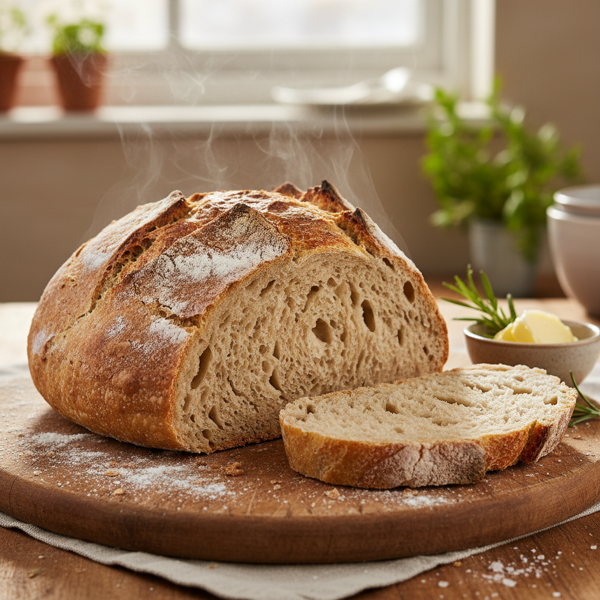
This artisan loaf is an absolute game-changer in the world of gluten and dairy-free baking. It boasts a stunning golden-brown crust and a soft, airy interior, ensuring that each slice feels as indulgent as traditional bread. Unlike most gluten-free options that quickly go stale, this bread remains fresh and delicious for several days when stored at room temperature. Perfect for sandwiches or toasted with your favorite spread, it's a versatile addition to your gluten-free lifestyle. Whether you're enjoying it at brunch or pairing it with dinner, this bread will leave you and your guests wanting more! Visit www.allergyfreealaska.com for more delightful recipes.
N/A
Servings
N/A
Calories
12
Ingredients
Ingredients
Honey
3 tablespoons (Liquid sweetener)
Warm Water
1 1/4 cups (Between 110 - 115 degrees F)
Active Dry Yeast
2 3/4 teaspoons (Make sure it's not instant yeast)
Eggs
3 (At room temperature)
Olive Oil
3 tablespoons (Liquid fat)
Apple Cider Vinegar
2 teaspoons (Liquid acid)
Brown Rice Flour
2 cups (Gluten-free flour)
Tapioca Starch
1/2 cup (Gluten-free thickener)
Arrowroot
1/2 cup (Gluten-free thickener)
Blanched Almond Flour
1/2 cup (Gluten-free flour)
Xanthan Gum
2 3/4 teaspoons (Thickening and stabilizing agent)
Sea Salt
1 1/4 teaspoons (Seasoning)
Instructions
1
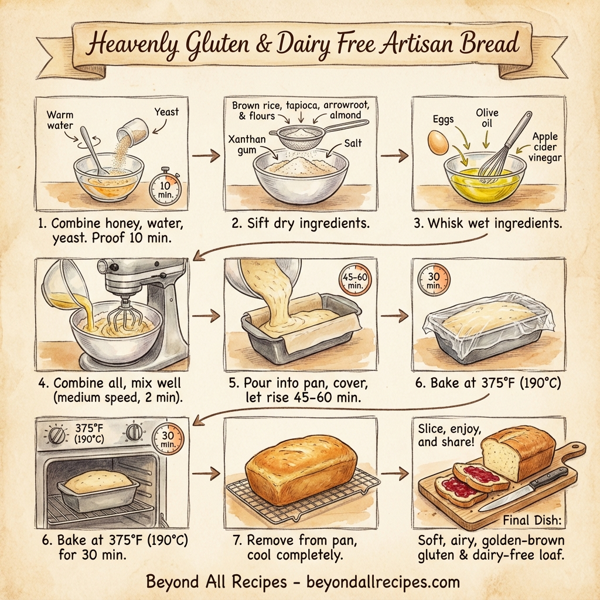
In a small mixing bowl, combine the honey and warm water. Stir until the honey is fully dissolved. Sprinkle the active dry yeast over the surface and gently stir to mix. Allow the mixture to proof for exactly 10 minutes, setting a timer to ensure precision. Have your other wet and dry ingredients ready while you wait.
2
In a large mixing bowl, sift together the brown rice flour, tapioca starch, arrowroot, almond flour, xanthan gum, and sea salt until fully combined.
3
In a separate bowl, whisk together the eggs, olive oil, and apple cider vinegar until well blended.
4
Once the yeast mixture is ready, pour the wet mixture into the dry ingredients. Stir until you achieve a thick, paste-like consistency, then add in the yeast mixture. Using a heavy-duty mixer, initially mix on low speed for about 30 seconds. Scrape down the sides of the bowl and then increase to medium speed, mixing for about 2 minutes or until the dough is smooth and well-aerated. Stop occasionally to scrape down the bowl as necessary.
5
Carefully pour the dough into a well-greased and parchment-lined 9 x 5-inch bread pan. Cover the pan with plastic wrap and allow it to rise in a warm area for 45-60 minutes. Check the dough after 30 minutes; when it is nearly touching the plastic wrap, remove the wrap and let it rise uncovered for the remaining time.
6
Preheat your oven to 375°F (190°C). Once the dough has risen to just above the top of the pan, bake in the preheated oven for 30 minutes until the loaf is beautifully golden.
7
After baking, remove the loaf from the pan and cool on a wire rack. Allow it to cool completely before slicing to achieve the best texture.
8
Slice, enjoy, and share your delicious creation!
Nutrition Information
Frequently Asked Questions
Frequently Asked Questions
Is this Heavenly Artisan Bread gluten-free?
Yes, this bread is specifically developed to be 100% gluten-free, using a blend of brown rice flour, almond flour, and starches.
Is this bread dairy-free?
Yes, this recipe contains no dairy products; it uses olive oil as the fat source instead of butter.
What type of yeast should I use?
You should use active dry yeast. Do not use instant yeast for this specific recipe as the proofing steps are designed for active dry.
What is the ideal temperature for the water to proof the yeast?
The water should be between 110 and 115 degrees Fahrenheit to properly activate the yeast without killing it.
How long should the yeast proof?
The yeast mixture should proof for exactly 10 minutes; it is recommended to set a timer for precision.
Can I use cold eggs?
No, for the best results, ensure your eggs are at room temperature before mixing them into the dough.
What kind of oil is recommended for this bread?
The recipe calls for 3 tablespoons of olive oil.
Why is apple cider vinegar included in the recipe?
Apple cider vinegar acts as a liquid acid that helps the dough rise and improves the overall texture of gluten-free bread.
Which gluten-free flours are required?
You will need brown rice flour and blanched almond flour.
What starches are used in this artisan loaf?
This recipe utilizes both tapioca starch and arrowroot for thickening and structure.
Is xanthan gum necessary?
Yes, 2 3/4 teaspoons of xanthan gum are used as a thickening and stabilizing agent to mimic the elasticity of gluten.
What consistency should the dough have?
The dough should achieve a thick, paste-like consistency before the yeast mixture is added, and then become smooth and well-aerated after mixing.
Should I sift the dry ingredients?
Yes, you should sift together the brown rice flour, starches, almond flour, xanthan gum, and sea salt until fully combined.
How long do I need to mix the dough?
After adding the yeast mixture, mix on low for 30 seconds, then on medium speed for about 2 minutes.
What size bread pan is best?
A well-greased and parchment-lined 9 x 5-inch bread pan is required.
How long does the dough need to rise?
The dough should rise in a warm area for 45 to 60 minutes.
How do I know when to remove the plastic wrap during rising?
Check the dough after 30 minutes; when it is nearly touching the plastic wrap, remove it and let it finish rising uncovered.
At what temperature should the oven be preheated?
Preheat your oven to 375 degrees Fahrenheit (190 degrees Celsius).
How long does the bread bake?
The loaf should bake for approximately 30 minutes until it is beautifully golden.
How should I cool the bread?
Remove the loaf from the pan immediately after baking and let it cool completely on a wire rack.
Why must I wait for the bread to cool before slicing?
Cooling completely is essential to achieve the best texture and prevent the bread from becoming gummy.
How should I store the finished bread?
The bread can be stored at room temperature, where it remains fresh and delicious for several days.
Is this bread suitable for sandwiches?
Yes, it is versatile enough for sandwiches or toasted with your favorite spread.
Does this bread go stale quickly?
Unlike many gluten-free options, this artisan loaf remains fresh for several days at room temperature.
Can I use a manual whisk for the entire process?
It is recommended to use a heavy-duty mixer to ensure the dough is properly smooth and aerated.
What is the role of honey in this recipe?
Honey serves as a liquid sweetener and helps feed the yeast during the proofing process.
What should I do if my yeast doesn't bubble during proofing?
If the yeast doesn't foam or bubble after 10 minutes, it may be dead, and you should start over with fresh yeast and water at the correct temperature.
Can I omit the sea salt?
Sea salt provides essential seasoning; omitting it may result in a bland-tasting loaf.
What is the texture of the crust?
This recipe produces a stunning golden-brown artisan crust with a soft, airy interior.
Where can I find more recipes like this?
You can visit www.allergyfreealaska.com for more gluten and dairy-free recipes.