Heavenly Buttermilk Gluten-Free Loaf
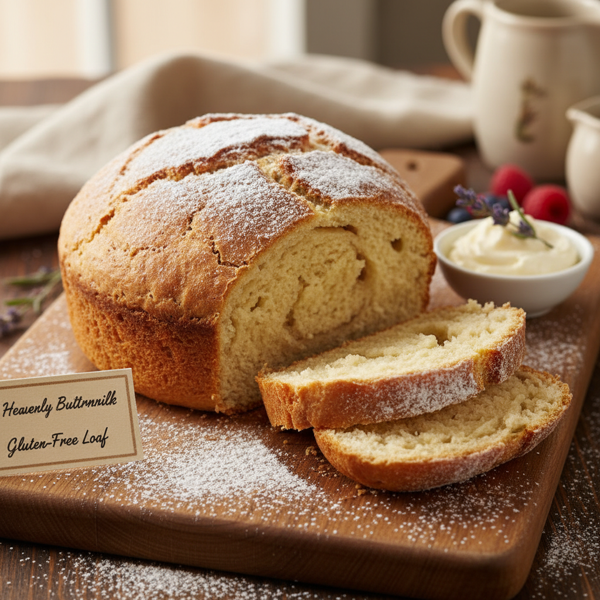
Indulge in the delightful taste of our Heavenly Buttermilk Gluten-Free Loaf, an exquisite recipe inspired by Roben Ryberg's masterpiece from 'The Gluten-Free Kitchen.' This beloved loaf, cherished by both novices and seasoned bakers, can be prepared in a mere 35 minutes, from start to finish! Its moist, tender crumb and rich flavor surpass any store-bought gluten-free alternatives you've ever tasted. Perfect for sandwiches, toast, or simply enjoyed warm with butter, this loaf will impress family and friends alike. Enjoy delicious homemade goodness right at your table!
1
Servings
N/A
Calories
11
Ingredients
Ingredients
Buttermilk
1 1/4 cups (room temperature)
Yeast
1 packet (about 1 tablespoon) (active dry yeast)
Potato Starch
3/4 cup ((or potato starch flour; do not use potato flour))
Cornstarch
1 1/4 cups (none)
Sugar
2 tablespoons (none)
Baking Soda
1/2 teaspoon (none)
Baking Powder
2 teaspoons (none)
Xanthan Gum
2 1/2 teaspoons (none)
Salt
1/2 teaspoon (none)
Oil
1/4 cup ((canola and/or safflower oil))
Shortening
as needed (for greasing the baking pan)
Instructions
1
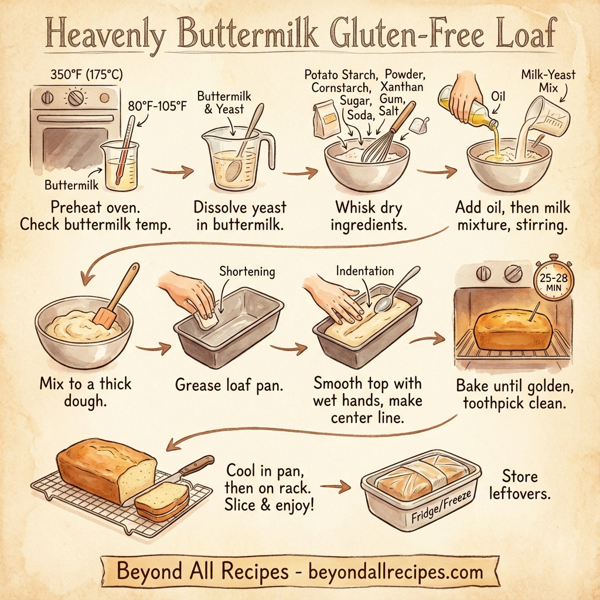
Preheat the oven to 350°F (175°C). Make sure your buttermilk is at room temperature, ideally between 80°F and 105°F, which is crucial for the yeast activation.
2
In a measuring cup with the buttermilk, stir in the yeast and let it dissolve while you prepare the dry ingredients.
3
In a medium-sized mixing bowl, whisk together all the dry ingredients: potato starch, cornstarch, sugar, baking soda, baking powder, xanthan gum, and salt.
4
Gradually add the oil to the dry mixture, stirring continuously to combine. Then, slowly pour in the milk-yeast mixture while stirring to incorporate.
5
Continue mixing until you achieve a well-combined, thick, and pasty dough.
6
Grease a 9x4 inch loaf pan generously with shortening.
7
Transfer the dough into the prepared loaf pan. Wet your hands to prevent sticking, then smooth out the top of the dough, creating a lengthwise indentation down the center using the back of a wet spoon.
8
Bake the loaf in the preheated oven for 25-28 minutes, or until just golden brown. Test for doneness with a long toothpick; it should come out clean.
9
Allow the loaf to cool briefly in the pan before gently removing it. Finish cooling on a wire rack before slicing.
10
Store any leftovers in the refrigerator or freeze for future enjoyment.
Nutrition Information
Frequently Asked Questions
Frequently Asked Questions
What is the Heavenly Buttermilk Gluten-Free Loaf?
It is an exquisite gluten-free recipe inspired by Roben Ryberg's 'The Gluten-Free Kitchen' known for its moist, tender crumb and rich flavor.
How long does it take to make this gluten-free bread?
The entire process from start to finish takes approximately 35 minutes.
Who is the inspiration behind this recipe?
The recipe is inspired by Roben Ryberg's masterpiece from 'The Gluten-Free Kitchen.'
What is the ideal temperature for the buttermilk?
The buttermilk should be at room temperature, ideally between 80°F and 105°F for optimal yeast activation.
What type of yeast is required for this recipe?
The recipe calls for one packet, which is approximately 1 tablespoon, of active dry yeast.
Can I use potato flour instead of potato starch?
No, you should use potato starch or potato starch flour, but do not use potato flour.
What are the main dry ingredients used in this bread?
The dry ingredients include potato starch, cornstarch, sugar, baking soda, baking powder, xanthan gum, and salt.
What temperature should the oven be set to?
The oven should be preheated to 350°F (175°C).
What size loaf pan is needed?
A 9x4 inch loaf pan is recommended for this recipe.
How should the loaf pan be prepared before baking?
The pan should be greased generously with shortening to prevent the bread from sticking.
What kind of oil should be used in the dough?
You can use 1/4 cup of canola oil, safflower oil, or a combination of both.
What is the texture of the dough?
The dough should be well-combined, thick, and pasty before being transferred to the pan.
How do I prevent the dough from sticking to my hands?
You should wet your hands before smoothing out the top of the dough.
What is the purpose of the indentation in the dough?
A lengthwise indentation created with a wet spoon helps the bread expand and bake properly.
How long does the bread need to bake?
The loaf should bake for 25 to 28 minutes until it is just golden brown.
How do I test if the bread is done?
Test for doneness using a long toothpick; it should come out clean when inserted into the center.
How should the bread be cooled?
Allow the loaf to cool briefly in the pan, then transfer it to a wire rack to finish cooling before slicing.
How should I store leftovers?
Store any leftovers in the refrigerator or freeze them for long-term storage.
Is this bread suitable for making sandwiches?
Yes, its moist and tender crumb makes it perfect for sandwiches, toast, or eating warm with butter.
How much xanthan gum is needed?
The recipe requires 2 1/2 teaspoons of xanthan gum.
Does this recipe use both baking soda and baking powder?
Yes, it uses 1/2 teaspoon of baking soda and 2 teaspoons of baking powder.
How many servings does one loaf provide?
The recipe is designed to make one full loaf.
What is the first step in preparing the dough?
The first step is to stir the yeast into the room-temperature buttermilk and let it dissolve.
Can beginners make this bread?
Yes, this recipe is cherished by both novices and seasoned bakers for its simplicity.
What category does this recipe fall into?
This recipe is categorized as a Yeast Bread.
Is sugar included in the ingredients?
Yes, the recipe uses 2 tablespoons of sugar.
What are the suggested tags for this recipe?
Tags include gluten-free, buttermilk, quick bread, easy recipe, homemade loaf, and yeast bread.
How do you incorporate the liquids into the dry ingredients?
Gradually add the oil first, then slowly pour in the milk-yeast mixture while stirring continuously.
What happens if the buttermilk is too cold?
If the buttermilk is too cold, the yeast may not activate properly, which is crucial for the bread's rise.
Is this bread better than store-bought options?
According to the description, its flavor and texture surpass any store-bought gluten-free alternatives.