Hearty Vegan Bolognese with Whole Wheat Spaghetti
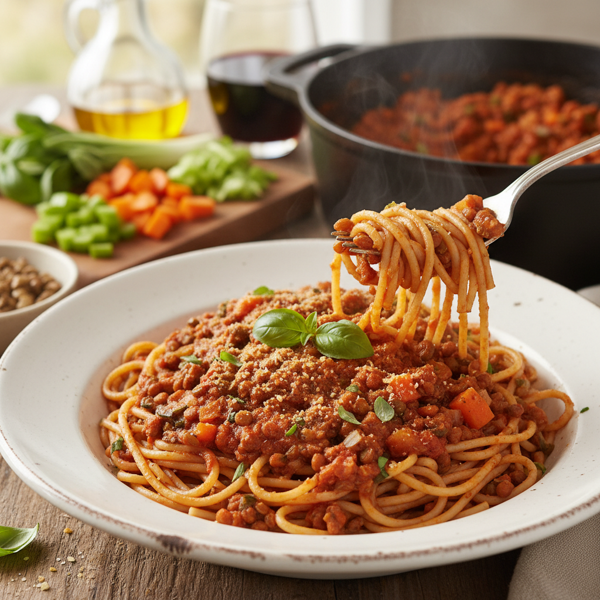
This delightful Vegan Bolognese recipe reimagines a classic Italian dish that even your meat-loving friends won't resist! Crafted with textured vegetable protein (TVP), which soaks up all the rich, savory flavors, this plant-based sauce is packed with wholesome ingredients like fresh vegetables and aromatic herbs. Whether you're cooking for a dinner party or a cozy date night, this recipe ensures you can serve up a delight that’s both comforting and nutritious. The addition of whole wheat spaghetti adds a nutty flavor and extra fiber, making this a hearty meal you can feel good about.
N/A
Servings
N/A
Calories
17
Ingredients
Ingredients
Olive Oil
1-2 tablespoons (for sautéing)
Onion
1, chopped (chopped)
Carrot
1, diced (diced)
Garlic Cloves
2, minced (minced)
Basil
1 tablespoon (dried)
Oregano
1 tablespoon (dried)
Thyme
1 tablespoon (dried)
Bay Leaf
1 (whole)
Crushed Red Pepper Flakes
1 teaspoon (optional)
Textured Vegetable Protein (TVP)
1 cup (dry, not rehydrated)
Soy Sauce or Bragg's Liquid Aminos
2-3 tablespoons (for flavoring)
Vegetable Stock
1 cup (for rehydrating TVP)
Tomato Paste
1 (6-ounce) can (for sauce base)
Nutritional Yeast
2 tablespoons (for flavor and nutrients)
Crushed Tomatoes
1 (28-ounce) can (for sauce)
Fresh Parsley or Basil
1/2 cup, chopped (for garnish)
Whole Wheat Spaghetti
1 lb (for serving)
Instructions
1
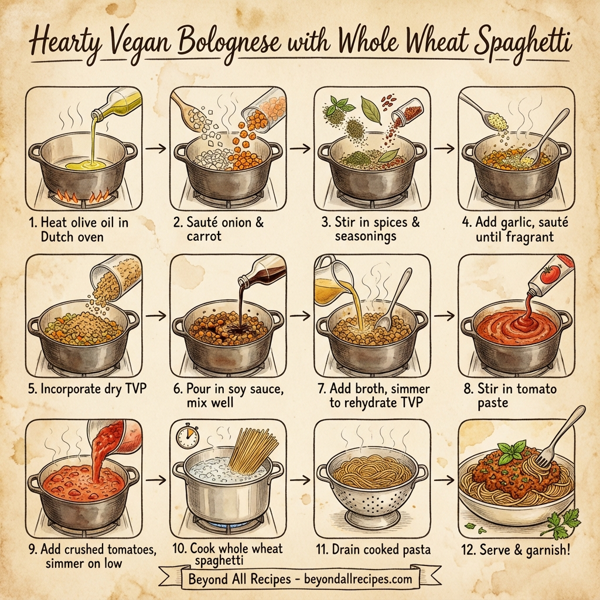
In a large Dutch oven, heat the olive oil over medium heat until shimmering.
2
Add the chopped onion and diced carrot, sauté for about 5 minutes until they start to soften. Season with a pinch of salt and pepper, keeping in mind the soy sauce will add more saltiness later.
3
Stir in the dried Italian seasonings (basil, oregano, thyme), bay leaf, and crushed red pepper flakes (if desired). If the mixture appears dry, feel free to drizzle in a little more olive oil.
4
Add minced garlic and sauté for 1-2 minutes until fragrant, stirring frequently to avoid burning.
5
Incorporate the dry textured vegetable protein (TVP), ensuring it is evenly coated with the vegetable mixture.
6
Pour in the soy sauce, mixing well to evenly distribute and impart flavor to the TVP.
7
Add the vegetable broth gradually, stirring to rehydrate the TVP thoroughly, scraping down any bits stuck to the sides of the pot. Allow the mixture to simmer for 2-3 minutes.
8
Stir in the tomato paste until well blended, cooking for an additional minute to deepen its flavor before adding the crushed tomatoes.
9
Once the sauce begins to bubble, reduce the heat to low, allowing it to simmer gently while you cook the spaghetti.
10
In a separate large pot, bring salted water to a rolling boil. Add the whole wheat spaghetti and cook for 7-9 minutes or until al dente.
11
Drain the pasta and transfer it to a large serving bowl. Top generously with the Vegan Bolognese sauce, garnishing with chopped fresh parsley or basil before serving.
Nutrition Information
Frequently Asked Questions
Frequently Asked Questions
What is the main protein source in this Vegan Bolognese?
The main protein source is textured vegetable protein (TVP), which provides a meat-like texture and absorbs savory flavors.
Is this recipe suitable for vegans?
Yes, this recipe is entirely plant-based and vegan-friendly.
What kind of pasta is recommended for this dish?
The recipe calls for whole wheat spaghetti to add a nutty flavor and extra fiber.
How long should I cook the whole wheat spaghetti?
Cook the spaghetti in salted boiling water for 7-9 minutes or until it is al dente.
Can I use an alternative to soy sauce?
Yes, you can use Bragg's Liquid Aminos as a substitute for soy sauce for flavoring.
What is TVP?
TVP stands for Textured Vegetable Protein, a dehydrated soy product used as a meat substitute in many recipes.
Do I need to rehydrate the TVP before adding it to the pot?
No, you should incorporate the dry TVP into the vegetable mixture before adding the liquids.
How is the TVP rehydrated in this recipe?
It is rehydrated directly in the pot using vegetable broth and soy sauce during the cooking process.
What vegetables are used in the base of the sauce?
The base consists of chopped onion and diced carrots.
How many garlic cloves are needed for this recipe?
The recipe requires 2 minced garlic cloves.
What dried herbs are included in the seasoning?
The seasoning includes one tablespoon each of dried basil, oregano, and thyme.
Is this Bolognese sauce spicy?
It can be if you choose to add the optional teaspoon of crushed red pepper flakes.
What should I do if the vegetables seem dry while sautéing?
You can drizzle in a little more olive oil to ensure they soften without burning.
When should the garlic be added during the cooking process?
Add the garlic after the onions and carrots have softened, typically after about 5 minutes.
How long do I sauté the garlic?
Sauté the garlic for 1-2 minutes until it becomes fragrant, stirring frequently.
What gives the sauce its rich savory flavor?
The combination of soy sauce, vegetable stock, and nutritional yeast provides deep savory notes.
Why is tomato paste added to the recipe?
Tomato paste is used to create a rich sauce base and deepen the overall flavor before adding crushed tomatoes.
What type of tomatoes are used for the bulk of the sauce?
A 28-ounce can of crushed tomatoes is used for the main body of the sauce.
What garnishes are recommended for this dish?
Garnish the dish with chopped fresh parsley or basil before serving.
Is this recipe considered a healthy option?
Yes, it is a nutritious, plant-based meal featuring whole grains and fresh vegetables.
Can I use regular white spaghetti instead?
Yes, though whole wheat spaghetti is suggested for its nutritional benefits and nutty taste.
What is the role of nutritional yeast in this sauce?
Nutritional yeast is added for its unique savory flavor and extra nutrients.
Should the bay leaf be removed before serving?
While the instructions don't explicitly say, it is standard practice to remove the bay leaf before serving.
How do I know the onion and carrots are ready for the next step?
They are ready when they start to soften, which usually takes about 5 minutes of sautéing.
What is the best type of pot for this recipe?
A large Dutch oven is ideal for cooking the sauce evenly.
How much TVP is required for the recipe?
The recipe calls for 1 cup of dry Textured Vegetable Protein.
What size can of tomato paste is used?
The recipe uses one 6-ounce can of tomato paste.
How much spaghetti should I prepare?
The recipe is designed to be served with 1 lb of whole wheat spaghetti.
Are the red pepper flakes required?
No, they are optional and can be omitted if you prefer a milder flavor.
How much vegetable stock is used to rehydrate the TVP?
You will need 1 cup of vegetable stock added gradually to the pot.