Hearty TVP and Bean Chili
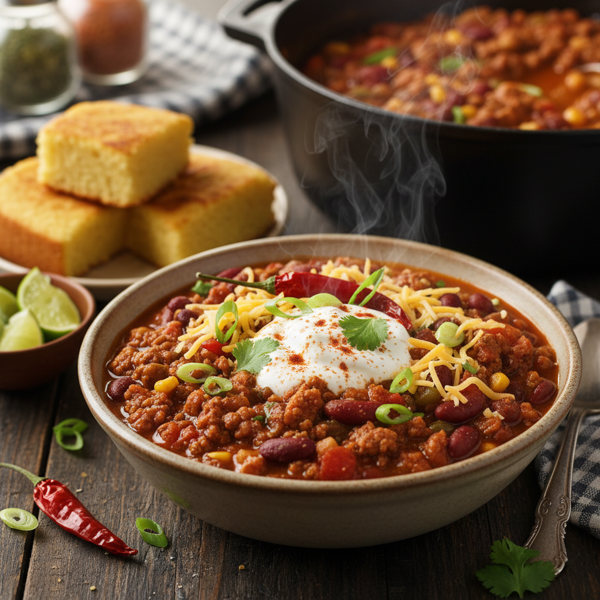
Warm up with this delightful Hearty TVP and Bean Chili, featuring a rich blend of spices and textures. Utilizing dried kidney or black beans, along with an ample amount of textured vegetable protein (TVP), this vegetarian chili mimics the comforting essence of traditional chili while remaining completely plant-based. Packed with nourishing ingredients, it's perfect for a cozy family dinner, meal prep, or a crowd-pleasing potluck dish. Top it off with your favorite garnishes for an extra burst of flavor!
N/A
Servings
N/A
Calories
15
Ingredients
Ingredients
Dried kidney beans (or black beans)
2 cups (soaked and cooked)
Water
8 cups (for cooking beans)
Vegetable broth
1 cup (hot)
Textured vegetable protein (TVP)
1 cup (uncooked)
Bay leaves
2 (whole)
Olive oil
1/4 cup (for sautéing)
Onions
2 (diced)
Garlic cloves
4 (minced)
Chili pepper
1 (minced)
Cayenne pepper
1/2 teaspoon (for seasoning)
Coriander
2 teaspoons (ground)
Cumin
2 teaspoons (ground)
Chili powder
1 tablespoon (for seasoning)
Crushed tomatoes
28 ounces (canned)
Salt and pepper
to taste (for seasoning)
Instructions
1
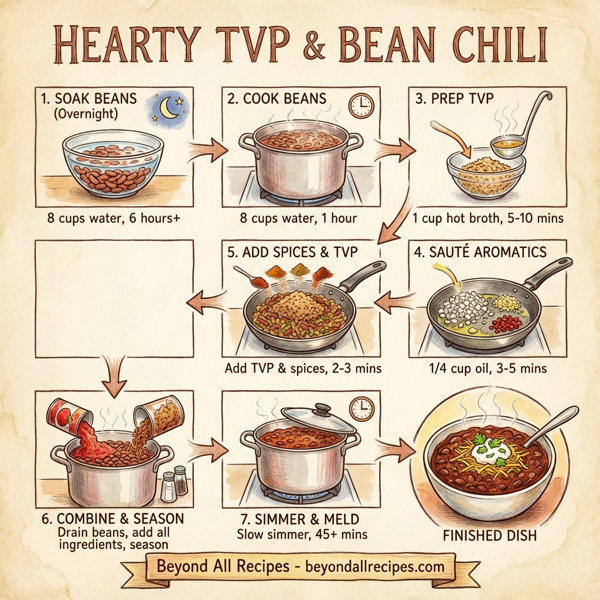
Begin by soaking the dried beans in 8 cups of water for at least 6 hours or overnight, then drain and rinse them to remove any impurities.
2
In a large pot, combine the soaked beans with 8 cups of water from the soaking process, then bring to a gentle simmer. Cook for about 1 hour or until the beans are tender, but not mushy.
3
While the beans are cooking, prepare the TVP. In a small bowl, mix the uncooked TVP with 1 cup of hot vegetable broth and let it sit for 5 to 10 minutes until it absorbs the liquid and becomes fluffy.
4
In a separate large saucepan, heat 1/4 cup of olive oil over medium heat. Sauté the diced onions, minced garlic, and chili pepper for 3 to 5 minutes until the onions are soft and translucent.
5
Reduce the heat and add the hydrated TVP, cayenne pepper, coriander, cumin, and chili powder to the onion mixture. Stir well to combine and cook for another 2-3 minutes to develop the flavors.
6
Once the beans are ready, drain them and add them to the onion and TVP mixture. Pour in the crushed tomatoes and season with salt and pepper to taste.
7
Bring the chili to a slow simmer, stirring to combine all ingredients. Allow it to cook for at least 45 minutes, stirring occasionally, to let the flavors meld together.
Nutrition Information
Frequently Asked Questions
Frequently Asked Questions
What is Hearty TVP and Bean Chili?
It is a plant-based, vegetarian chili that uses textured vegetable protein (TVP) and dried beans to create a rich, meat-like texture and savory flavor.
What is TVP?
TVP stands for Textured Vegetable Protein, which is a high-protein, soy-based meat substitute that absorbs the flavors of the dish it is cooked in.
Is this recipe suitable for vegans?
Yes, this recipe is entirely plant-based and vegan-friendly as it uses vegetable broth and no animal products.
How do I prepare the dried beans for this chili?
Soak the dried kidney or black beans in 8 cups of water for at least 6 hours or overnight, then drain and rinse before cooking.
Can I use canned beans instead of dried?
Yes, you can substitute canned beans; simply skip the soaking and initial boiling steps and add them directly to the mixture.
How long do the beans need to soak?
The dried beans should be soaked for a minimum of 6 hours, though overnight is often preferred for better texture.
What types of beans work best in this recipe?
Dried kidney beans or black beans are the best choices for providing the right texture and flavor for this chili.
How do I hydrate the TVP?
Mix 1 cup of uncooked TVP with 1 cup of hot vegetable broth and let it sit for 5 to 10 minutes until it becomes fluffy.
Why should the vegetable broth for the TVP be hot?
Hot broth allows the TVP to absorb the liquid more quickly and effectively, ensuring a better texture.
Can I hydrate the TVP with water instead of broth?
You can use water, but vegetable broth is recommended because it infuses the TVP with much more flavor.
How long does it take to cook the beans after they have soaked?
After soaking, the beans usually take about 1 hour of simmering to become tender.
What aromatics are used in this chili?
The recipe uses diced onions, minced garlic, and a minced chili pepper as the aromatic base.
Is this Hearty TVP and Bean Chili spicy?
It has a moderate spice level from the chili powder, cayenne pepper, and fresh chili pepper.
Can I adjust the spice level?
Yes, you can easily adjust the heat by increasing or decreasing the amount of cayenne pepper and fresh chili pepper.
What are the primary spices used for seasoning?
The main seasonings include ground coriander, ground cumin, chili powder, and cayenne pepper.
How long does the chili need to simmer?
The chili should simmer for at least 45 minutes to allow all the flavors to meld together.
Why is it important to simmer the chili for so long?
Simmering allows the TVP and beans to fully absorb the spices and the acidity of the tomatoes to mellow.
What kind of tomatoes should I use?
The recipe calls for a 28-ounce can of crushed tomatoes for a thick and consistent texture.
Can I use fresh tomatoes instead of canned?
Yes, but you may need to add some tomato paste or a little extra liquid to achieve the desired consistency.
Is this recipe good for meal prep?
Absolutely; the flavors of this chili often improve after sitting, making it perfect for preparing in advance.
Is this chili gluten-free?
Most TVP is gluten-free, but you should always check the packaging of your specific brand to be certain.
Can this be made in a slow cooker?
Yes, once the beans are tender and TVP is hydrated, you can combine all ingredients in a slow cooker on low for 4-6 hours.
Is this recipe high in protein?
Yes, both the beans and the textured vegetable protein provide a significant amount of plant-based protein.
How should I store leftover chili?
Store leftovers in an airtight container in the refrigerator for up to 5 days.
Can I freeze this chili?
Yes, this chili freezes exceptionally well and can be kept in the freezer for up to 3 months.
What are some recommended toppings?
Try topping it with avocado slices, vegan sour cream, fresh cilantro, or a squeeze of lime juice.
Is this chili a good source of fiber?
Yes, it is very high in fiber thanks to the large amount of beans and vegetable protein.
Can I add other vegetables to this recipe?
Yes, bell peppers, corn, or diced carrots would make excellent additions to this chili.
What should I do if my beans are still hard?
Ensure the beans are simmered in water until tender before adding acidic ingredients like tomatoes, which can slow the softening process.
Can I use a different type of oil?
Yes, while olive oil is suggested, any neutral oil like avocado or vegetable oil will work well.