Hearty Tibetan Beef Noodle Soup with Bhatsa
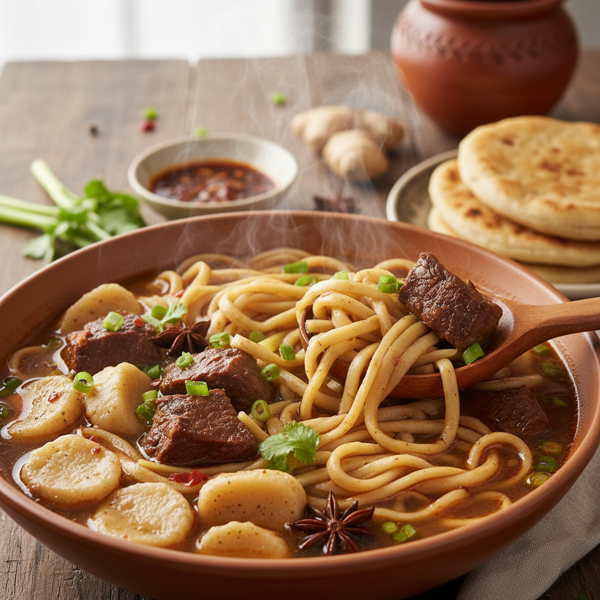
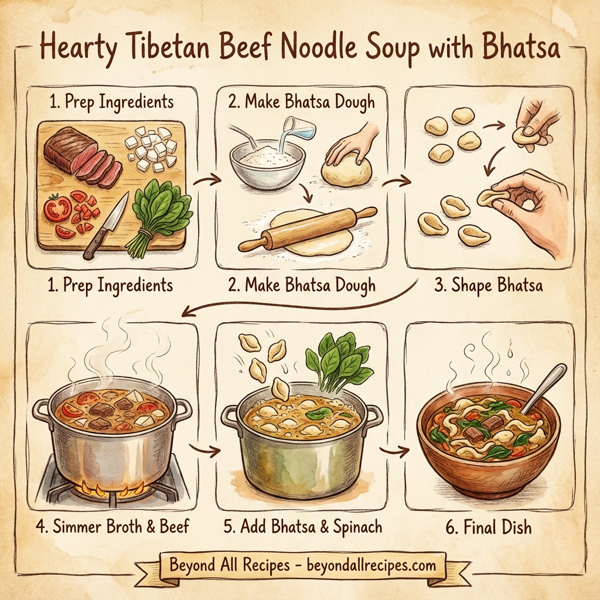
Experience the rich flavors of Tibet with this comforting Beef Noodle Soup, featuring delightful homemade bhatsa noodles. These unique, scoop-shaped dumplings mimic Italian gnocchi but are specifically crafted to capture the savory broth, ensuring that each bite is packed with flavor. This recipe balances tender beef sirloin with fresh veggies such as daikon radish, spinach, and tomatoes, creating a nourishing and satisfying meal. Perfect for warming up on a chilly day, this dish can be made vegetarian by substituting the beef with vegetable bouillon while maintaining the steamy goodness. Spend about an hour crafting this soul-soothing soup, with much of the preparation seamlessly done while the broth simmers. Whether serving two or doubling for the family, this versatile recipe is sure to be a hit.
N/A
Servings
N/A
Calories
12
Ingredients
Ingredients
Beef sirloin
1/2 lb (Cut into bite-sized pieces)
Garlic cloves
2 (Minced)
Onion
1/3 medium (Chopped)
Beef bouillon
1 teaspoon
Water
6 cups, divided
Daikon radish
2/3 of a large (Chopped)
Green onion
1 stalk (Chopped)
Cilantro
1 cup (Chopped)
Spinach
5 cups (Roughly chopped (measure before chopping))
Tomato
1 (Chopped)
All-purpose white flour
1 1/2 cups
Water
1/2 cup
Instructions
Nutrition Information
Frequently Asked Questions
Frequently Asked Questions
What is bhatsa?
Bhatsa are unique, scoop-shaped Tibetan noodles or dumplings similar to Italian gnocchi, designed to capture the savory broth.
What type of beef is best for this soup?
The recipe recommends using 1/2 lb of beef sirloin cut into bite-sized pieces for the best texture and flavor.
How can I make this soup vegetarian?
You can easily make this dish vegetarian by substituting the beef sirloin with extra vegetables and using vegetable bouillon instead of beef bouillon.
What vegetables are included in this Tibetan Beef Noodle Soup?
The soup features a variety of fresh vegetables including daikon radish, spinach, tomato, onion, and green onion.
How long does it take to prepare this recipe?
It takes approximately one hour to craft this soul-soothing soup, with much of the prep work done while the broth simmers.
How do I make the bhatsa noodles?
The noodles are made by mixing 1 1/2 cups of all-purpose white flour with 1/2 cup of water and shaping them into small scoops.
Is this recipe suitable for a cold day?
Yes, it is described as a comforting and nourishing meal that is perfect for warming up on a chilly day.
How many people does this recipe serve?
This recipe is portioned for two people but can be easily doubled to serve a larger family.
What gives the broth its rich flavor?
The savory flavor comes from a combination of beef bouillon, garlic, onions, and fresh cilantro.
What is the purpose of the scoop shape of the noodles?
The scoop shape is specifically crafted to capture the savory broth, ensuring every bite is packed with flavor.
How much spinach is needed?
The recipe calls for 5 cups of spinach, measured before being roughly chopped.
Can I substitute the daikon radish?
While daikon radish provides a traditional flavor, you can substitute it with regular radishes or turnips if necessary.
How should the garlic be prepared?
The two garlic cloves should be minced before being added to the soup base.
Do I need special equipment to shape the noodles?
No special equipment is needed; the bhatsa can be shaped by hand into their signature scoop form.
How much water is required for the entire recipe?
A total of 6 1/2 cups of water are used: 6 cups divided for the soup and 1/2 cup specifically for the noodle dough.
What type of flour is used for the noodles?
The recipe specifies using all-purpose white flour for the bhatsa noodles.
Is the soup spicy?
The recipe as written is not spicy, focusing instead on savory and fresh herbal flavors.
What is the role of the tomato in this recipe?
The chopped tomato adds a layer of acidity and color that balances the richness of the beef broth.
How much cilantro should I use?
You will need 1 cup of chopped fresh cilantro to provide a bright, herbal finish to the soup.
Can I make this soup ahead of time?
Yes, the broth can be prepared ahead, though the noodles are best when cooked fresh in the simmering soup.
What are the main tags for this dish?
Key tags for this recipe include Tibetan, soup, beef, noodle, bhatsa, and comfort food.
How do I prepare the beef sirloin?
The beef sirloin should be cut into small, bite-sized pieces to ensure it becomes tender during the cooking process.
Is this considered Asian cuisine?
Yes, it is a traditional dish representing the rich culinary flavors of Tibet.
Can I add more vegetables?
Absolutely, you can increase the veggie count or add others like bok choy or carrots to customize the soup.
How much beef bouillon is used?
The recipe requires 1 teaspoon of beef bouillon to season the base.
Is the soup broth-heavy?
Yes, with 6 cups of water, it creates a generous amount of savory broth to accompany the noodles and beef.
Can I use chicken instead of beef?
While traditional to use beef, you could substitute chicken and chicken bouillon for a different variation.
Is there a specific way to chop the onion?
The recipe suggests using 1/3 of a medium onion, chopped finely.
What makes this soup 'soul-soothing'?
The combination of homemade noodles, tender meat, and a warm, savory broth creates a deeply satisfying meal.
What is the best way to serve this soup?
Serve it hot in large bowls, ensuring each serving has a good balance of bhatsa noodles, beef, and vegetables.