Hearty Slow-Roasted Root Vegetable Soup
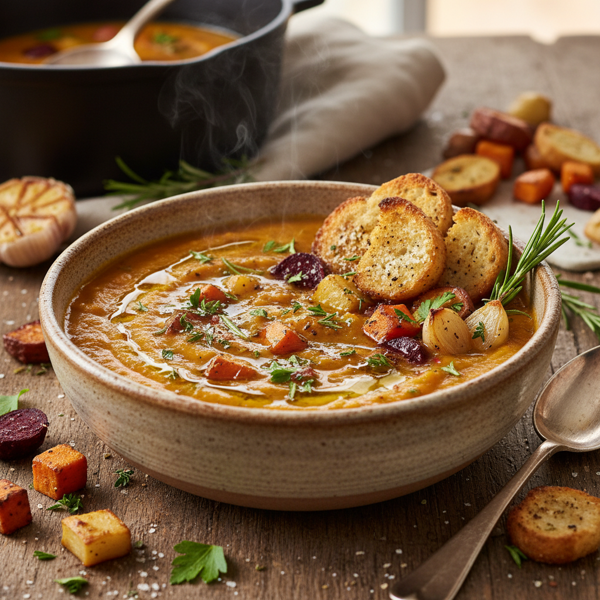
This Hearty Slow-Roasted Root Vegetable Soup transforms humble ingredients into a bowl of comforting goodness. The slow roasting process intensifies the natural sweetness of the vegetables, resulting in a rich, velvety texture and deep, caramelized flavors. This soup is perfect for warming up on a bitterly cold day, served alongside crusty bread and a selection of cheese. For a more elegant presentation at dinner parties, elevate your dish by garnishing with crispy bacon, crumbled Cheshire cheese, or herby croutons, making it not just a meal but a delightful experience.
6
Servings
160
Calories
12
Ingredients
Ingredients
Red onion
1 large (peeled)
Carrots
8 ounces (peeled)
Sweet potatoes
8 ounces (peeled)
Butternut squash
8 ounces (peeled and seeded)
Sweet red peppers
8 ounces (deseeded)
Tomatoes
6 ounces
Garlic
1 head
Olive oil
1-2 tablespoons
Fresh rosemary
2 sprigs
Vegetable stock
1.5 liters
Fresh ground black pepper
to taste
Low-fat Greek yogurt
2-3 tablespoons
Instructions
1
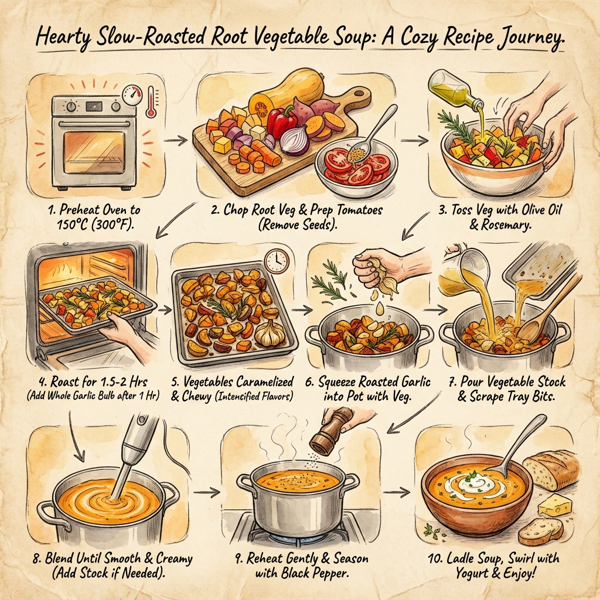
Preheat your oven to 150°C (300°F).
2
Prepare the vegetables by chopping the peeled butternut squash, sweet potatoes, sweet red peppers, red onion, and carrots into large, 2-inch chunks.
3
Slice the tomatoes into similar-sized pieces, discarding the seeds and jelly to reduce acidity.
4
In a large bowl, toss all the chopped vegetables with olive oil until evenly coated, then add the fresh rosemary sprigs.
5
Spread the vegetables evenly on a baking tray and place them in the preheated oven for 1.5 to 2 hours. After the first hour, add the whole unpeeled garlic bulb to the tray.
6
The vegetables should be cooked through, caramelized, and slightly chewy, signaling their intensified flavors.
7
Once roasted, remove the rosemary sprigs and squeeze the roasted garlic out of its papery husk into a large saucepan with the roasted vegetables.
8
Pour in the vegetable stock, scraping any flavorful bits from the bottom of the roasting tray into the saucepan.
9
Using an immersion blender, carefully puree the soup in batches until smooth and creamy. If necessary, add additional stock to reach your desired consistency.
10
Reheat the soup gently while adjusting seasoning with fresh ground black pepper.
11
Ladle the soup into bowls and finish with a swirl of low-fat Greek yogurt on each serving before enjoying.
Nutrition Information
7.17g
Fat
20.17g
Carbs
4.33g
Protein
4.33g
Fiber
Frequently Asked Questions
Frequently Asked Questions
What is the main benefit of slow-roasting the vegetables for this soup?
The slow roasting process intensifies the natural sweetness of the vegetables, resulting in a rich, velvety texture and deep, caramelized flavors.
What ingredients are needed for this Hearty Slow-Roasted Root Vegetable Soup?
The soup requires red onion, carrots, sweet potatoes, butternut squash, sweet red peppers, tomatoes, garlic, olive oil, fresh rosemary, vegetable stock, black pepper, and Greek yogurt.
How many servings does this recipe yield?
This recipe yields 6 servings.
At what temperature should the oven be set?
The oven should be preheated to 150 degrees Celsius or 300 degrees Fahrenheit.
How should the vegetables be chopped for roasting?
The peeled butternut squash, sweet potatoes, sweet red peppers, red onion, and carrots should be chopped into large, 2-inch chunks.
How do you prepare the tomatoes for the recipe?
Slice the tomatoes and discard the seeds and jelly to help reduce the acidity of the soup.
How long should the vegetables roast in total?
The vegetables should roast for 1.5 to 2 hours until they are cooked through, caramelized, and slightly chewy.
When should the garlic bulb be added to the oven?
The whole unpeeled garlic bulb should be added to the roasting tray after the other vegetables have been roasting for one hour.
How is the garlic processed after roasting?
Once roasted, the garlic is squeezed out of its papery husk directly into the saucepan with the other vegetables.
What happens to the rosemary sprigs after roasting?
The fresh rosemary sprigs should be removed from the roasted vegetables before the soup is pureed.
How do you incorporate the flavors from the roasting tray into the soup?
Pour the vegetable stock into the saucepan and scrape any flavorful bits from the bottom of the roasting tray into the liquid.
What is the best way to puree the soup?
Using an immersion blender, carefully puree the soup in batches until it reaches a smooth and creamy consistency.
How can I adjust the soup's consistency if it is too thick?
If necessary, you can add additional vegetable stock until you reach your desired thickness.
What is the recommended garnish for each serving?
Each bowl should be finished with a swirl of low-fat Greek yogurt before serving.
Is this soup suitable for a vegetarian diet?
Yes, this recipe is vegetarian as it uses vegetable stock and entirely plant-based main ingredients plus yogurt.
Can this soup be made vegan?
Yes, to make the soup vegan, you can omit the Greek yogurt or use a plant-based alternative.
What are some elegant garnish options for dinner parties?
For an elegant presentation, garnish with crispy bacon, crumbled Cheshire cheese, or herby croutons.
How many calories are in one serving of this soup?
Each serving contains approximately 160 calories.
What is the fat content per serving?
Each serving contains 7.17 grams of fat.
How many carbohydrates are in each serving?
There are 20.17 grams of carbohydrates per serving.
What is the fiber content of this soup?
The soup provides 4.33 grams of fiber per serving.
How much protein is in one serving?
Each serving contains 4.33 grams of protein.
What amount of vegetable stock is required?
The recipe calls for 1.5 liters of vegetable stock.
How should the butternut squash be prepared?
The butternut squash should be peeled, seeded, and chopped into chunks.
What is the quantity of carrots used?
The recipe uses 8 ounces of peeled carrots.
How do you season the soup?
The soup is seasoned with fresh ground black pepper to taste while being gently reheated.
What type of onion is used in this recipe?
The recipe uses one large red onion, which should be peeled and chopped.
How much olive oil is used for the vegetables?
Between 1 and 2 tablespoons of olive oil are used to coat the vegetables for roasting.
What is the best way to serve this soup for a hearty meal?
It is best served alongside crusty bread and a selection of cheese for a comforting experience.
Is this recipe good for cold winter days?
Yes, it is described as perfect for warming up on a bitterly cold day.