Hearty Scottish Oat Scones with Dried Fruits
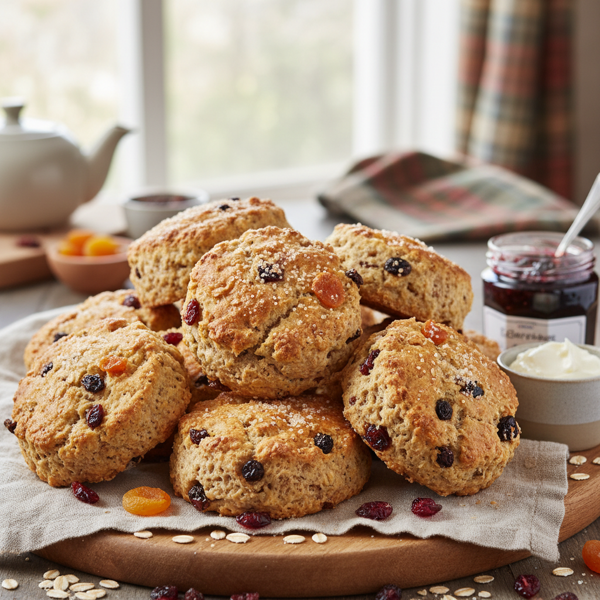
Experience the warm, comforting taste of Scotland with these delightful oat scones, inspired by a beloved recipe from Eating Well Magazine. This lower-fat version is perfect for a cozy breakfast or a delightful afternoon tea. Made with wholesome rolled oats, a mix of all-purpose and whole wheat pastry flour, and naturally sweetened with raisins or your choice of dried fruits, these scones are not only delicious but also nutritious. Whether you enjoy them fresh out of the oven or warmed the next day, these scones are bound to become a family favorite.
N/A
Servings
N/A
Calories
12
Ingredients
Ingredients
Butter or Vegan Margarine
2 tablespoons (Melted until light brown)
Rolled Oats
1 1/4 cups (Regular oats)
All-Purpose White Flour
3/4 cup (Sifted)
Whole Wheat Pastry Flour
3/4 cup (Sifted)
Sugar or Splenda
1/4 cup (Regular sugar or sweetener)
Baking Powder
1 tablespoon (Dry ingredient)
Baking Soda
1/2 teaspoon (Dry ingredient)
Salt
1/2 teaspoon (Dry ingredient)
Raisins or other dried fruit
1/2 cup (Chopped if large)
Large Egg
1 (Lightly beaten)
Nonfat Plain Yogurt or Soy Yogurt
1/2 cup (Regular or plant-based)
Canola Oil
2 tablespoons (Liquid)
Instructions
1
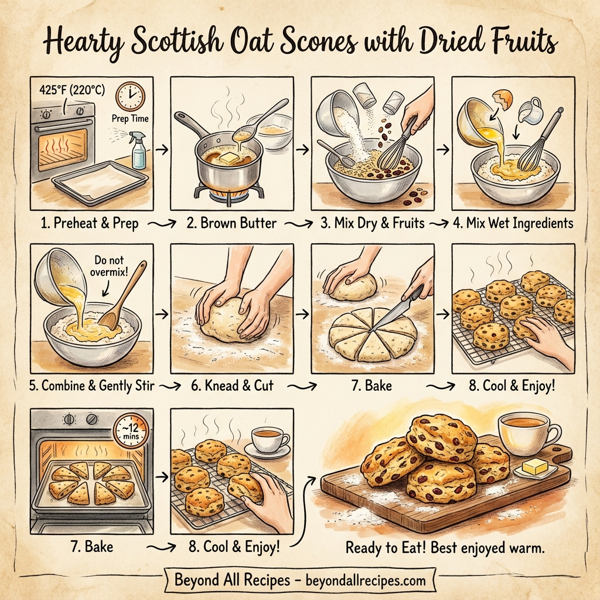
1. Preheat your oven to 425°F (220°C). Prepare a baking sheet by spraying it with nonstick cooking spray or lining it with parchment paper.
2
2. In a small saucepan, melt the butter over low heat and watch closely until it just begins to turn light brown, about 2 minutes. Skim off any foam and transfer to a small bowl to cool slightly.
3
3. In a large mixing bowl, combine the rolled oats, all-purpose flour, whole wheat pastry flour, sugar, baking powder, baking soda, and salt. Mix well to ensure all dry ingredients are evenly distributed, then stir in your chosen dried fruits.
4
4. Create a well in the center of the dry ingredients. In another bowl, mix together the browned butter, lightly beaten egg, nonfat plain yogurt, and canola oil until well combined. Pour this mixture into the well of the dry ingredients.
5
5. Stir gently until the mixture is just moistened; be careful not to overmix.
6
6. Transfer the dough onto a lightly floured surface and gently knead it a few times until it forms a cohesive ball. Pat the ball down into an 8-inch circle, then use a sharp knife to cut it into 8 or 12 wedges based on your preferred serving size.
7
7. Arrange the wedges on the prepared baking sheet, leaving space between them to allow for expansion. Bake in the preheated oven for about 12 minutes, or until the tops are lightly browned and the scones feel firm to the touch.
8
8. Once baked, remove from the oven and transfer the scones to a wire rack to cool slightly. These scones are best enjoyed warm, fresh from the oven.
Nutrition Information
Frequently Asked Questions
Frequently Asked Questions
What are Hearty Scottish Oat Scones?
These are a lower-fat, wholesome version of traditional Scottish scones featuring rolled oats and dried fruits.
What is the inspiration behind this recipe?
The recipe is inspired by a beloved version from Eating Well Magazine.
What temperature should I preheat the oven to?
You should preheat your oven to 425°F (220°C).
How do I prepare the baking sheet?
Spray the baking sheet with nonstick cooking spray or line it with parchment paper.
How do I brown the butter for this recipe?
Melt the butter over low heat for about 2 minutes until it turns light brown, then skim off the foam.
Can I use vegan margarine?
Yes, you can substitute butter with vegan margarine.
What types of flour are used in these scones?
The recipe uses a combination of all-purpose flour and whole wheat pastry flour.
What kind of oats are required?
The recipe calls for 1 1/4 cups of regular rolled oats.
Can I use a sugar substitute?
Yes, you can use either regular sugar or Splenda as a sweetener.
What dried fruits can I add?
You can use raisins or any other choice of dried fruits, chopped if they are large.
What is the first step for the dry ingredients?
Combine rolled oats, flours, sugar, baking powder, baking soda, and salt in a large bowl.
How do I prepare the wet ingredients?
In a separate bowl, mix browned butter, a lightly beaten egg, yogurt, and canola oil.
Can I use plant-based yogurt?
Yes, nonfat plain soy yogurt is a suitable plant-based alternative.
How do I combine the wet and dry mixtures?
Create a well in the center of the dry ingredients and pour in the wet mixture, stirring until just moistened.
What happens if I overmix the dough?
Overmixing can result in tough scones; stir only until the mixture is just moistened.
How do I shape the scone dough?
Gently knead the dough on a floured surface into a ball, then pat it into an 8-inch circle.
How many scones does this recipe yield?
The dough can be cut into either 8 or 12 wedges depending on your size preference.
How long do the scones need to bake?
Bake the scones for approximately 12 minutes.
How do I know when the scones are finished baking?
The scones are done when the tops are lightly browned and they feel firm to the touch.
Should I cool the scones before serving?
They should be transferred to a wire rack to cool slightly, but they are best enjoyed warm.
Is this recipe low in fat?
Yes, this is a lower-fat version of traditional scones.
How much canola oil is used?
The recipe requires 2 tablespoons of canola oil.
Do I need to sift the flour?
The recipe recommends using sifted all-purpose and whole wheat pastry flour.
What serves as the leavening agent?
The recipe uses both baking powder (1 tablespoon) and baking soda (1/2 teaspoon).
Can these scones be eaten the next day?
Yes, they can be enjoyed fresh or warmed up the following day.
Is there salt in this recipe?
Yes, the recipe includes 1/2 teaspoon of salt.
What is the preparation for the egg?
The large egg should be lightly beaten before being added to the wet mixture.
Are these scones suitable for tea time?
Absolutely, they are perfect for a cozy afternoon tea.
Do I need to leave space between the wedges on the baking sheet?
Yes, leave space between them to allow for expansion during baking.
What kind of flour is best for the surface?
Use a lightly floured surface (using all-purpose flour) to knead and shape the dough.