Hearty Italian Beef Braciole with Tomato Basil Sauce
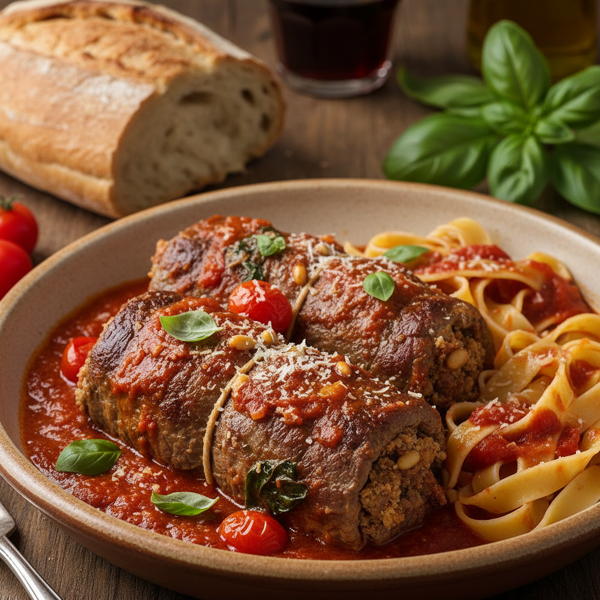
Indulge in this savory Hearty Italian Beef Braciole, a classic dish enriched with layers of flavorful prosciutto, aromatic herbs, and a luscious tomato basil sauce. Tender beef rounds are pounded and stuffed with a delightful mixture of pine nuts, pecorino, and garlic, then rolled and simmered to perfection in a rich sauce. This recipe captures the essence of traditional Italian cuisine and is perfect for gatherings or family dinners. Serve it with crusty bread or pasta, and savor the heartwarming flavors of Italy.
4
Servings
300
Calories
18
Ingredients
Ingredients
boneless beef round steak
1 lb (cut into 4 thin slices, approximately 1/3 inch thick)
prosciutto
4 slices
pignolis (pine nuts)
1 tablespoon
grated pecorino romano cheese
2 tablespoons
garlic
2 cloves (chopped)
parsley
2 tablespoons (chopped)
olive oil
1/2 cup
imported Italian tomatoes
2 (28 ounce) cans
tomato puree
1/4 cup
bay leaves
2
fresh basil leaves
3 (torn into small pieces)
yellow onion
1 medium (chopped fine)
carrots
2 (peeled and chopped fine)
celery
2 stalks (chopped fine)
dry red wine
1 cup
flour
(for dredging)
salt
(to taste)
pepper
(to taste)
Instructions
1
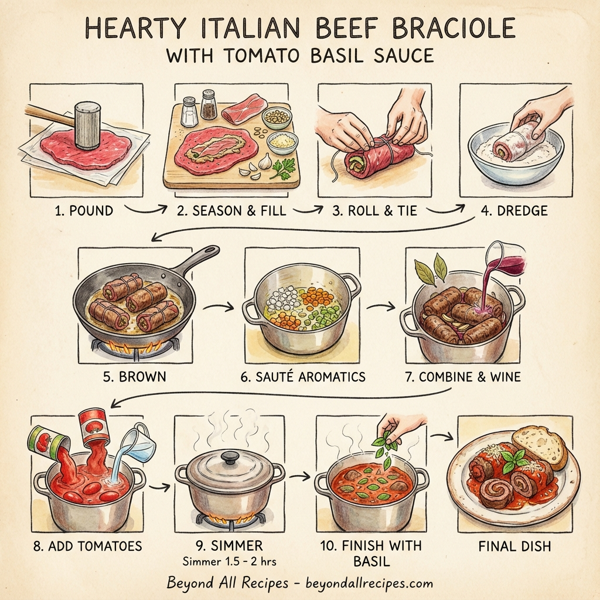
Place each slice of beef between 2 sheets of plastic wrap. Use a meat pounder to gently pound each slice until they are about 1/4 inch thick.
2
Evenly sprinkle salt and pepper over the flattened beef slices.
3
Lay a slice of prosciutto over each beef slice. Top with pignolis, grated pecorino romano cheese, chopped garlic, and parsley.
4
Roll each beef slice tightly, tucking in the ends. Secure the rolls with kitchen string to hold them together.
5
In a large frying pan, heat 1/4 cup of olive oil over medium heat. Dredge each braciole in flour, shaking off the excess, and add them to the pan.
6
Cook the braciole until browned on all sides, approximately 15 minutes. Remove the browned braciole and set aside.
7
In a large saucepan, heat the remaining 1/4 cup of olive oil over medium heat. Add the diced onion, carrots, and celery, cooking them until they are tender but not browned, about 10 minutes.
8
Return the braciole to the saucepan. Add bay leaves, salt, and pepper to taste.
9
Pour in the red wine, and let it cook until most of the liquid has evaporated, about 2 minutes.
10
Pass the canned tomatoes through a food mill or sieve and add them to the saucepan, along with the tomato puree. Fill one of the empty tomato cans halfway with water and add this to the sauce.
11
Reduce the heat to low and let the sauce simmer, stirring occasionally, until the beef is tender, about 1.5 to 2 hours.
12
In the final moments of cooking, sprinkle the torn basil over the braciole and cook for an additional 2 minutes.
13
Transfer the braciole to serving plates, spoon the rich tomato basil sauce over them, and serve immediately.
Nutrition Information
17.5g
Fat
12.5g
Carbs
20g
Protein
2.5g
Fiber
Frequently Asked Questions
Frequently Asked Questions
What is Hearty Italian Beef Braciole?
Hearty Italian Beef Braciole is a traditional Italian dish featuring thin slices of beef round steak rolled with a filling of prosciutto, pecorino cheese, pine nuts, and herbs, then simmered in a rich tomato basil sauce.
What cut of meat should I use for Braciole?
This recipe calls for 1 lb of boneless beef round steak, cut into four thin slices approximately 1/3 inch thick before pounding.
How thin should the beef be for the rolls?
You should use a meat pounder to gently flatten each beef slice until it is approximately 1/4 inch thick.
What are the ingredients in the Braciole filling?
The filling consists of salt, pepper, a slice of prosciutto, pignolis (pine nuts), grated pecorino romano cheese, chopped garlic, and chopped parsley.
Can I substitute the Pecorino Romano cheese?
While Pecorino Romano provides a classic salty tang, you could substitute it with Parmesan or Grana Padano if necessary.
What are pignolis?
Pignolis are pine nuts, which add a delicate nutty flavor and texture to the beef roll filling.
How do I keep the beef rolls from falling apart?
After rolling the beef tightly and tucking in the ends, secure each roll with kitchen string to hold them together during the cooking process.
Why is the beef dredged in flour?
Dredging the braciole in flour before browning helps create a nice crust on the meat and serves as a natural thickener for the tomato sauce.
How long does it take to brown the beef?
The braciole should be cooked in olive oil until browned on all sides, which takes approximately 15 minutes.
What vegetables are used in the tomato basil sauce?
The sauce features a classic base of finely chopped yellow onion, carrots, and celery, also known as a soffritto.
What kind of wine is recommended for this recipe?
The recipe calls for 1 cup of dry red wine, which is used to deglaze the pan and add depth to the sauce.
How do I prepare the canned tomatoes for the sauce?
The imported Italian tomatoes should be passed through a food mill or sieve before being added to the saucepan along with tomato puree.
How long does the beef need to simmer?
The beef should simmer in the sauce on low heat for about 1.5 to 2 hours until it becomes tender.
When should I add the fresh basil?
The torn fresh basil leaves should be sprinkled over the braciole in the final two minutes of cooking to maintain their bright flavor.
How many servings does this recipe provide?
This recipe makes 4 servings.
What is the calorie count per serving?
There are 300 calories per serving of Hearty Italian Beef Braciole.
How much protein is in one serving?
Each serving contains 20g of protein.
How much fat is in this dish?
Each serving contains 17.5g of fat.
What is the carbohydrate content?
One serving of this recipe has 12.5g of carbohydrates.
Is there fiber in this recipe?
Yes, there is 2.5g of fiber per serving.
What should I serve with Beef Braciole?
This dish is perfect when served with crusty Italian bread or over a bed of your favorite pasta.
Can I prepare this dish ahead of time?
Yes, like many braised dishes, the flavors of Braciole often improve the next day when reheated gently.
Is this recipe considered comfort food?
Yes, it is tagged as comfort food and a hearty meal, perfect for family dinners or special gatherings.
What is the best way to chop the vegetables?
The onion, carrots, and celery should be chopped fine so they blend smoothly into the rich tomato sauce.
How much olive oil is used in total?
A total of 1/2 cup of olive oil is used: 1/4 cup for browning the meat and 1/4 cup for sautéing the vegetables.
Do I need to remove the kitchen string?
Yes, you should carefully remove the kitchen string before serving the braciole to your guests.
What size of tomato cans are needed?
The recipe requires two 28-ounce cans of imported Italian tomatoes.
Why add water to the sauce?
Adding half a can of water helps balance the consistency of the sauce as it simmers and reduces over the 2-hour cooking period.
Can I use fresh tomatoes instead of canned?
While canned imported Italian tomatoes provide consistent results, you can use very ripe fresh plum tomatoes that have been peeled and seeded.
What herbs are essential for the flavor profile?
Fresh parsley in the filling and fresh basil in the sauce, along with bay leaves, provide the essential aromatic profile.