Hearty German Eye of Round Pot Roast

Bringing the essence of German culinary tradition, this Hearty German Eye of Round Pot Roast captures rich flavors and tender textures. Chef Tell enhances the classic pot roast with a blend of savory ingredients including aromatic garlic, robust red wine, and fresh vegetables. As it slowly simmers, the eye of round becomes irresistibly tender, infused with a tantalizing sauce that beautifully complements the roast. Perfect for family gatherings or a comforting weeknight dinner, this dish is sure to be a favorite at your table.
8-10 servings
Servings
420
Calories
13
Ingredients
Ingredients
olive oil
2 tablespoons
beef eye round
4-5 lb
tomato paste
2 tablespoons
garlic cloves, finely chopped
2
beef stock or broth
4 cups
red wine
2 cups
bay leaves
2
lightly-salted butter
7 tablespoons, divided
medium carrots, diced
6
medium celery ribs, diced
6
medium onions, diced
2
all-purpose flour
6 tablespoons
salt and pepper
to taste
Instructions
1
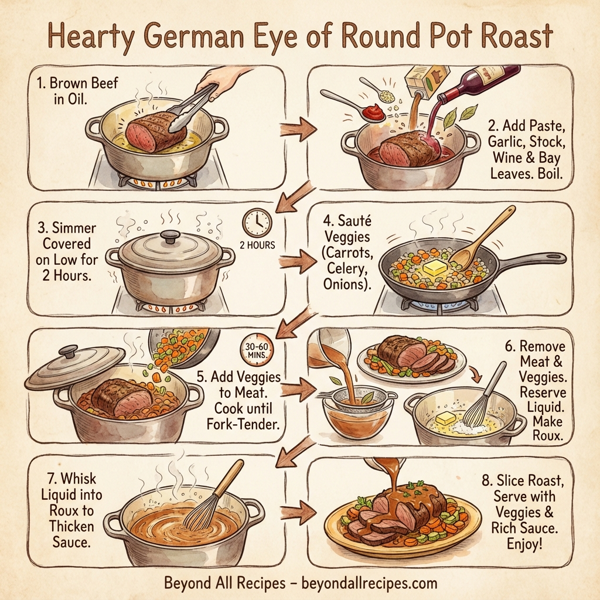
In a Dutch oven or large, heavy saucepot, heat the olive oil over medium-high heat.
2
Carefully add the beef eye round to the pot, browning it evenly on all sides to develop a rich color and flavor.
3
Once browned, add the tomato paste and finely chopped garlic, stirring until the garlic becomes lightly browned and aromatic.
4
Pour in the beef stock, red wine, and add the bay leaves. Stir gently to combine and bring the mixture to a boil over high heat.
5
After boiling, reduce the heat to low, cover the pot tightly, and let it simmer gently for about 2 hours. Avoid boiling to ensure the meat remains tender.
6
While the meat is cooking, prepare the vegetable mixture: In a large skillet, heat 1 tablespoon of butter over medium-high heat.
7
Add the diced carrots, diced celery, and diced onions to the skillet, and sauté for 5 to 10 minutes until they soften slightly.
8
After the meat has cooked for 2 hours, incorporate the sautéed vegetable mixture into the Dutch oven with the meat. Cover and continue cooking for an additional 30 to 60 minutes, or until the meat is fork-tender.
9
Once cooked, carefully transfer the meat and vegetables to a serving platter and set aside. Pour the cooking liquid into a large bowl, reserving it for the sauce, and discard the bay leaves.
10
In the Dutch oven over medium heat, melt the remaining 6 tablespoons of butter.
11
Whisk in the flour, stirring constantly until the mixture is smooth and bubbly, about 2 to 3 minutes.
12
Gradually add the reserved beef stock, whisking in small amounts at a time and blending completely after each addition.
13
Continue cooking and stirring until the sauce comes to a boil and thickens. Season the sauce with salt and pepper to taste.
14
Slice the roast and serve it alongside the sautéed vegetables, generously pouring the rich sauce over the top.
Nutrition Information
23g
Fat
15g
Carbs
35g
Protein
2.5g
Fiber
Frequently Asked Questions
Frequently Asked Questions
What is Hearty German Eye of Round Pot Roast?
It is a traditional German-style dish featuring a 4-5 lb beef eye round slow-simmered in a rich sauce of red wine, beef stock, and aromatic vegetables.
Which chef is associated with this recipe?
This pot roast recipe is inspired by the culinary style of Chef Tell.
What specific cut of beef is used?
The recipe calls for a 4-5 lb beef eye round.
How many servings does this recipe yield?
This recipe makes approximately 8 to 10 servings.
What are the nutritional facts for one serving?
One serving contains 420 calories, 23g of fat, 15g of carbohydrates, 35g of protein, and 2.5g of fiber.
What is the initial preparation step for the beef?
The beef eye round should be browned evenly on all sides in olive oil within a Dutch oven or heavy saucepot.
What liquid ingredients are used for the braising liquid?
The braising liquid consists of 4 cups of beef stock or broth and 2 cups of red wine.
How long should the meat simmer initially?
The meat should be covered and simmered gently for approximately 2 hours before adding the vegetables.
Which vegetables are included in this German pot roast?
The recipe includes 6 diced medium carrots, 6 diced medium celery ribs, and 2 diced medium onions.
How are the vegetables prepared before being added to the pot?
The carrots, celery, and onions are sautéed in a tablespoon of butter for 5 to 10 minutes until they soften slightly.
When do you add the vegetables to the meat?
The sautéed vegetable mixture is added to the Dutch oven after the meat has already cooked for 2 hours.
What is the total cooking time after adding the vegetables?
After adding the vegetables, continue cooking for an additional 30 to 60 minutes until the meat is fork-tender.
How is the sauce or gravy thickened?
The sauce is thickened by making a roux with 6 tablespoons of butter and 6 tablespoons of flour, then gradually whisking in the reserved cooking liquid.
What aromatics are used in the roast?
The recipe uses 2 finely chopped garlic cloves and 2 bay leaves for aromatic flavor.
Why is it important to simmer rather than boil the meat?
Avoiding a boil and maintaining a gentle simmer ensures that the eye of round remains tender rather than becoming tough.
How much butter is used in total for the recipe?
A total of 7 tablespoons of lightly-salted butter is used, divided between the vegetable sauté and the sauce.
What is the role of tomato paste in this recipe?
Two tablespoons of tomato paste are added after browning the meat and stirred with the garlic to develop a rich, aromatic base.
What should be done with the bay leaves after cooking?
The bay leaves should be discarded after the cooking process is complete and before preparing the final sauce.
How should the final dish be presented?
The roast should be sliced and served alongside the sautéed vegetables with the thickened sauce poured over the top.
Is this recipe suitable for a slow cooker?
While written for a Dutch oven, the slow-cooking nature of the recipe suggests it could be adapted for a slow cooker, though the browning and sauce-making steps should still be done on a stove.
What are the carbohydrate and fiber levels?
Each serving has 15g of carbohydrates and 2.5g of fiber.
What kind of oil is recommended for browning the beef?
Two tablespoons of olive oil are recommended for browning the meat.
How many garlic cloves are needed?
The recipe requires 2 garlic cloves, finely chopped.
What category of cuisine does this fall under?
It is categorized under German cuisine.
Can I use beef broth if I don't have stock?
Yes, the recipe suggests using 4 cups of either beef stock or beef broth.
What tags are associated with this dish?
Tags include german cuisine, pot roast, beef roast, hearty meal, family dinner, slow-cooked, and comfort food.
How much flour is required for the sauce?
Six tablespoons of all-purpose flour are used to thicken the sauce.
What type of butter is specified?
The recipe specifies using lightly-salted butter.
How is the salt and pepper handled?
Salt and pepper are added at the end of the sauce-making process to taste.
What is the recommended cooking vessel?
A Dutch oven or a large, heavy saucepot is recommended for this recipe.