Hearty Daikon Rice Stew
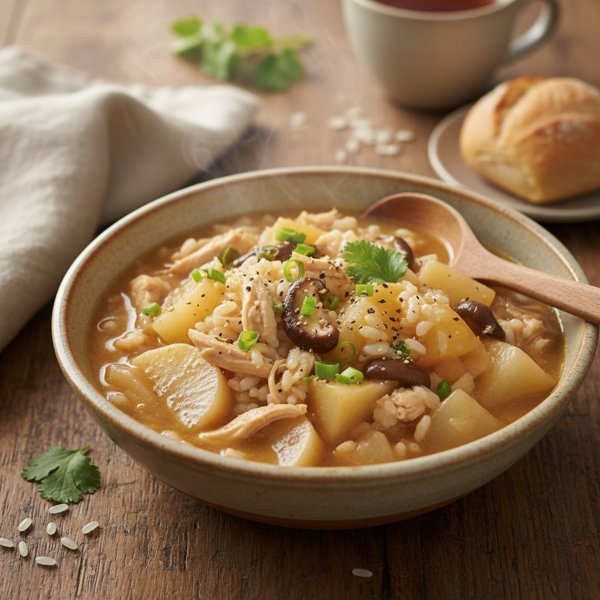
This Heartwarming Daikon Rice Stew, also known as Daikon Zosui, is a comforting Japanese-inspired dish that features the delicate flavors of daikon radishes and shiitake mushrooms, harmoniously blended with tender short-grain rice. It’s perfect for a cold day, providing both nourishment and warmth. Easily adaptable for vegetarians, just switch the chicken stock for vegetable stock to enjoy a wholesome and satisfying meal. Rich in umami from the soy sauce and umbilicus of flavors from the seaweed, every spoonful of this stew is a delightful experience that transports you to the heart of Japan.
5
Servings
192
Calories
8
Ingredients
Ingredients
Cooked short-grain rice
2 1/2 cups (cooked)
Shiitake mushrooms
3/4 cup (thinly sliced)
Daikon radishes
1 1/2 cups (peeled and sliced into ribbons)
Carrot
1/4 cup (peeled and sliced into ribbons)
Wakame seaweed
1/2 cup (soaked for five minutes, then chopped)
Chicken stock or vegetable stock
5 cups (stock)
Salt
1 teaspoon (to taste)
Soy sauce
2 1/2 tablespoons (for seasoning)
Instructions
1
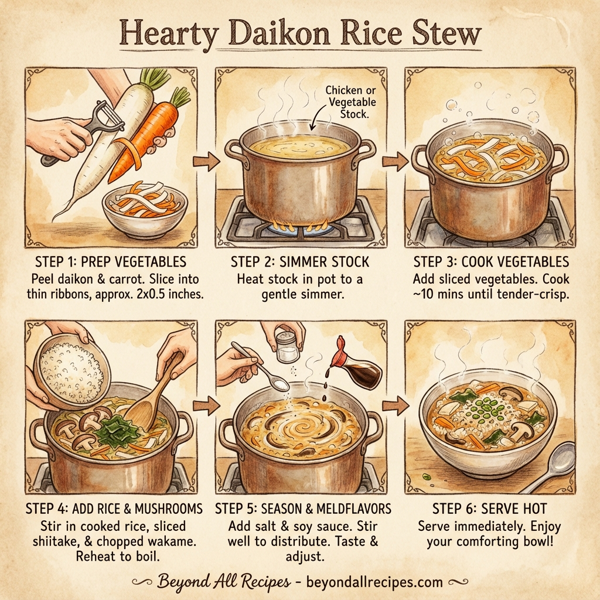
Begin by peeling the daikon and carrot. Using a vegetable peeler, slice them into ribbons measuring approximately two inches long and half an inch wide, ensuring they're no thicker than an eighth of an inch to promote even cooking.
2
In a stockpot or large saucepan, pour in the chicken or vegetable stock and heat it over medium-high heat until it reaches a gentle simmer.
3
Once the stock is bubbling, add in the sliced daikon and carrot. Allow them to cook for about 10 minutes or until they are tender yet still slightly crisp.
4
Next, fold in the cooked short-grain rice, sliced shiitake mushrooms, and the soaked and chopped wakame seaweed. Stir gently to combine, and bring the mixture back to a boil, allowing it to reheat and the flavors to meld.
5
After a few minutes, add in the salt and soy sauce, stirring until evenly distributed. Taste and adjust seasoning if needed.
6
Serve the stew immediately, ensuring the rice remains fluffy to avoid a glue-like consistency. Enjoy your delicious, warm bowl of Heartwarming Daikon Rice Stew!
Nutrition Information
1g
Fat
38g
Carbs
6g
Protein
2g
Fiber
Frequently Asked Questions
Frequently Asked Questions
What is Hearty Daikon Rice Stew?
Hearty Daikon Rice Stew, also known as Daikon Zosui, is a Japanese-inspired dish featuring daikon radishes, shiitake mushrooms, and short-grain rice.
Is this recipe vegetarian friendly?
Yes, it is easily adaptable for vegetarians by substituting chicken stock with vegetable stock.
How many servings does this recipe provide?
This recipe makes 5 servings.
What is the calorie count per serving?
Each serving contains 192 calories.
What is the fat content per serving?
Each serving has 1g of fat.
How many carbohydrates are in one serving?
There are 38g of carbohydrates per serving.
What is the protein content?
Each serving provides 6g of protein.
How much fiber is in the stew?
There is 2g of fiber per serving.
What kind of rice is recommended?
The recipe specifies using cooked short-grain rice.
What mushrooms are used in this dish?
The recipe calls for 3/4 cup of thinly sliced shiitake mushrooms.
What type of seaweed is included?
Wakame seaweed is used in this stew.
How should the seaweed be prepared?
Soak the wakame seaweed for five minutes and then chop it before adding to the stew.
How should I slice the daikon and carrots?
Slice them into ribbons approximately two inches long, half an inch wide, and an eighth of an inch thick.
How long should the daikon ribbons cook?
They should cook in the simmering stock for about 10 minutes until tender yet slightly crisp.
When do I add the cooked rice and mushrooms?
Fold them into the pot once the daikon and carrots have reached the desired tenderness.
Why is it important to serve the stew immediately?
Serving immediately ensures the rice remains fluffy and prevents it from reaching a glue-like consistency.
What liquid base is used for the stew?
You can use 5 cups of either chicken stock or vegetable stock.
How much cooked rice is needed for this recipe?
The recipe requires 2 1/2 cups of cooked short-grain rice.
How much daikon radish is used?
You will need 1 1/2 cups of peeled and sliced daikon ribbons.
How much soy sauce should be added?
The recipe uses 2 1/2 tablespoons of soy sauce for seasoning.
How much salt is required?
Use 1 teaspoon of salt, though it can be adjusted to taste.
Is there any sugar in this recipe?
No, the nutritional information indicates there is no sugar in this dish.
Is this recipe considered a main course?
Yes, it is categorized as a main course rice dish.
Is the stew healthy?
Yes, it is described as a healthy and nourishing meal with wholesome ingredients.
What is the primary flavor profile?
The stew is rich in umami flavors derived from soy sauce and seaweed.
Can I adjust the seasonings?
Yes, you should taste the stew and adjust the salt and soy sauce before serving.
Is this dish suitable for cold weather?
Yes, it is perfect for a cold day, providing warmth and comfort.
How many ingredients are in the recipe?
There are a total of 8 ingredients listed.
Do I need to peel the vegetables?
Yes, the instructions specifically state to peel both the daikon and the carrot.
What are the tags associated with this recipe?
Tags include Japanese, stew, vegetarian, comfort food, healthy, and daikon.