Hearty Caraway Rye Bread
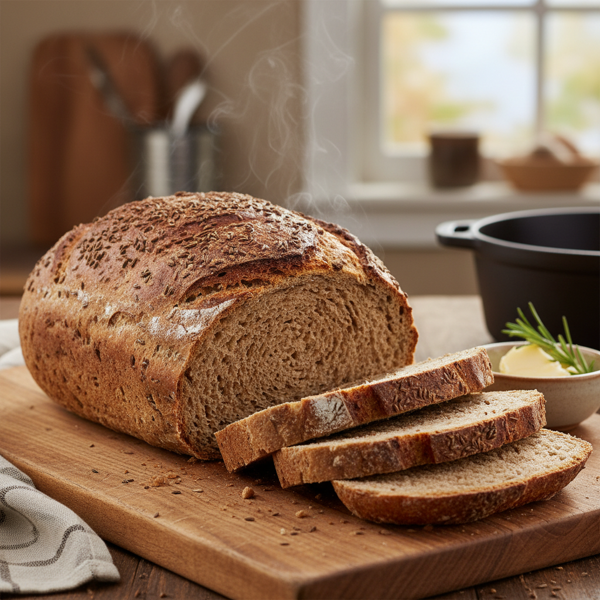
Experience the comforting warmth of homemade Hearty Caraway Rye Bread, a delightful yeast bread that combines the nutty flavor of rye flour with the aromatic essence of caraway seeds. This recipe, sourced from a popular Kitchenaid forum, strikes the perfect balance: rich and flavorful but not overwhelming to the palate. The addition of honey and light molasses imparts a slight sweetness, enhancing the bread’s depth and character. Perfect for sandwiches, toasting, or enjoying with a bit of butter, this bread will become a cherished staple in your kitchen.
2
Servings
900
Calories
10
Ingredients
Ingredients
active dry yeast
2 (1/4 ounce) packages (none)
warm water
3/4 cup (heated to 105 F-115 F)
honey
1/4 cup (none)
light molasses
1/4 cup (optionally, dark or blackstrap can be used)
salt
2 teaspoons (none)
margarine
2 tablespoons (melted)
caraway seeds
2 tablespoons (none)
boiling water
1 cup (boiled)
rye flour
2 cups (none)
all-purpose flour
3 1/2-4 cups (none)
Instructions
1
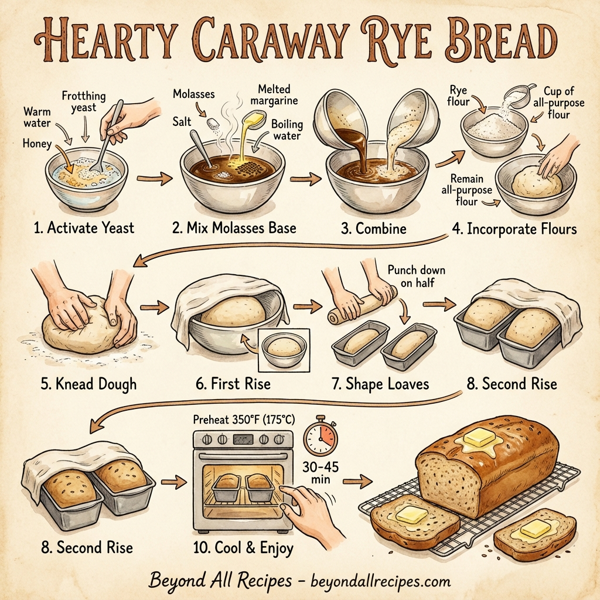
In a small bowl, combine the warm water and honey, then sprinkle the yeast over the mixture. Stir gently until dissolved and let it sit for about 5–10 minutes until it becomes frothy.
2
In a separate large bowl, mix together the molasses, salt, melted margarine, caraway seeds, and boiling water. Stir until the mixture is well combined and let it cool to lukewarm.
3
Once the molasses mixture has cooled, add the yeast mixture to it and stir well.
4
Gradually mix in the rye flour followed by 1 cup of all-purpose flour, mixing until fully combined.
5
Slowly add the remaining all-purpose flour, 1/2 cup at a time, until the dough forms a firm, cohesive ball.
6
Knead the dough on a floured surface for about 5-10 minutes until it is smooth and elastic.
7
Place the kneaded dough in a greased bowl, turning to coat the top. Cover it with a towel or cloth and let it rise in a warm location, free from drafts, for about 1 hour or until it has doubled in size.
8
After the first rise, punch down the dough to release any air. Divide it in half and roll out one half on a floured surface. Roll it tightly to form a loaf and pinch the ends. Place the shaped loaf in a greased loaf pan. Repeat with the other half.
9
Cover both loaf pans with a cloth and allow them to rise for an additional 35-60 minutes until doubled in size.
10
Preheat the oven to 350°F (175°C). Bake the loaves in the preheated oven for 30-45 minutes, or until the loaves sound hollow when tapped. If the loaves brown too quickly, cover them loosely with foil for the last 15 minutes.
11
Remove the loaves from the oven and optionally rub the tops with butter for extra flavor. Cool before slicing.
Nutrition Information
12g
Fat
189g
Carbs
33g
Protein
12g
Fiber
14g
Sugar
Frequently Asked Questions
Frequently Asked Questions
What is Hearty Caraway Rye Bread?
Hearty Caraway Rye Bread is a homemade yeast bread that blends the nutty flavor of rye flour with aromatic caraway seeds, honey, and molasses.
How many loaves does this recipe produce?
This recipe is designed to make 2 loaves of bread.
What type of yeast is required for this recipe?
The recipe calls for 2 packages (1/4 ounce each) of active dry yeast.
What is the ideal temperature for the warm water used to activate the yeast?
The water should be heated to between 105 F and 115 F to properly dissolve the honey and activate the yeast.
Can I use bread flour instead of all-purpose flour?
Yes, bread flour can be used as a substitute for all-purpose flour to provide a slightly chewier texture.
What role does honey play in this bread?
Honey acts as a sweetener and provides food for the yeast to help the dough rise.
Can I substitute the light molasses?
Yes, you can use dark or blackstrap molasses if you prefer a deeper, more robust flavor profile.
Is it possible to use butter instead of margarine?
Absolutely, melted butter can be used in place of margarine for a richer taste.
Why is boiling water used in the molasses mixture?
Boiling water helps dissolve the salt and molasses while drawing out the flavor from the caraway seeds.
Why must the molasses mixture cool before adding yeast?
Adding yeast to a hot mixture can kill the yeast cells, preventing the bread from rising; it must be lukewarm first.
What happens if I omit the caraway seeds?
The bread will still bake correctly, but it will lack the traditional rye bread aroma and flavor caraway provides.
How long should the dough be kneaded?
You should knead the dough on a floured surface for approximately 5 to 10 minutes until it is smooth and elastic.
Can I use a stand mixer for this recipe?
Yes, this recipe is well-suited for a stand mixer using a dough hook for both mixing and kneading.
How long is the first rising period?
The first rise typically takes about 1 hour, or until the dough has doubled in size.
What is the purpose of punching down the dough?
Punching down the dough releases built-up air bubbles and redistributes the yeast for the second rise.
How long is the second rise in the loaf pans?
The second rise should last between 35 and 60 minutes until the dough has doubled in size again.
What temperature should the oven be set to?
The oven should be preheated to 350°F (175°C).
How long should the bread bake?
The loaves should bake for 30 to 45 minutes.
How do I know when the bread is done?
The bread is finished when the loaves sound hollow when tapped on the top or bottom.
What should I do if the bread browns too quickly?
If the crust is browning too fast, cover the loaves loosely with aluminum foil for the final 15 minutes of baking.
Should I brush the tops of the loaves with anything?
Optionally, you can rub the tops with butter immediately after removing them from the oven for extra flavor and a softer crust.
How many calories are in one serving?
According to the provided data, the recipe has 900 calories total, which is 450 calories per loaf if considering two servings.
What is the fiber content of this bread?
The bread contains 12 grams of fiber per the specified nutritional facts.
Is this bread high in protein?
The recipe contains 33 grams of protein in total.
What is the best way to store this bread?
Store the cooled bread in an airtight container or plastic bag at room temperature for several days.
Can this rye bread be frozen?
Yes, you can wrap the cooled loaves tightly in foil or plastic wrap and freeze them for up to 3 months.
How should I slice the bread?
It is best to wait until the bread is completely cool before slicing to prevent the interior from becoming gummy.
What are some serving suggestions?
This bread is excellent for deli-style sandwiches, served toasted with butter, or paired with hearty soups.
Is this recipe suitable for beginners?
Yes, the instructions are straightforward, making it a great entry-level recipe for those learning to bake with yeast and rye flour.
Does this bread contain cholesterol?
No cholesterol information is provided, but using margarine usually results in zero cholesterol compared to butter.