Healthy Whole Wheat Pizza Crust
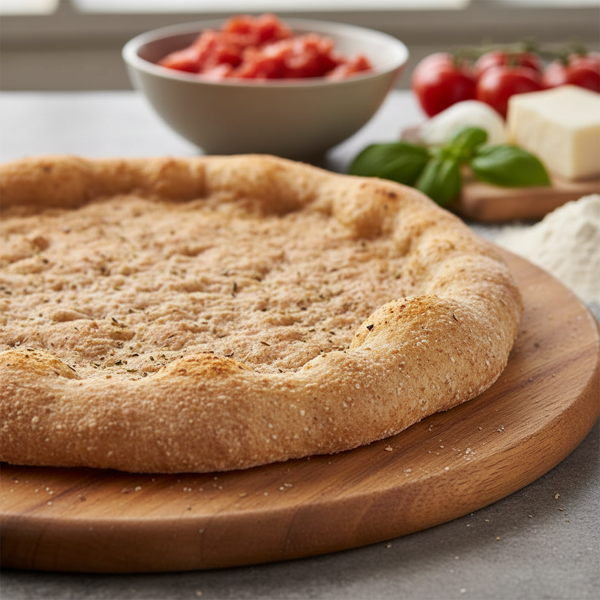
This Healthy Whole Wheat Pizza Crust recipe is your gateway to a delicious, nutritious homemade pizza experience! Made with wholesome ingredients, this crust is perfect for health-conscious pizza lovers looking to enjoy their favorite meal. The combination of whole wheat flour, vital wheat gluten, and a touch of honey creates a crust that is not only rich in fiber but also has a wonderful chewy texture. Whether you are topping it with classic marinara and mozzarella or loading it up with veggies and gourmet toppings, this crust will satisfy your cravings while providing essential nutrients. Enjoy this recipe as a base for family pizza nights, casual get-togethers, or a comforting meal any day of the week!
2
Servings
400
Calories
8
Ingredients
Ingredients
Water
1.5 cups (warm)
Honey
1 teaspoon (liquid)
Olive oil
1.5 teaspoons (liquid)
Salt
0.5 teaspoons (granulated)
Whole wheat flour
2-4 cups (all-purpose)
Vital wheat gluten
2 tablespoons (dry)
Yeast
1.5 tablespoons (active dry)
Garlic powder
1 teaspoon (optional, dry)
Instructions
1
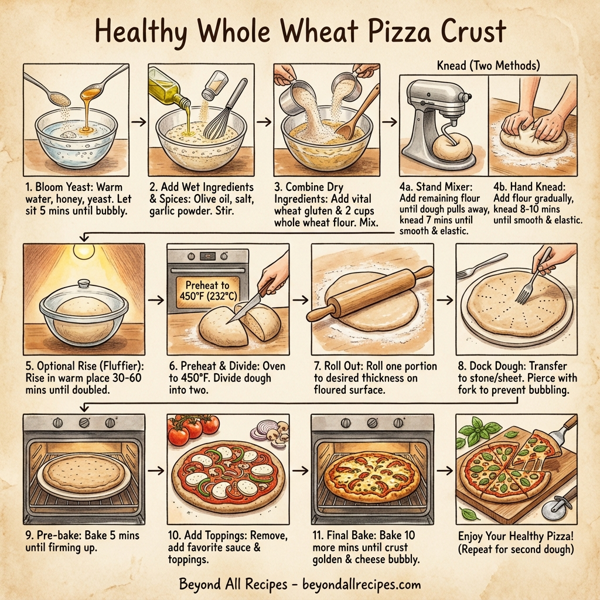
In a large mixing bowl, combine the warm water with honey and yeast. Let sit for about 5 minutes until bubbly.
2
Add in olive oil, salt, and garlic powder (if using). Stir to combine.
3
Gradually add vital wheat gluten and 2 cups of whole wheat flour. Mix until incorporated.
4
If using a stand mixer, continue adding flour until the dough pulls away from the sides of the bowl, then knead for about 7 minutes on medium speed until smooth and elastic.
5
If mixing by hand, add flour one cup at a time until the dough achieves the right consistency. Knead on a floured surface for about 8-10 minutes until smooth and elastic.
6
Optionally, allow the dough to rise in a warm place for about 30 minutes to 1 hour until doubled in size for a fluffier crust.
7
Preheat your oven to 450°F (232°C).
8
Divide the dough into two equal portions. Roll out one portion on a floured surface to your desired thickness.
9
Transfer the rolled dough to a pizza stone or baking sheet. Pierce the surface with a fork to prevent bubbling during baking.
10
Pre-bake the crust in the oven for about 5 minutes until it starts to firm up.
11
Remove the crust from the oven and add your desired toppings. Return to the oven and bake for an additional 10 minutes, or until the crust is golden brown and the cheese is bubbling.
12
Repeat the process with the second portion of dough.
Nutrition Information
9g
Fat
65g
Carbs
20g
Protein
Frequently Asked Questions
Frequently Asked Questions
What is the main benefit of this Healthy Whole Wheat Pizza Crust?
This crust is a nutritious alternative to traditional pizza dough, offering higher fiber from whole wheat flour and a chewy texture thanks to vital wheat gluten.
How many servings does this recipe provide?
The recipe is designed to make 2 servings.
How many calories are in one serving of this pizza crust?
Each serving contains 400 calories.
What is the protein content of this recipe?
Each serving of this pizza crust provides 20g of protein.
What are the primary ingredients needed?
The main ingredients include water, honey, olive oil, salt, whole wheat flour, vital wheat gluten, yeast, and optional garlic powder.
Why is vital wheat gluten added to the dough?
Vital wheat gluten helps create a wonderful chewy texture and compensates for the lower gluten content in whole wheat flour.
How much whole wheat flour should I use?
You should use between 2 to 4 cups of whole wheat flour, adding it gradually until the dough reaches the correct consistency.
What type of yeast is used in this recipe?
The recipe calls for 1.5 tablespoons of active dry yeast.
What temperature should the water be when mixing with yeast?
The water should be warm to properly activate the yeast.
How long should I let the yeast mixture sit?
Let the yeast, honey, and warm water sit for about 5 minutes until the mixture becomes bubbly.
Is there a vegan option for this recipe?
Yes, while the recipe uses honey, it is tagged as having a vegan option, which can be achieved by substituting honey with maple syrup or sugar.
How long should I knead the dough if using a stand mixer?
Knead for about 7 minutes on medium speed until the dough is smooth and elastic.
How long should I knead the dough by hand?
Knead on a floured surface for about 8-10 minutes until the dough is smooth and elastic.
Do I need to let the dough rise?
Rising is optional but recommended for 30 minutes to 1 hour if you want a fluffier crust.
What oven temperature is required for baking?
Preheat your oven to 450°F (232°C).
Should the crust be pre-baked?
Yes, you should pre-bake the rolled-out crust for about 5 minutes before adding toppings.
How do I prevent bubbles from forming in the crust?
Pierce the surface of the rolled dough with a fork before pre-baking.
How many portions should I divide the dough into?
The dough should be divided into two equal portions.
How long does the final bake take with toppings?
Bake for an additional 10 minutes once toppings are added, or until the crust is golden brown.
What is the fat content per serving?
Each serving contains 9g of fat.
How many carbohydrates are in one serving?
There are 65g of carbohydrates per serving.
Is garlic powder mandatory in this recipe?
No, garlic powder is an optional ingredient used for extra flavor.
What kind of surface can I bake the pizza on?
You can use either a pizza stone or a standard baking sheet.
How much honey is included in the recipe?
The recipe uses 1 teaspoon of liquid honey.
What is the sodium content of this pizza crust?
The specific sodium content is not listed, but the recipe uses 0.5 teaspoons of salt.
Can this crust be used for gourmet toppings?
Yes, it is versatile enough for classic mozzarella or complex gourmet vegetable toppings.
How much olive oil is required?
The recipe calls for 1.5 teaspoons of olive oil.
What is the total number of ingredients?
There are 8 ingredients in total for this recipe.
What should I do after the first portion is baked?
Repeat the rolling, pre-baking, and topping process with the second portion of dough.
Is this recipe suitable for family pizza nights?
Absolutely, it is described as an ideal base for family pizza nights and casual get-togethers.