Healthy Sweet & Sour Pork Delight
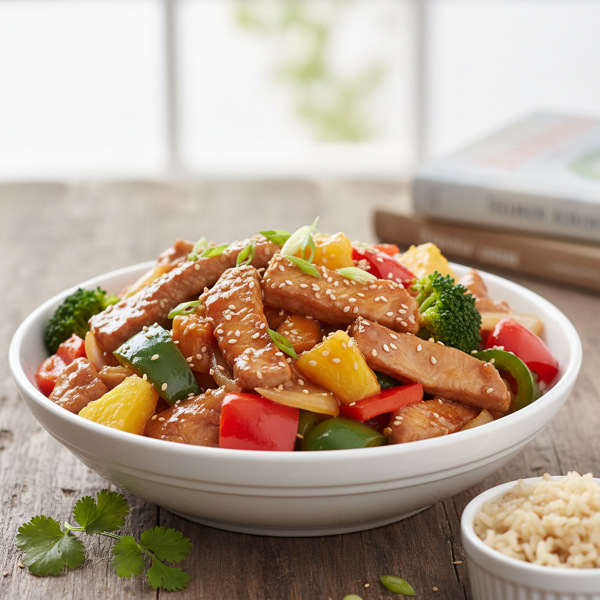
Savor the vibrant flavors of Healthy Sweet & Sour Pork Delight, a nutritious take on a classic Chinese dish. Lean pork tenderloin strips are perfectly seared and simmered in a tangy, sweet, and savory sauce made from pantry staples. This delightful dish is complemented by fresh green peppers and juicy pineapple chunks, creating a harmony of textures and tastes. Serve it over warm brown rice for a wholesome meal that your whole family will love. Each serving is just 7 Weight Watchers points, making it a guilt-free choice for any occasion.
N/A
Servings
70
Calories
12
Ingredients
Ingredients
Cooking Spray
1 spray (For greasing the skillet)
Lean Pork Tenderloin
1.5 lbs (Cut into thin strips)
Canned Unsweetened Pineapple Chunks
15 ounces (Drained and reserved juice set aside)
Water
1/2 cup (For the sauce)
Rice Wine Vinegar
1/3 cup (For the sauce)
Brown Sugar
1/4 cup (Packed, for sweetness)
Cornstarch
2 tablespoons (For thickening the sauce)
Table Salt
1/2 teaspoon (For seasoning)
Low Sodium Soy Sauce
1 tablespoon (For seasoning)
Green Peppers
2 medium (Sliced)
Onion
1 small (Sliced)
Cooked Brown Rice
3 cups (Kept warm for serving)
Instructions
1
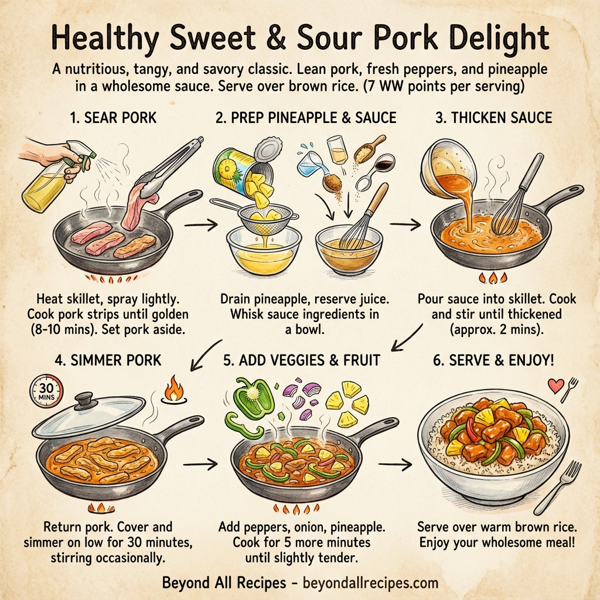
1. Begin by heating a large nonstick skillet over medium-high heat. Lightly coat it with cooking spray to prevent sticking.
2
2. Once the skillet is hot, add the thinly sliced pork tenderloin. Cook until the pork is golden brown and cooked through, approximately 8 to 10 minutes. Remove the pork from the skillet and set it aside. Drain any excess fat from the skillet.
3
3. Drain the canned pineapple chunks, ensuring to reserve the juice for the sauce. Set the pineapple aside.
4
4. In a small bowl, combine the reserved pineapple juice, water, rice wine vinegar, brown sugar, cornstarch, salt, and low sodium soy sauce. Mix well to create a slurry.
5
5. Pour the mixture into the skillet over medium heat. Cook while stirring constantly until the sauce begins to thicken, approximately 2 minutes.
6
6. Return the cooked pork to the skillet, reduce the heat to low, and cover. Let it simmer for about 30 minutes, stirring occasionally to ensure even cooking.
7
7. After 30 minutes, add the sliced green peppers, onion, and reserved pineapple chunks to the skillet. Cook for an additional 5 minutes until the vegetables are slightly tender but still vibrant.
8
8. Serve the sweet and sour pork over warm cooked brown rice. Each serving should have about 1 cup of pork and 1/2 cup of rice.
Nutrition Information
1g
Fat
11g
Carbs
6g
Protein
1g
Fiber
2g
Sugar
Frequently Asked Questions
Frequently Asked Questions
What is Healthy Sweet & Sour Pork Delight?
It is a nutritious version of the classic Chinese dish featuring lean pork tenderloin, fresh green peppers, and pineapple in a tangy sauce, served over brown rice.
How many Weight Watchers points is this recipe per serving?
Each serving of this Healthy Sweet & Sour Pork Delight is calculated at 7 Weight Watchers points.
What cut of meat is recommended for this recipe?
The recipe calls for 1.5 lbs of lean pork tenderloin, cut into thin strips.
How do I prepare the pineapple for the sauce?
Drain a 15-ounce can of unsweetened pineapple chunks, making sure to reserve the juice to use as a base for the sweet and sour sauce.
What are the primary ingredients in the sauce slurry?
The sauce slurry consists of reserved pineapple juice, water, rice wine vinegar, brown sugar, cornstarch, salt, and low sodium soy sauce.
How long should I cook the pork initially?
The pork should be seared in a nonstick skillet over medium-high heat for approximately 8 to 10 minutes until golden brown.
How long does the pork simmer in the sauce?
Once the sauce has thickened and the pork is returned to the skillet, it should simmer covered on low heat for about 30 minutes.
When should I add the vegetables to the skillet?
Add the sliced green peppers, onion, and reserved pineapple chunks after the pork has finished its 30-minute simmer.
What is the recommended serving suggestion?
The dish is best served over warm cooked brown rice, with a suggested portion of 1 cup of the pork mixture and 1/2 cup of rice.
How many calories are in a serving of this dish?
According to the recipe data, there are 70 calories per serving.
What is the fat content per serving?
This recipe is very low in fat, containing only 1 gram per serving.
How much protein does this meal provide?
Each serving provides 6 grams of protein.
How many carbohydrates are in the Healthy Sweet & Sour Pork Delight?
There are 11 grams of carbohydrates per serving.
What type of vinegar is best for this recipe?
The recipe specifies using 1/3 cup of rice wine vinegar for an authentic tangy flavor.
Can I use regular soy sauce instead of low sodium?
While you can, the recipe recommends low sodium soy sauce to keep the dish heart-healthy and within the specified points.
How do I thicken the sauce?
The sauce is thickened using 2 tablespoons of cornstarch mixed into the liquid ingredients and stirred over medium heat for about 2 minutes.
What kind of rice is used in this recipe?
The recipe uses 3 cups of cooked brown rice to add fiber and nutrients to the meal.
Is this recipe family-friendly?
Yes, it is tagged as family-friendly and is designed to be a guilt-free version of a popular takeout favorite.
How many ingredients are needed in total?
The recipe requires 12 total ingredients, including pantry staples and fresh produce.
What kind of skillet should I use?
A large nonstick skillet is recommended to prevent the pork from sticking while using minimal cooking spray.
What is the sugar content per serving?
There are 2 grams of sugar per serving in this recipe.
How much fiber is in the meal?
Each serving contains approximately 1 gram of fiber.
What are the main vegetables used?
The recipe uses 2 medium sliced green peppers and 1 small sliced onion.
Does this dish fall under a specific cuisine?
Yes, it is categorized under Asian cuisine and Chinese food tags.
What should I do after browning the pork?
Remove the pork from the skillet, set it aside, and drain any excess fat before starting the sauce.
How long do the vegetables cook at the end?
The vegetables and pineapple chunks should be cooked for an additional 5 minutes until tender but still vibrant.
Is this a one-dish meal?
Yes, it is tagged as a one-dish meal because it combines protein, vegetables, and sauce in a single skillet.
What is used to grease the skillet?
Cooking spray is used to lightly coat the skillet, keeping the fat content low.
How much brown sugar is in the recipe?
The recipe uses 1/4 cup of packed brown sugar for sweetness.
Can I prepare the pork in advance?
The recipe instructions suggest browning the pork as the first step, but cutting it into thin strips can certainly be done ahead of time.