Healthy Italian Sausage & Bean Soup
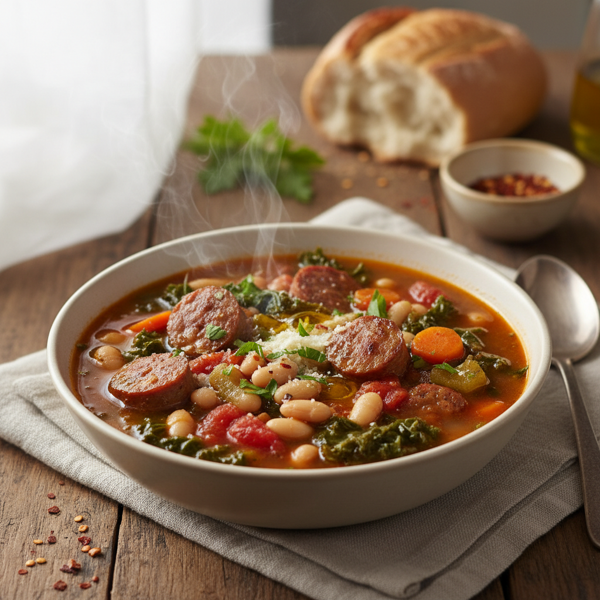
Experience the comforting flavors of authentic Italian sausage soup with a healthier twist. This delightful soup combines the richness of lean Italian sausage, crispy bacon, and a medley of hearty beans with tender potatoes and fresh kale. Perfectly seasoned with classic Italian herbs and spices, this low-fat version captures the essence of the beloved dish from Olive Garden while keeping it light. It’s a wholesome meal that can be enjoyed as a filling lunch or dinner, making it a perfect choice for family gatherings or meal-prepping for the week ahead.
N/A
Servings
N/A
Calories
14
Ingredients
Ingredients
Bacon
2 slices (Cooked until crispy and crumbled)
Lean Italian sausage
1/2 lb (Casings removed)
Russet potatoes
2 large (Cut into 1/2 inch cubes)
Onion
1 large (Chopped)
Garlic cloves
2 (Minced)
Italian seasoning
1 teaspoon (N/A)
Salt
1/2 teaspoon (N/A)
Pepper
1/4 teaspoon (N/A)
Red pepper flakes
1/4 teaspoon (N/A)
Water
4 cups (N/A)
Progresso reduced-sodium chicken broth
3 1/3 cups (N/A)
Fresh kale
4 cups (Chopped)
Cannellini beans
11 ounces (Drained and rinsed)
Fat-free half-and-half
1 cup (Or regular half-and-half)
Instructions
1
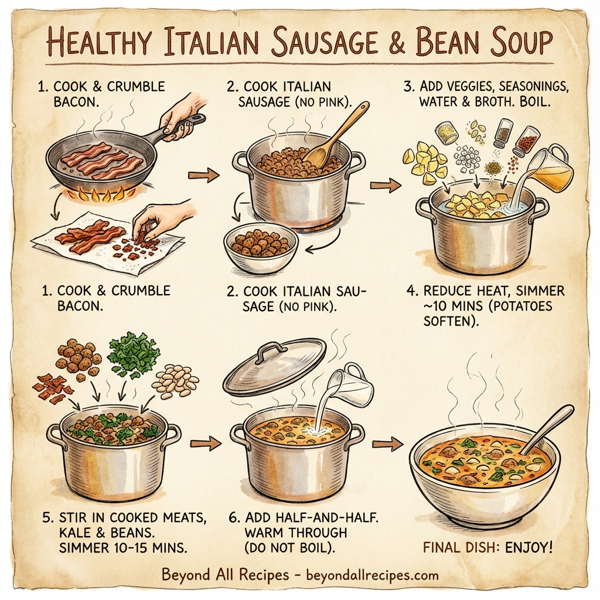
In a 4-quart nonstick saucepan or Dutch oven, cook the bacon over medium heat until crispy. Once done, remove it from the pan and drain on a paper towel. Crumble the bacon and set aside, discarding the drippings from the pan.
2
In the same saucepan, add the lean Italian sausage (casings removed), cooking over medium-high heat for 6 to 8 minutes while stirring frequently until it's no longer pink. Once cooked, set aside.
3
Pour in the chopped potatoes, onion, minced garlic, Italian seasoning, salt, pepper, red pepper flakes, water, and reduced-sodium chicken broth. Bring the mixture to a boil.
4
Reduce the heat to low and cook uncovered for about 10 minutes, stirring occasionally, until the potatoes begin to soften.
5
Stir in the crumbled bacon, cooked sausage, chopped kale, and rinsed cannellini beans. Cook for an additional 10 to 15 minutes, stirring occasionally, until the potatoes are tender and the kale is wilted.
6
Finally, stir in the fat-free half-and-half (or regular half-and-half) and heat until warmed through, without boiling. Serve hot and enjoy!
Nutrition Information
Frequently Asked Questions
Frequently Asked Questions
What is Healthy Italian Sausage & Bean Soup?
It is a wholesome, lighter version of traditional Italian sausage soup, featuring lean meat, fresh kale, potatoes, and cannellini beans in a creamy broth.
How many calories are in this soup?
While specific nutritional data isn't provided, this version is designed to be low-fat by using lean sausage and fat-free half-and-half.
Is this recipe similar to Olive Garden's Zuppa Toscana?
Yes, it captures the essence of the popular restaurant dish but uses healthier ingredients like lean sausage and reduced-sodium broth.
What type of sausage should I use?
The recipe calls for 1/2 lb of lean Italian sausage with the casings removed.
Can I use regular Italian sausage instead of lean?
You can, though it will increase the fat content of the soup.
Which potatoes are best for this soup?
Russet potatoes are recommended, cut into 1/2 inch cubes for even cooking.
Do I need to peel the potatoes?
The recipe implies using peeled potatoes as they are cubed, but you can leave the skin on if you prefer a more rustic texture.
What kind of kale should I use?
Fresh chopped kale is best; ensure you remove the tough stems before adding it to the pot.
Can I substitute spinach for kale?
Yes, fresh spinach can be used, but add it at the very end as it wilts much faster than kale.
Are cannellini beans necessary?
Cannellini beans add a creamy texture, but you can substitute them with Great Northern beans or navy beans.
Is this soup spicy?
It has a mild kick from the 1/4 teaspoon of red pepper flakes and the Italian sausage seasonings.
How can I make the soup spicier?
You can use hot Italian sausage instead of mild or increase the amount of red pepper flakes.
What can I use instead of fat-free half-and-half?
You can use regular half-and-half, whole milk, or a non-dairy unsweetened creamer if preferred.
Is this recipe gluten-free?
The main ingredients are gluten-free, but always check the labels on your sausage and chicken broth to ensure no gluten additives are present.
Can I make this soup vegetarian?
Yes, by using plant-based sausage, vegetable broth, and omitting the bacon.
How do I prepare the bacon?
Cook 2 slices until crispy, crumble them, and discard the fat before adding them back to the soup later.
Why do I discard the bacon drippings?
Discarding the drippings helps keep the soup low-fat and healthy.
How long does it take to cook the sausage?
It takes about 6 to 8 minutes over medium-high heat until it is no longer pink.
Can I use dried beans instead of canned?
Yes, but they must be soaked and cooked separately before being added to the soup.
What type of broth is recommended?
Progresso reduced-sodium chicken broth is suggested to control the salt content.
How long should the potatoes simmer?
The potatoes should simmer for about 10 minutes initially, then another 10 to 15 minutes once the other ingredients are added.
Can I freeze this soup?
Yes, but the texture of the potatoes and dairy might change slightly upon thawing. It is best to freeze it before adding the half-and-half.
How long will leftovers last in the fridge?
The soup will stay fresh in an airtight container for 3 to 4 days.
Can I make this in a slow cooker?
Yes, cook the meat first, then combine everything except the kale and dairy in the slow cooker for 4-6 hours on low, adding kale and dairy at the end.
What should I serve with this soup?
It pairs perfectly with crusty Italian bread or a light side salad.
Can I add other vegetables?
Carrots or celery would make great additions; sauté them with the onions for extra flavor.
How do I prevent the half-and-half from curdling?
Add the half-and-half at the very end over low heat and do not let the soup come to a boil once it is added.
Is this a good meal-prep recipe?
Absolutely, the flavors often improve the next day, making it ideal for weekday lunches.
What size pot do I need?
A 4-quart nonstick saucepan or a Dutch oven is the ideal size for this recipe.
How do I remove the sausage from the casings?
Use a sharp knife to slit the casing lengthwise and then peel it away from the meat before cooking.