Healing Hearth Sourdough Bread
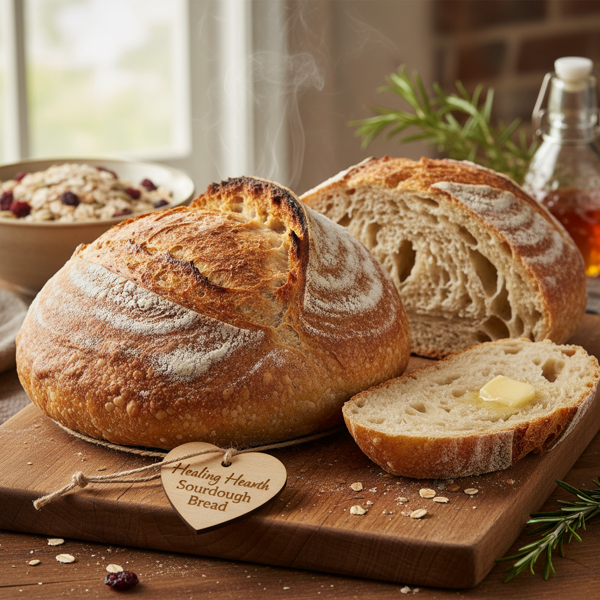
Indulge in the wholesome goodness of Healing Hearth Sourdough Bread, a perfect blend of nutrition and flavor. This rustic bread, made from simple yet quality ingredients, is not only a satisfying homemade treat but also a heartwarming gift to share with loved ones. The process begins with a tangy sourdough starter that ferments overnight, developing a complex flavor profile. Each loaf is enriched with warm milk, honey, and a hint of wheat germ for added texture and nutrients. Whether you enjoy it toasted for breakfast or as a base for your favorite sandwiches, this recipe will elevate any meal. Bake and savor the delightful aroma and a soft, airy crumb of freshly baked bread right from your kitchen!
N/A
Servings
N/A
Calories
11
Ingredients
Ingredients
sourdough starter
1 cup (prepared)
water
2 cups (room temperature)
milk
2 cups (warm)
butter
1 tablespoon (melted)
active dry yeast
1 packet (activated)
honey
1/4 cup (smooth)
unbleached flour
7 cups (divided)
wheat germ
1/4 cup (raw)
sugar
2 tablespoons (granulated)
salt
2 teaspoons (kosher or sea salt)
baking soda
2 teaspoons (sifted)
Instructions
1
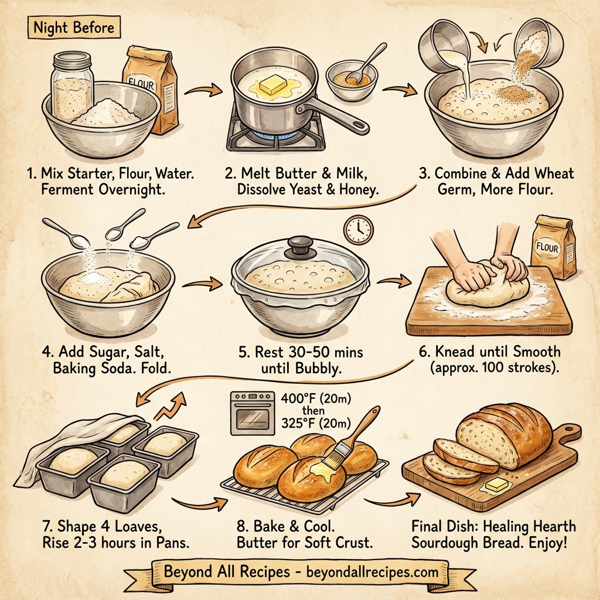
The night before baking, combine the sourdough starter with 2 1/2 cups of unbleached flour and all of the water in a large mixing bowl. Mix well and allow to stand in a warm location overnight to ferment.
2
In the morning, melt the butter and mix it with the warm milk. Stir in the active dry yeast until fully dissolved, then add the honey and mix until combined.
3
Incorporate the cooked mixture into the fermented dough, adding an additional 2 cups of flour and the wheat germ. Mix gently until combined.
4
Sprinkle the sugar, salt, and baking soda over the mixture, and fold them into the dough by gently pressing and mixing.
5
Allow the mixture to rest for 30 to 50 minutes, or until it becomes bubbly and shows signs of fermentation.
6
Continue adding flour until the dough no longer sticks to the sides of the bowl.
7
Transfer the dough to a lightly floured surface and knead it for about 100 strokes or until it becomes smooth and silky.
8
Divide the dough into four equal portions and form each into a loaf shape. Place the loaves into well-greased 9 x 3 inch loaf pans.
9
Cover the pans and let the dough rise in a warm environment until doubled in size, which should take about 2 to 3 hours.
10
Preheat the oven to 400 degrees F. Bake the loaves for 20 minutes, then reduce the temperature to 325 degrees F and continue baking for an additional 20 minutes or until the loaves are golden brown and cooked through.
11
Once baked, remove the loaves from the pans and place them on a wire rack to cool. For a softer crust, lightly butter the tops of the warm loaves.
Nutrition Information
Frequently Asked Questions
Frequently Asked Questions
What is Healing Hearth Sourdough Bread?
Healing Hearth Sourdough Bread is a rustic, wholesome loaf featuring a blend of sourdough starter, honey, milk, and wheat germ for a nutritious and flavorful treat.
How many loaves does this recipe produce?
This recipe yields four equal loaves.
What size loaf pans should I use?
It is recommended to use well-greased 9 x 3 inch loaf pans.
How long is the initial fermentation process?
The initial fermentation takes place overnight in a warm location.
What are the primary ingredients for the overnight ferment?
You combine 1 cup of sourdough starter, 2 1/2 cups of unbleached flour, and 2 cups of water.
Is active dry yeast required for this sourdough?
Yes, one packet of active dry yeast is used in the morning mixing stage.
How much honey is included in the recipe?
The recipe calls for 1/4 cup of smooth honey.
What type of flour is recommended?
The recipe uses 7 cups of unbleached flour, added in stages.
When do I add the wheat germ?
The 1/4 cup of raw wheat germ is incorporated into the dough in the morning along with the milk mixture and additional flour.
How much butter is used in the dough?
One tablespoon of melted butter is mixed with the warm milk.
What is the purpose of the baking soda?
Two teaspoons of sifted baking soda are added with sugar and salt to help the dough structure and rise.
How long should the dough rest before kneading?
The dough should rest for 30 to 50 minutes until it becomes bubbly.
How many strokes are needed during the kneading process?
You should knead the dough for about 100 strokes until it is smooth and silky.
How much total water is needed?
The recipe requires 2 cups of room temperature water.
What temperature should the milk be?
The 2 cups of milk should be warm to properly activate the yeast.
How long is the final rise in the pans?
The dough should rise in a warm environment for about 2 to 3 hours until doubled in size.
What is the initial baking temperature?
The oven should be preheated to 400 degrees F.
How long do the loaves bake at 400 degrees F?
Bake the loaves for 20 minutes at the initial high temperature.
What is the secondary baking temperature?
After the first 20 minutes, reduce the oven temperature to 325 degrees F.
How much longer do they bake after reducing the heat?
Bake for an additional 20 minutes until golden brown.
How can I achieve a softer crust?
Lightly butter the tops of the warm loaves immediately after removing them from the oven.
What type of salt is best for this recipe?
Two teaspoons of kosher or sea salt are recommended.
Where should the bread cool?
Once removed from the pans, place the loaves on a wire rack to cool.
What kind of sugar is used?
The recipe calls for 2 tablespoons of granulated sugar.
What makes this bread a good gift?
Its rustic appearance, soft crumb, and heartwarming aroma make it a perfect homemade gift.
Can I use a different type of flour?
While unbleached flour is specified, the recipe's structure relies on its specific protein content for the 100-stroke knead.
What texture should the finished bread have?
The finished bread should have a soft, airy crumb and a golden-brown crust.
Is the sourdough starter used cold?
The recipe specifies using 1 cup of prepared sourdough starter, typically at room temperature when mixing.
How do I know the dough is ready for the final rise?
The dough is ready for the pans once it has been kneaded into a smooth, silky texture and shaped into loaves.
What is the total preparation time including fermentation?
The process begins the night before, with about 4-6 hours of active work and rising time the following day.