Hawaiian Slow-Roasted Kalua Pork
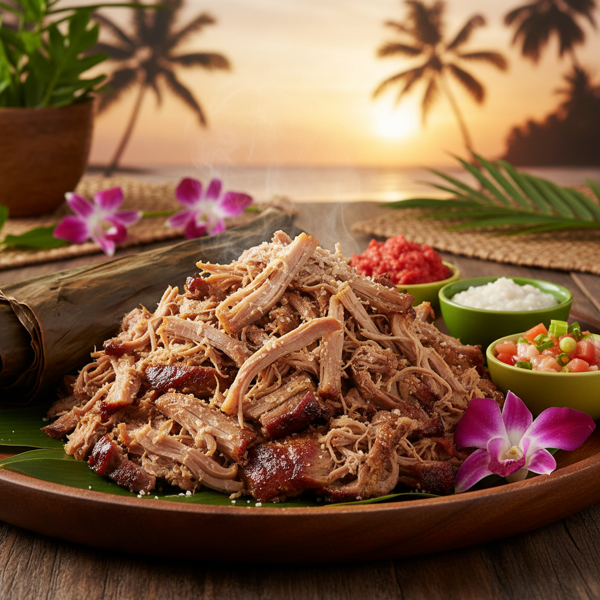
Bring the flavors of Hawaii to your kitchen with this tender and smoky Kalua Pork, a beloved Hawaiian dish traditionally cooked in an underground oven (imu). This oven and crockpot method allows you to replicate that savory, succulent taste without the need for an imu or a nearby Hawaiian market. Perfect for luau parties or family gatherings, it’s easy to prepare and serves well with a variety of sides. Enjoy this versatile dish on its own or use it in tacos, sandwiches, or a hearty plate of Kahlua pig and cabbage.
20
Servings
N/A
Calories
4
Ingredients
Ingredients
Boston butt
8 lbs (whole)
rock salt or sea salt
1/4 cup (for seasoning)
liquid smoke
1 teaspoon (for flavor)
water
2 cups (for roasting)
Instructions
1
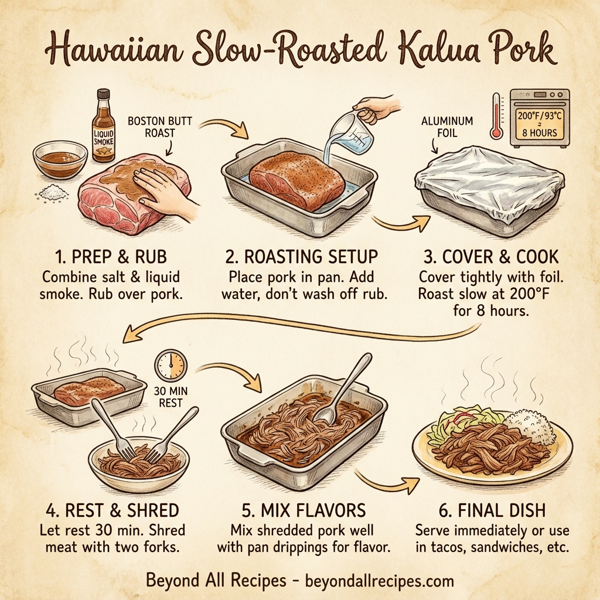
Preheat your oven to 200°F (93°C).
2
Place the Boston butt in a large roasting pan.
3
In a small bowl, combine the rock salt (or sea salt) with the liquid smoke. Rub this mixture thoroughly over the entire surface of the roast.
4
Pour the water into the bottom of the roasting pan, being careful not to wash off the salt and liquid smoke mixture.
5
Cover the pan tightly with heavy-duty aluminum foil to keep the moisture in. This is essential for achieving tender, juicy meat.
6
Roast in the preheated oven for 8 hours, or overnight if you prefer to have it ready by morning.
7
After cooking, remove the pan from the oven and let it rest for 30 minutes. Then, shred the meat using two forks, mixing it well with the drippings for maximum flavor.
8
Serve immediately or store leftovers in the refrigerator for later. You can also freeze leftovers for future meals.
Nutrition Information
Frequently Asked Questions
Frequently Asked Questions
What is Hawaiian Kalua Pork?
Kalua Pork is a traditional Hawaiian dish characterized by its tender texture and smoky flavor, traditionally cooked in an underground oven called an imu.
What cut of meat is used for this Kalua Pork recipe?
An 8 lb Boston butt is used for this recipe to ensure the meat is succulent and easy to shred.
What temperature should the oven be set to?
The oven should be preheated to 200°F (93°C) for a low and slow roasting process.
How long does the Kalua Pork need to cook?
The pork should be roasted for 8 hours, though it can be left overnight if preferred.
What type of salt is best for this recipe?
You can use either rock salt or sea salt for seasoning the Boston butt.
How do I get a smoky flavor without an underground oven?
The recipe uses 1 teaspoon of liquid smoke mixed with the salt rub to replicate the traditional smoky taste.
Why is water added to the roasting pan?
Two cups of water are added to the bottom of the pan to help maintain moisture during the long roasting time.
Is it necessary to cover the pan with foil?
Yes, covering the pan tightly with heavy-duty aluminum foil is essential for keeping the moisture in and achieving tender meat.
Should the meat rest after cooking?
Yes, let the pan rest for 30 minutes after removing it from the oven before you begin shredding the meat.
How do I shred the Kalua Pork?
The meat can be easily shredded using two forks after it has rested.
Should I keep the pan drippings?
Yes, you should mix the shredded meat well with the drippings to ensure maximum flavor and moisture.
How many servings does this recipe provide?
This recipe makes approximately 20 servings, making it ideal for large gatherings.
Can I freeze leftover Kalua Pork?
Yes, leftovers can be frozen for future meals or stored in the refrigerator.
What are some ways to serve Kalua Pork?
It can be served on its own, in tacos, in sandwiches, or as part of a plate with cabbage.
What is the preparation method for the salt rub?
In a small bowl, combine 1/4 cup of salt with 1 teaspoon of liquid smoke before rubbing it over the meat.
Can I cook this in a slow cooker?
While this specific recipe focuses on an oven method, the tags indicate it is also suitable for slow cooker adaptations.
Is this recipe suitable for a luau?
Absolutely, Kalua Pork is a staple dish for luau parties and family gatherings.
Does this recipe contain carbohydrates?
Based on the ingredients of pork, salt, liquid smoke, and water, this recipe is naturally very low in carbohydrates.
Can I use a smaller roast?
You can, but you may need to adjust the cooking time and the amount of salt and liquid smoke accordingly.
What is an imu?
An imu is a traditional Hawaiian underground oven used for slow-cooking meats like pork.
How much salt should I use per pound of meat?
This recipe uses 1/4 cup of salt for an 8 lb roast, which is roughly 1.5 teaspoons per pound.
Is this recipe easy for beginners?
Yes, it is tagged as an easy recipe because it requires very little active prep time despite the long cook time.
Can I add other spices to the pork?
Traditional Kalua Pork is simple, but you can add spices to your preference, though salt and liquid smoke provide the authentic flavor.
How should I reheat leftovers?
Leftovers can be reheated in a pan or microwave, preferably with some of the reserved juices to keep it moist.
Is Boston butt the same as pork shoulder?
Yes, Boston butt is a specific cut from the upper part of the pork shoulder.
What is 'low and slow' cooking?
It refers to cooking meat at a low temperature for a long duration, which breaks down connective tissues for a tender result.
Should I trim the fat off the Boston butt?
It is generally recommended to leave the fat during cooking as it adds flavor and moisture, then remove any excess when shredding.
Can I make this recipe in a shorter amount of time?
To achieve the authentic 'melt-in-your-mouth' texture, the full 8 hours at a low temperature is highly recommended.
Does the recipe require any oil?
No oil is needed; the fat from the pork and the added water provide all necessary moisture.
What should I avoid when adding water to the pan?
Be careful not to pour the water directly over the meat, as it might wash off the salt and liquid smoke seasoning.