Harvest Multicolor Challah
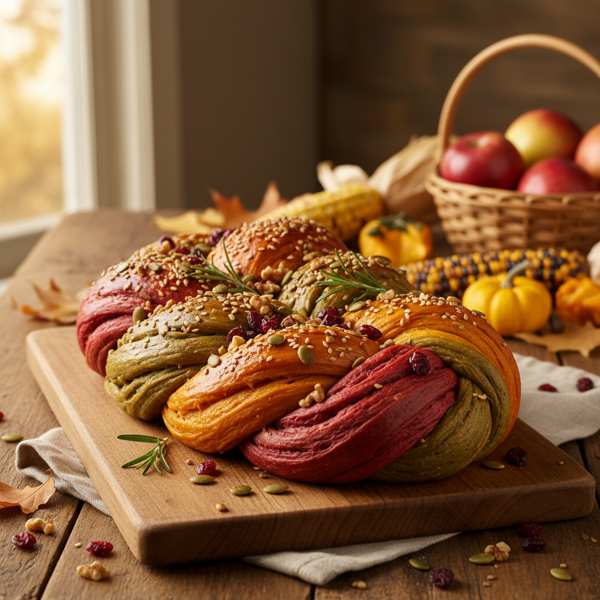
Celebrate the vibrant flavors of the harvest season with this stunning Harvest Multicolor Challah, perfect for Sukkot or any festive occasion. This recipe transforms traditional challah into a visual feast by incorporating colorful vegetable purees—deep red beet, bright orange carrot, and vibrant green spinach—each contributing not only a unique hue but also a subtle flavor. Braid these beautiful strands together for a striking centerpiece at your table that captures the essence of the harvest. Versatile enough for other celebrations, you can also envision a joyful red and green arrangement for Christmas, appealing to friends of all traditions. With a yield of 12 loaves, this recipe is ideal for sharing or freezing, ensuring you can enjoy this delightful bread long after the holidays have passed.
N/A
Servings
N/A
Calories
11
Ingredients
Ingredients
beets
2-3 (peeled and diced)
frozen chopped spinach
1 (10-ounce) package (no preparation needed)
carrots
3-4 large (peeled and diced)
water
as needed (for cooking vegetables and in dough)
eggs
12 (whole, for the dough)
canola oil
2 cups, plus extra for bowls (for mixing and greasing)
honey
2 cups, divided (for mixing into dough)
salt
12 teaspoons, divided (for mixing into dough)
flour
28-32 cups (a mix of bread flour and all-purpose flour)
instant yeast
8 tablespoons (for mixing into dough)
egg whites
3 (for glazing loaves)
Instructions
1
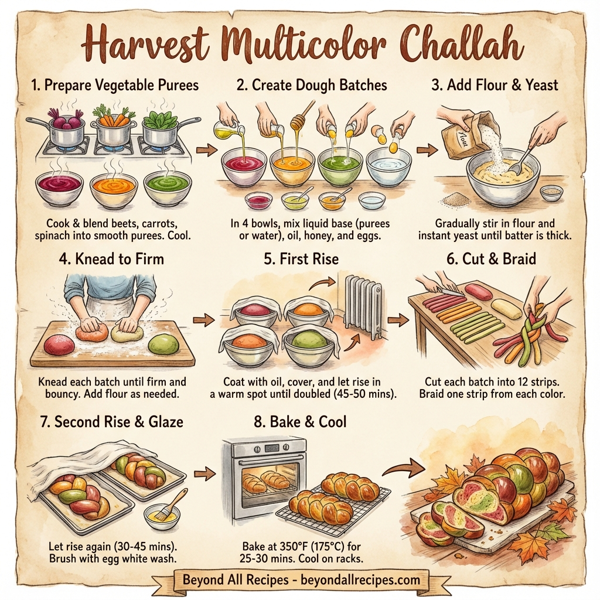
Prepare the vegetable purees by peeling and dicing the beets and carrots. Place each type of vegetable (beets, carrots, and spinach) into separate saucepans and cover with water by about 1/2 inch. Cook each until tender, monitoring water levels as needed.
2
Once cooked, blend each vegetable along with some of the cooking water to create a smooth puree, aiming for 2 cups of puree per vegetable. Allow all purees to cool to a warm temperature.
3
In four large mixing bowls, pour each vegetable puree into separate bowls and add 1 2/3 cups of water to a separate bowl for the standard challah dough. Add ½ cup of canola oil and ½ cup of honey to each bowl—hint: pour the oil first to help the honey slide out easily.
4
Mix each mixture thoroughly, then add 3 eggs and mix until combined. Stir in 3 teaspoons of salt and mix again.
5
To each bowl, gradually incorporate 3 cups of bread flour and stir until the batter becomes sloppy. Add 2 scant tablespoons of instant dry yeast to each batch and mix well.
6
Continue adding flour until the dough becomes thick enough to turn out and knead. Knead each batch on a floured surface, adding additional flour as necessary until the dough is firm, bouncy, and slightly tacky but not sticky.
7
Coat each mixing bowl with a layer of canola oil before placing the kneaded dough back in, flipping it to cover in oil. Cover the bowls with plates or plastic wrap and let the dough rise in a warm spot for 45-50 minutes, until doubled in volume.
8
Once risen, turn each dough out onto a floured surface, knead briefly, and cut each batch into 12 long strips. Keep the strips lightly floured and organized by color.
9
With all color strands prepared, braid together one strip from each color to create vibrant 4-strand braids. Arrange the braided loaves onto parchment-lined baking sheets.
10
Cover the loaves with plastic wrap or a plastic tablecloth and allow them to rise a second time for 30-45 minutes, until they have doubled in size.
11
In a small bowl, mix about 1/3 to 1/2 cup water with 3 egg whites. Brush this mixture over each risen loaf to create a glossy finish.
12
Preheat your oven to 350°F (175°C) and bake the loaves for 25-30 minutes or until they are golden brown and sound hollow when tapped on the bottom.
13
Once baked, allow the loaves to cool on racks. Enjoy them fresh, and freeze any extras for later!
Nutrition Information
Frequently Asked Questions
Frequently Asked Questions
What is Harvest Multicolor Challah?
Harvest Multicolor Challah is a festive bread that incorporates vegetable purees—beet, carrot, and spinach—to create vibrant, naturally colored dough strands for braiding.
Which vegetables are used to color the dough?
This recipe uses deep red beets, bright orange carrots, and vibrant green spinach to provide natural hues and subtle flavors.
Is this recipe suitable for specific holidays?
Yes, it is perfect for Sukkot, harvest festivals, or even Christmas when using red and green strands.
How many loaves does this recipe yield?
This recipe is designed to yield approximately 12 braided loaves.
How do I prepare the vegetable purees?
Peel and dice the beets and carrots, then cook them separately in water until tender. Blend each vegetable with some cooking water until smooth.
What is the target amount of puree for each vegetable?
You should aim for approximately 2 cups of puree per vegetable type.
At what temperature should the purees be when mixed into the dough?
The purees should be allowed to cool until they are just warm before mixing.
Why should I pour the oil into the bowl before the honey?
Pouring the oil first coats the measuring tool, which helps the honey slide out more easily without sticking.
How many eggs are required for the dough batches?
The recipe calls for 12 whole eggs in total, with 3 eggs mixed into each of the four dough batches.
What type of flour is best for this challah?
The recipe recommends using a mix of bread flour and all-purpose flour for the best texture.
How much yeast is needed for each batch?
Each batch of dough requires 2 scant tablespoons of instant dry yeast.
How long is the first rise?
The dough should rise in a warm spot for about 45-50 minutes, or until it has doubled in volume.
How do I know when the dough is properly kneaded?
The dough should be firm, bouncy, and slightly tacky to the touch, but not sticky.
Why is the mixing bowl coated with canola oil?
Coating the bowl with oil prevents the dough from sticking and keeps the surface from drying out during the rise.
How many strands are used for the braid?
This recipe uses a 4-strand braiding technique, using one strip of each color.
How do I organize the dough before braiding?
After the first rise, cut each batch into 12 long strips and keep them organized by color on a floured surface.
How long is the second rise?
After braiding, the loaves should rise a second time for 30-45 minutes until they have doubled in size.
What is used to glaze the loaves before baking?
A mixture of 3 egg whites and approximately 1/3 to 1/2 cup of water is brushed over the loaves for a glossy finish.
What temperature should the oven be set to?
Preheat your oven to 350°F (175°C) for baking the challah.
How long does the baking process take?
The loaves typically bake for 25-30 minutes.
How can I tell if the challah is fully baked?
The bread is done when it is golden brown and produces a hollow sound when tapped on the bottom.
Can I freeze the extra loaves?
Yes, this recipe is ideal for freezing so you can enjoy the bread long after the holidays.
What type of yeast is used in this recipe?
The recipe specifies using instant dry yeast.
Does the spinach need any special preparation?
The recipe uses one 10-ounce package of frozen chopped spinach, which is cooked and blended like the other vegetables.
How much honey is used in the entire recipe?
A total of 2 cups of honey is used, divided among the different dough batches.
How much salt is added to each batch?
Each of the four batches receives 3 teaspoons of salt, totaling 12 teaspoons for the entire recipe.
Is there a plain dough batch included?
Yes, in addition to the three vegetable batches, there is one standard challah dough batch made with water.
What should I use to line the baking sheets?
Use parchment paper to line the baking sheets to prevent the bread from sticking.
What should I do if the dough is too sticky during kneading?
Gradually add additional flour until the dough is firm and bouncy but no longer sticks to your hands.
How should the finished loaves be cooled?
Once removed from the oven, allow the loaves to cool completely on wire racks.